
A Treasure Trove in the Heart of Jaipur
Standing majestically in the heart of Jaipur's Ram Niwas Garden, the Albert Hall Museum is more than just a building—it's a time capsule that takes you on a journey through centuries of art, culture, and history. As Rajasthan's oldest museum, this architectural marvel has been captivating visitors since 1887 with its stunning Indo-Saracenic design and incredible collection of over 40,000 artifacts.
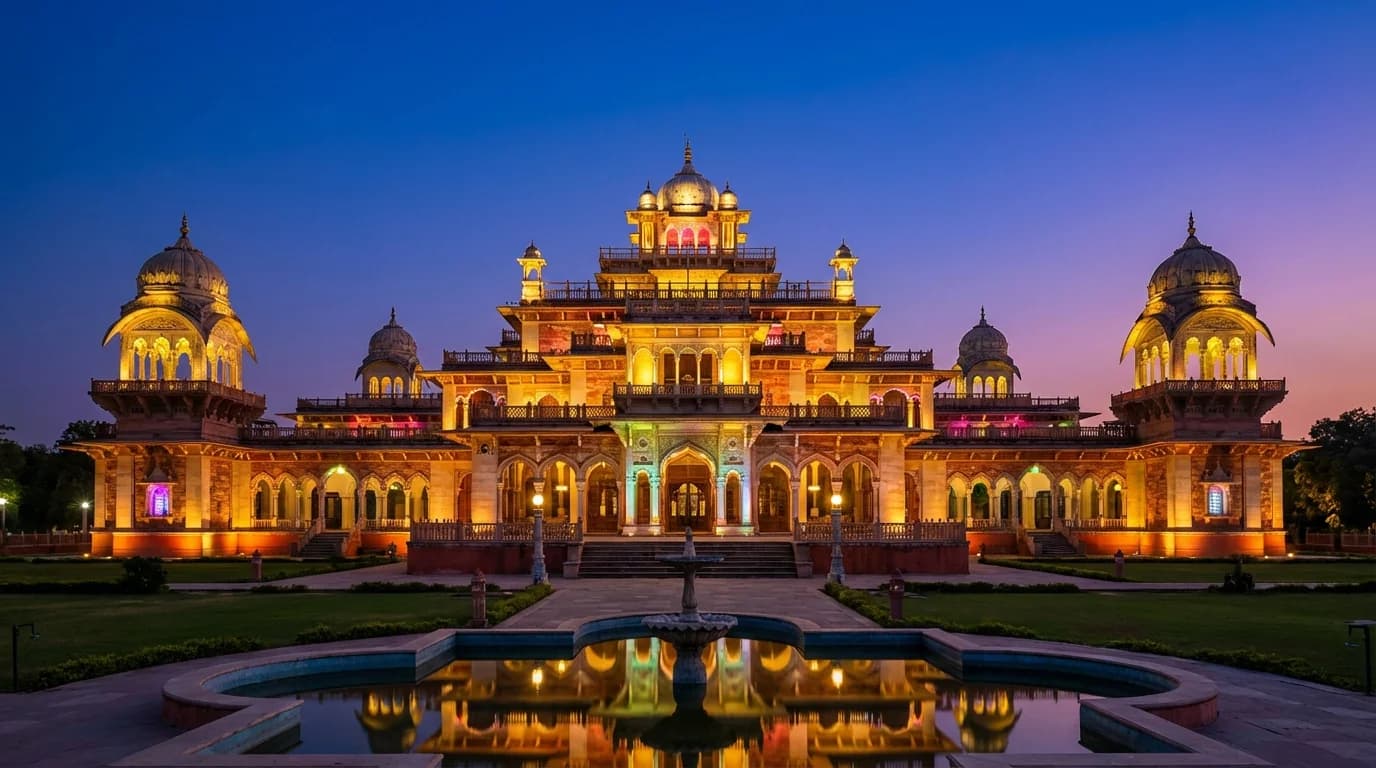
Whether you're a history buff, an architecture enthusiast, or simply someone who appreciates beautiful things, Albert Hall Museum has something special waiting for you. And here's a secret that many visitors don't know—the museum transforms into an absolute spectacle at night when it's illuminated with colorful lights!
Let's dive into everything you need to know about this magnificent museum before your visit.
The Fascinating History of Albert Hall
A Royal Beginning
The story of Albert Hall begins with a royal visit. On February 6, 1876, the Prince of Wales, Albert Edward (who would later become King Edward VII), visited Jaipur and laid the foundation stone for what was initially planned as a town hall. The building is named in his honor.
But the vision changed. Maharaja Sawai Ram Singh II originally wanted this building to serve as a public gathering space, but his successor, Maharaja Sawai Madho Singh II, had different plans. He decided to transform it into a museum dedicated to showcasing the art and craftsmanship of Jaipur and Rajasthan.
From Exhibition Hall to Museum
In 1880, Dr. Thomas Holbein Hendley, the Resident Surgeon whose interests extended far beyond medicine, suggested creating a Museum of Industrial Arts to display products of local craftsmen. Maharaja Madho Singh II loved the idea, and a temporary museum was set up in 1881.
The temporary museum proved incredibly popular, especially after the grand Jaipur Exhibition of 1883, which showcased local arts and crafts. This success convinced everyone that a permanent museum was needed. The Albert Hall building, which had been under construction since 1876, was finally completed and opened to the public as a museum in 1887.
The Architectural Genius: Sir Samuel Swinton Jacob
The man behind Albert Hall's stunning design was Sir Samuel Swinton Jacob, a British architect who served as the Chief Engineer of Jaipur State from 1867. Jacob was a master of the Indo-Saracenic style, which brilliantly blends Indian, Islamic, and European architectural elements.
He was assisted by Mir Tujumool Hoosein in completing this architectural masterpiece. The result? A building that remains one of the finest examples of Indo-Saracenic architecture in all of India.
Architectural Marvel: What Makes Albert Hall Special
Indo-Saracenic Splendor
Albert Hall Museum is a visual feast for architecture lovers. The building beautifully combines:
- Indian elements – Traditional chhatris (elevated dome-shaped pavilions), jharokhas (overhanging enclosed balconies), and intricate stone carvings
- Islamic influences – Pointed arches, geometric patterns, and ornamental details inspired by Mughal architecture
- European touches – Neo-Gothic elements that were fashionable during the Victorian era
Key Architectural Features
The Grand Dome: The central dome is the crown jewel of the building, surrounded by smaller domes and chhatris that create a stunning roofline against the Jaipur sky.
Red Sandstone Facade: Like many of Jaipur's iconic buildings, Albert Hall is constructed from beautiful red sandstone, giving it that characteristic warm, pink-tinged appearance that earned Jaipur its nickname "Pink City."
Intricate Carvings: Every surface seems to be adorned with detailed carvings—from floral motifs to geometric patterns. The craftsmanship is simply breathtaking.
Arched Corridors: The building features beautiful arched corridors and courtyards that provide both aesthetic beauty and practical shade from the Rajasthan sun.
Sprawling Grounds: The museum sits within the 19-acre Ram Niwas Garden, surrounded by manicured lawns and greenery that make it a pleasant escape from the bustling city.
The 16 Galleries: A Journey Through Time
Albert Hall Museum houses an extraordinary collection spread across 16 specialized galleries. Each gallery offers a unique window into different aspects of art, culture, and history. Here's what awaits you:
1. The Egyptian Gallery (The Famous Mummy!)
This is undoubtedly the most popular gallery in the museum. Albert Hall is one of only five museums in India to house an original Egyptian mummy! This 2,500-year-old mummy, dating from 322-30 BC, originally came from the banks of the Nile River.
The exhibit also includes Pharaonic antiquities from the 11th-1st century BC. You'll learn about the fascinating mummification process and ancient Egyptian burial practices—their strong belief in the afterlife led them to develop remarkably advanced preservation techniques.
2. Sculpture Gallery
Home to over 50 sculptures spanning the 10th to 18th centuries, this gallery showcases:
- Hindu and Jain idols in various forms
- Black stone sculptures of Yakshi from the 4th century
- Stunning stone sculptures from the Solanki and Chahamana dynasties
- Beautiful representations of Hindu gods and goddesses
3. Paintings Gallery
Art lovers will be captivated by the impressive collection of paintings from:
- Mughal School – Detailed miniatures with Persian influences
- Rajput School – Vibrant colors and romantic themes
- European School – Works showing Western artistic traditions
- Paintings by renowned artists like Raja Ravi Varma and Abdur Rahman Chughtai
4. Persian Gallery
The star attraction here is the magnificent Persian Garden Carpet, dating back to the 17th century (around 1632 AD). This extraordinary carpet was acquired during the reign of Mirza Raja Jai Singh I and is considered one of the finest examples of Persian carpet weaving in the world. The carpet depicts a garden scene symbolizing paradise.
5. Pottery Gallery
Discover the rich ceramic traditions of India:
- Glazed pottery from Delhi, Sindh, and Multan
- Unglazed pottery from Bikaner and Hyderabad
- The famous Blue Pottery of Jaipur – stunning pieces of cutlery and vases in that distinctive cobalt blue
6. Jewellery Gallery
A dazzling display of ornaments including:
- Silver and brass jewelry worn by common people in the 19th century
- Anklets, rings, hairpins, bracelets, and necklaces
- Expensive antiques like golden waist belts, ear studs, and foot ornaments
7. Arms and Armour Gallery
For those fascinated by military history:
- Swords with ornate hilts
- Tiger knives (katar)
- Helmets and body armor
- Javelins, bows, and arrows
- Various weapons used by Rajput warriors
8. Ivory Gallery
Exquisite artwork crafted from elephant tusks, including:
- Intricately carved ivory statues
- Decorative mirrors
- Medicine boxes
- Various ornamental items showcasing incredible craftsmanship
9. Textile Gallery
Rajasthan's rich textile heritage on display:
- Traditional fabrics and weaves
- Intricate embroidery work
- Block prints and tie-dye textiles
- Designs, patterns, and motifs reflecting centuries of tradition
10. Coin Gallery
A numismatist's delight featuring:
- Punch-marked coins – Said to be among the earliest coins used in history
- Mughal coins from the reigns of Akbar, Jehangir, Shah Jahan, and Aurangzeb
- British-era coins
- The evolution of coinage through Indian history
11. Musical Instruments Section
Traditional instruments that have filled Rajasthan with music for centuries:
- Sarangi and Sitar
- Dhap and Pungi (snake charmer's flute)
- Ravan Hatha (an ancient stringed instrument)
- Shehnai and more
12. Clay Art Gallery
Beautiful 19th-century clay models depicting:
- Yogic postures and spiritual practices
- Sociological themes and daily life scenes
- Traditional craft-making processes
13. International Art Gallery
A window to the world featuring:
- Japanese dolls from the 19th century
- Ancient Pharaonic artifacts from the 1st century BC
- Brass Buddha statues from Nepal
- Art pieces from various cultures
14. Miniature Paintings Section
Delicate masterpieces from:
- Rajput painting traditions
- Mughal miniature art
- Scenes from Indian mythology
- Hunting scenes and royal portraits
15. Metal Art Gallery
Showcasing the metalworking traditions of Rajasthan with brass, copper, and bronze artifacts.
16. Decorative Arts Gallery
Various decorative items that showcase the artistic excellence of Indian craftsmen through the ages.
The Magical Night Experience
Here's something that makes Albert Hall truly unique—the night viewing experience! Every evening, the museum transforms into a spectacular light show. The building is illuminated with vibrant, colorful lights that highlight its architectural details in the most magical way.
Night Visit Timings: 7:00 PM to 10:00 PM
Even if you've seen the museum during the day, the night experience is completely different and absolutely worth a separate visit. The illuminated Albert Hall against the dark sky is one of Jaipur's most Instagram-worthy sights!
Ticket Prices (2025)
Day Visit (9:00 AM - 5:00 PM)
| Category | Price |
|---|---|
| Indian Visitors | ₹40 |
| Indian Students | ₹20 |
| Foreign Visitors | ₹300 |
| Foreign Students | ₹150 |
| Children (below 7 years) | Free |
Night Visit (7:00 PM - 10:00 PM)
| Category | Price |
|---|---|
| Indian Visitors | ₹100 |
| Foreign Visitors | ₹300 |
Composite Ticket (Best Value!)
If you're planning to explore multiple Jaipur attractions, the Composite Entry Ticket offers excellent value. Valid for two days, it covers:
- Amber Fort
- Albert Hall Museum
- Hawa Mahal
- Jantar Mantar
- Nahargarh Fort
- Vidyadhar Garden
- Sisodia Rani Garden
- Isarlat (Sargasooli)
Composite Ticket Prices:
- Indian Visitors: ₹300
- Foreign Visitors: ₹1,000
Free Entry Days
Entry is free for everyone on these special days:
- Rajasthan Day (March 30)
- World Heritage Day (April 18)
- World Museum Day (May 18)
- World Tourism Day (September 27)
Timings
| Session | Timings |
|---|---|
| Day Visit | 9:00 AM - 5:00 PM |
| Night Visit | 7:00 PM - 10:00 PM |
| Days Open | All days including public holidays |
Note: The museum is open every day of the week, including public holidays—so you can plan your visit any day!
How to Reach Albert Hall Museum
Location
Albert Hall Museum is located in Ram Niwas Garden, in the heart of Jaipur city, opposite New Gate. It's surrounded by other famous attractions, making it easy to combine with other sightseeing.
Distance from Key Points
- Jaipur Railway Station: 5 km (15-20 minutes by auto/taxi)
- Jaipur International Airport: 11 km (25-30 minutes by taxi)
- Hawa Mahal: 1.5 km (5 minutes by auto)
- City Palace: 2 km (7-10 minutes by auto)
- Jantar Mantar: 2 km (7-10 minutes by auto)
Getting There
By Auto-Rickshaw: The most convenient and affordable option for short distances. Always insist on using the meter or agree on a fare before starting.
By Taxi/Cab: Uber and Ola operate in Jaipur. You can also hire a local taxi for a full-day sightseeing tour.
By Bus: Local city buses connect various parts of Jaipur to the Ram Niwas Garden area.
By Metro: The nearest metro station is Ram Niwas Garden on the Pink Line, just a short walk from the museum.
Best Time to Visit
Best Season
The ideal time to visit Albert Hall Museum is during the winter months (October to March). During this period:
- Temperatures are pleasant (15°C to 25°C)
- Comfortable for walking around the museum and gardens
- Perfect weather for exploring other Jaipur attractions
Best Time of Day
Morning (9:00 AM - 11:00 AM): Less crowded, comfortable temperatures, good lighting for photography.
Evening (4:00 PM - 5:00 PM then 7:00 PM onwards): Catch the sunset over the building, then stay for the spectacular night illumination!
Avoid
Summer months (April-June): Temperatures can soar above 40°C, making outdoor exploration uncomfortable.
Nearby Attractions
Albert Hall's central location makes it easy to explore other attractions:
- Ram Niwas Garden & Zoo – Right next to the museum
- Hawa Mahal – 1.5 km away
- City Palace – 2 km away
- Jantar Mantar – 2 km away
- Johari Bazaar – 1 km away (great for jewelry shopping)
- Bapu Bazaar – 1 km away (textiles and souvenirs)
- New Gate Market – Right opposite the museum
Tips for Your Visit
Before You Go
- Book online: You can book tickets through the official Rajasthan tourism website to save time
- Carry ID: Students need valid ID cards for discounted tickets
- Wear comfortable shoes: You'll be doing a lot of walking through 16 galleries!
- Dress modestly: While not required, it's respectful given the cultural context
During Your Visit
- Photography: Photography is allowed in most areas, but flash photography may be restricted in some galleries
- Take your time: Plan at least 2-3 hours to properly explore all the galleries
- Don't miss the mummy: The Egyptian Gallery is a must-see!
- Check out the carpet: The Persian Garden Carpet is incredibly detailed
- Visit the garden: After the museum, stroll through Ram Niwas Garden
For the Night Visit
- Arrive by 7:00 PM: To catch the full light show experience
- Bring your camera: The illuminated building is incredibly photogenic
- Combine with dinner: Many great restaurants are nearby
What Makes Albert Hall Special
In a city full of magnificent palaces and forts, Albert Hall holds its own as one of Jaipur's most beloved landmarks. Here's what sets it apart:
- Architectural Significance: One of the finest examples of Indo-Saracenic architecture in India
- Historical Importance: Rajasthan's oldest museum, operating since 1887
- Unique Collections: From a 2,500-year-old Egyptian mummy to 17th-century Persian carpets
- Central Location: Easy to combine with other Jaipur sightseeing
- Night Experience: One of the few museums in India offering a spectacular night viewing
- Affordable: Very reasonable entry fees make it accessible to everyone
A Living Legacy
Albert Hall Museum stands as a testament to the vision of Jaipur's rulers and the genius of its architects. What started as a plan for a town hall became something far more valuable—a treasure house that preserves and celebrates the artistic heritage of Rajasthan.
When you walk through its galleries, you're not just looking at old artifacts. You're connecting with centuries of human creativity, from the ancient Egyptians who believed so strongly in the afterlife that they perfected the art of preservation, to the Rajasthani craftsmen whose skills in pottery, textiles, and metalwork continue to inspire artisans today.
Whether you're marveling at the architectural details of the building itself, standing in awe before a 2,500-year-old mummy, or simply enjoying the peaceful gardens that surround this majestic structure, Albert Hall offers an experience that stays with you long after you've left.
So next time you're in Jaipur, make sure Albert Hall Museum is on your list. And if you can, visit twice—once during the day to explore its treasures, and once at night to see it transform into a palace of lights.
Frequently Asked Questions (FAQs)
What is the entry fee for Albert Hall Museum?
The entry fee is ₹40 for Indian visitors, ₹20 for Indian students, ₹300 for foreign visitors, and ₹150 for foreign students. Night visits cost ₹100 for Indians and ₹300 for foreigners. Children below 7 years enter free.
What are the timings of Albert Hall Museum?
The museum is open from 9:00 AM to 5:00 PM for day visits and 7:00 PM to 10:00 PM for night visits. It's open all days of the week, including public holidays.
Is there an Egyptian mummy in Albert Hall?
Yes! Albert Hall is one of only five museums in India to have an original Egyptian mummy. The mummy is approximately 2,500 years old and is displayed in the Egyptian Gallery along with other Pharaonic artifacts.
How much time is needed to visit Albert Hall Museum?
Plan for at least 2-3 hours to properly explore all 16 galleries. If you want to enjoy the architecture and gardens as well, budget 3-4 hours.
Can I visit Albert Hall at night?
Yes! The museum offers a special night viewing experience from 7:00 PM to 10:00 PM when the building is beautifully illuminated with colorful lights.
Who designed Albert Hall Museum?
Albert Hall was designed by Sir Samuel Swinton Jacob, a British architect famous for his Indo-Saracenic designs. He was assisted by Mir Tujumool Hoosein. The building was completed in 1887.
Where is Albert Hall Museum located?
Albert Hall Museum is located in Ram Niwas Garden, in the heart of Jaipur city, opposite New Gate. It's about 5 km from Jaipur Railway Station and 11 km from Jaipur International Airport.
What is special about Albert Hall Museum?
Albert Hall is Rajasthan's oldest museum (since 1887), features stunning Indo-Saracenic architecture, houses a rare Egyptian mummy, has 16 galleries with over 40,000 artifacts including the famous Persian Garden Carpet, and offers a unique night illumination experience.
Is photography allowed in Albert Hall Museum?
Yes, photography is generally allowed in most areas of the museum. However, flash photography may be restricted in some galleries to protect sensitive artifacts.
When is the best time to visit Albert Hall?
The best time to visit is during winter months (October to March) when the weather is pleasant. Visit in the morning to avoid crowds, or come in the evening to experience both the museum and the night illumination.