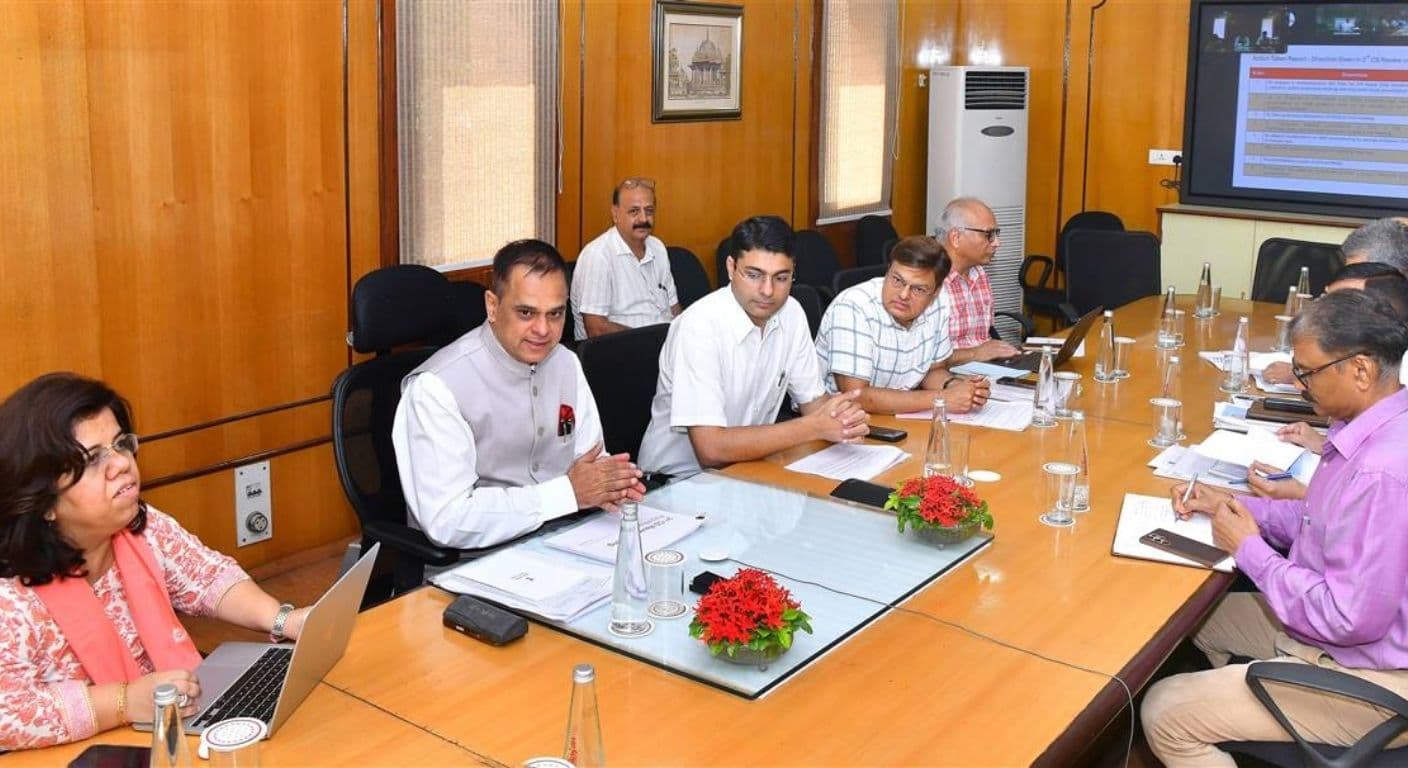

Chief Minister Bhajan Lal Sharma has used a July 14, 2026 review in Jaipur to push a more structured rollout of the VB-G RAM G scheme across Rajasthan. The meeting was not framed around one new announcement. Instead, Sharma told departments to work together on a comprehensive rural-development blueprint, prioritize durable village infrastructure works and strengthen mapping, records and transparency so implementation stays visible and accountable.
The public-interest angle is straightforward: the state wants the scheme to translate into both rural employment and more permanent improvements in village infrastructure. For Jaipur readers, the significance lies in where the coordination is happening. The capital is again serving as the command center for district action plans, inter-department alignment and the standards that will shape how the scheme is executed on the ground.
Quick Highlights
- The review was held in Jaipur on July 14, 2026, with the release issued the next morning on July 15.
- Bhajan Lal Sharma told departments to prepare a statewide rural-development blueprint and district-level action plans.
- The Chief Minister said durable, quality infrastructure works should get priority under the scheme.
- Officials were directed to use mapping, record maintenance and modern technology so implementation remains transparent.
- The release says approved works should match local needs and village priorities.
- Officials told the meeting that Rajasthan is currently first in the country in labour deployment under the scheme.
What the CM asked departments to do
Sharma's core message was that rural development should not move as disconnected departmental activity. He asked related departments to work in coordination and prepare a single, broader blueprint for Rajasthan's villages, while also building district-level action plans for implementation. That signals a shift from headline-level scheme talk toward a more monitored administrative rollout.
He also said works taken up under the scheme should strengthen basic rural infrastructure in a lasting way. In practice, that means the state wants the scheme associated with permanent, quality public assets rather than only short-term activity. The release does not list project counts or district allocations, but it is clear that permanence and quality are supposed to shape work selection.
| Focus area | Direction from the review |
|---|---|
| Rural blueprint | Departments should coordinate and prepare a comprehensive plan for village development. |
| District rollout | Every district should prepare an action plan for effective implementation. |
| Work selection | Prioritize durable and quality infrastructure works that strengthen rural basics. |
| Transparency | Use mapping, records and modern technology to improve visibility and accountability. |
| Local fit | Ensure approved works reflect local needs and rural priorities. |
| Coverage | Make sure no eligible rural family is left out of the scheme's benefits. |
Why mapping and record systems were singled out
One of the more important administrative signals in the release is the emphasis on mapping and record maintenance. Sharma said these systems, along with modern technology, should be built into implementation so transparency is preserved and social audits can work effectively. That matters because large rural works programmes often become harder to track once they move from state review rooms into district execution.
By making records and mapping part of the instructions, the state is effectively saying that monitoring quality is part of the scheme itself, not a separate afterthought. For readers, that is one of the more concrete takeaways from the meeting because it points to how the government wants progress to be documented and checked.
What happens next
The next meaningful checkpoint will be district-level execution. The release says action plans should be prepared in every district and that the scheme's benefits should reach every eligible rural family. What it does not yet provide are district targets, sanctioned work counts or timelines for specific infrastructure categories.
That means the story ahead is about whether departments convert this Jaipur review into visible local plans and durable assets in villages across Rajasthan. If that happens, the meeting will mark more than another policy review. It will represent the point where the state tried to tie rural employment, permanent infrastructure and tighter transparency standards into one coordinated rollout.