
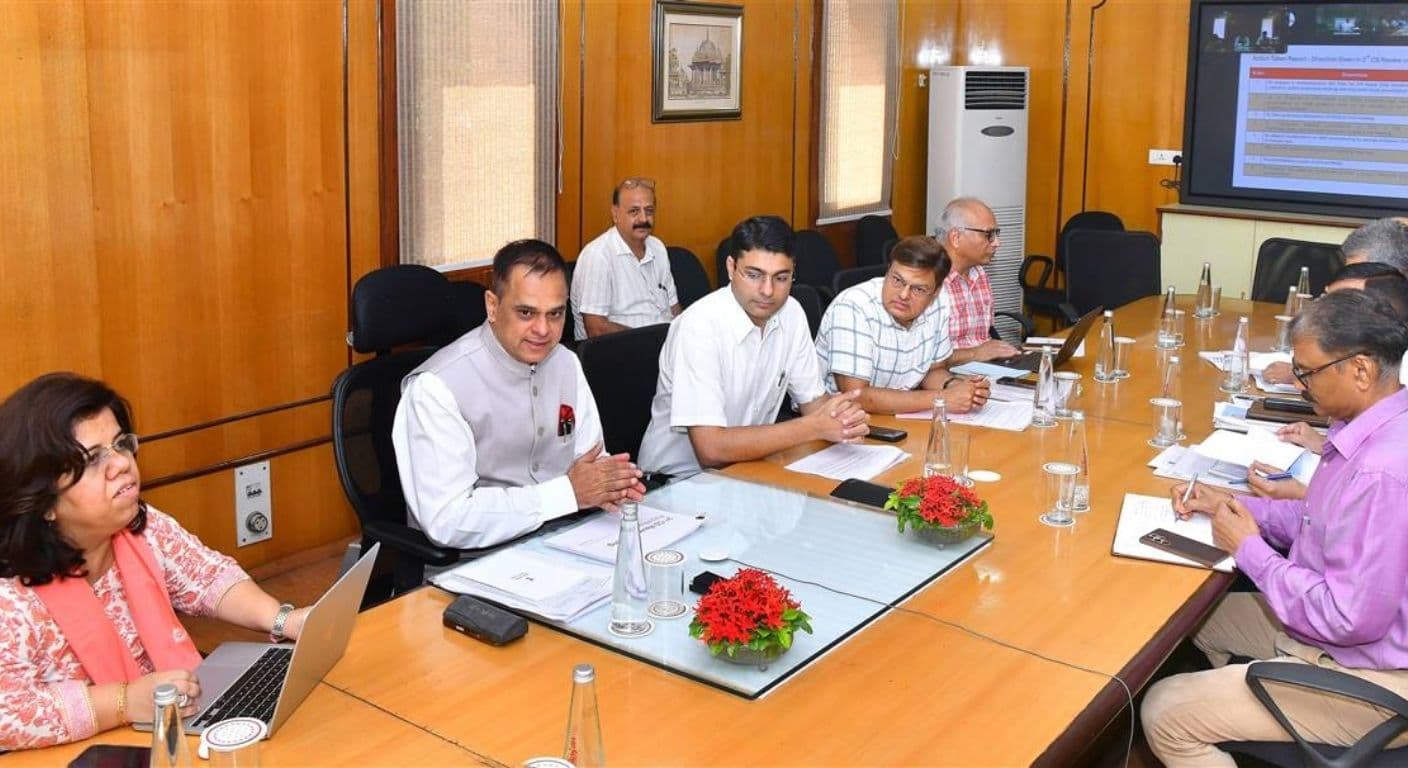
Rajasthan's latest power-sector review in Jaipur put a practical grid issue at the center of the conversation: how to store surplus solar electricity so the state buys less expensive power during peak-demand hours. At the July 13, 2026 meeting chaired by Chief Secretary V. Srinivas, officials reviewed battery energy storage pilots, DISCOM debt repricing, Green Energy Corridor Phase II works and the wider implementation push around PM Surya Ghar Muft Bijli Yojana.
The immediate public-interest takeaway is that the state is linking cleaner energy with cost control. If battery storage works as planned, Rajasthan could store more of the extra electricity produced under rooftop and other solar schemes instead of leaning as heavily on costly power purchases in peak hours. For Jaipur readers, the significance is direct: the capital remains the command center where financial, technical and rollout decisions for the wider state power system are being coordinated.
Quick Highlights
- The review was held in Jaipur on July 13, 2026 under Chief Secretary V. Srinivas.
- Battery energy storage pilots were reviewed as a way to store extra solar power and reduce peak-hour purchase costs.
- Sites for these storage projects have already been identified across circles of Jaipur, Ajmer and Jodhpur DISCOMs.
- The state said re-pricing high-interest loans from REC and PFC is already giving DISCOMs annual interest savings.
- Officials were told to speed up remaining debt repricing and complete Green Energy Corridor Phase II works in Hanumangarh and Udaipur on time.
- A broad IEC awareness campaign was ordered to expand the reach of PM Surya Ghar.
Why battery storage is the clearest hook
The review described battery storage as an important support system for electricity generated under PM Surya Ghar and other solar projects. The core argument is straightforward: if surplus energy can be stored effectively, the state can reduce its need to buy more expensive electricity during high-demand periods. That would not only help DISCOM finances but could also improve the overall economics of renewable-power integration.
This matters because Rajasthan's energy transition is no longer just about adding more solar capacity. It is increasingly about managing timing, storage and grid balance. A battery system that shifts surplus power into later demand windows can make renewable generation more useful in day-to-day supply planning rather than leaving it underused when production and demand do not line up neatly.
| Review area | What the meeting emphasized |
|---|---|
| Battery storage pilots | Use surplus solar power more effectively and reduce the need for costly peak-hour purchases. |
| Project locations | Sites have been identified in circles of Jaipur, Ajmer and Jodhpur DISCOMs. |
| DISCOM debt | Continue re-pricing high-interest REC and PFC loans to strengthen finances. |
| Transmission network | Speed up Green Energy Corridor Phase II works in Hanumangarh and Udaipur. |
| Scheme outreach | Run a wider PM Surya Ghar IEC campaign so more beneficiaries are reached. |
Why the financial side matters as much as the technical one
The meeting also made it clear that grid upgrades alone are not the whole story. Srinivas said financial strengthening of the DISCOMs remains one of the state's top priorities, and the review pointed to annual interest savings already being generated by re-pricing high-interest loans from REC and PFC. No public figure was given for the savings, but the direction was clear: reduce finance costs while modernizing the power system.
That is an important link for Jaipur readers to watch. Energy reform often sounds abstract until it shows up in the form of lower procurement pressure, stronger utility balance sheets or better network reliability. Here, the state is trying to move on both fronts at once by pairing debt cleanup with storage pilots and transmission work.
What the green corridor and PM Surya Ghar push add
The review also covered ongoing Green Energy Corridor Phase II construction in Hanumangarh and Udaipur, with directions to complete the projects within the set timeline. The release says those works will help smoother renewable-energy transmission and make Rajasthan's transmission network more modern and resilient.
At the beneficiary level, the Chief Secretary called for a stronger awareness and outreach plan under PM Surya Ghar Muft Bijli Yojana. That suggests the state sees public uptake and information gaps as part of the implementation challenge. In other words, Rajasthan is not only trying to build the energy system behind the scenes; it is also trying to get more households into the scheme pipeline.
What to watch next
The next real checkpoint is execution. The release does not give battery capacity figures, funding values for the pilots or a deadline for the identified Jaipur, Ajmer and Jodhpur storage sites. That means the story now depends on whether these pilot locations actually move into construction and operation within a visible timeline.
The same goes for the financial and transmission side. If more high-interest debt is successfully re-priced, the green corridor works stay on schedule and PM Surya Ghar outreach starts driving wider uptake, this Jaipur review could mark a meaningful step toward a more stable and flexible Rajasthan power system. If not, it will remain an important policy signal without full on-ground payoff.