
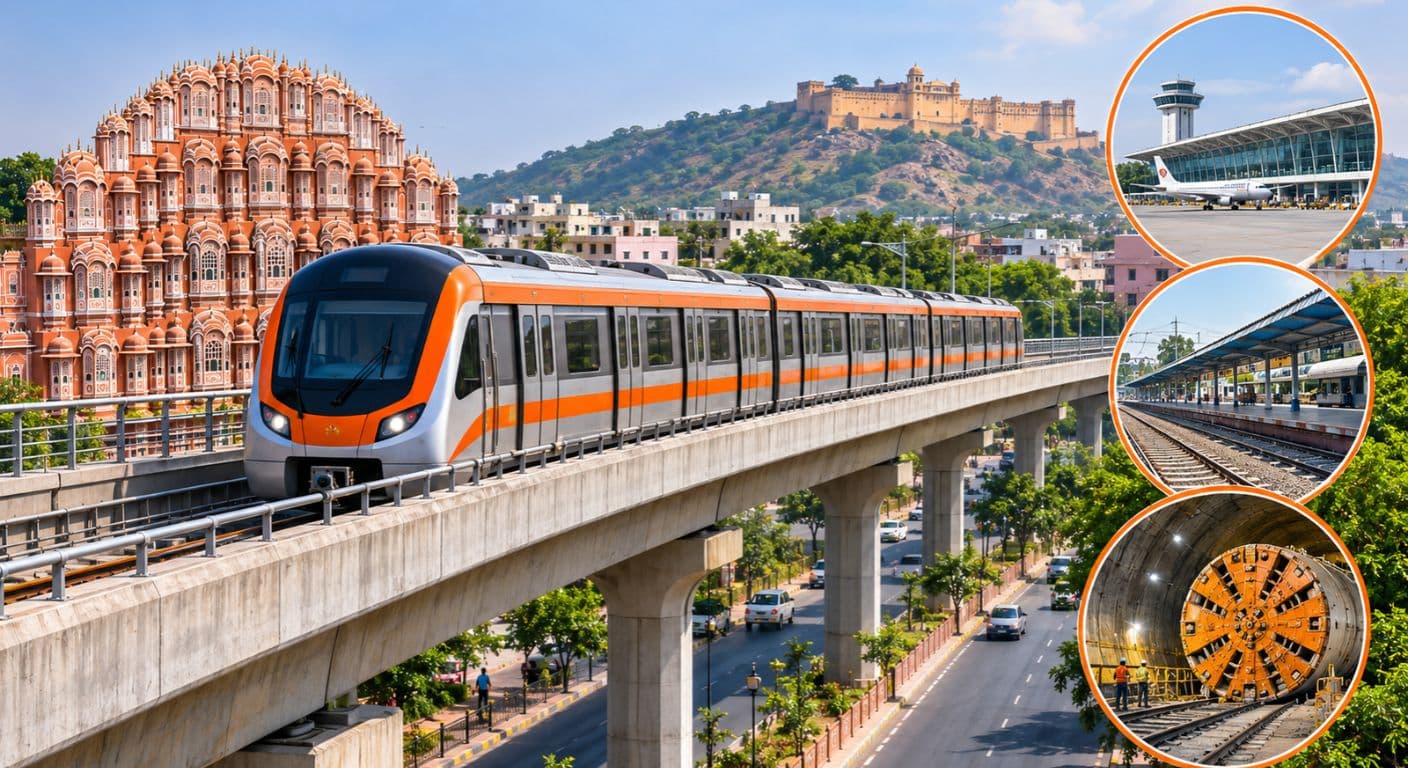
The upcoming 41-km Orange Line will connect Todi Mor to Prahladpura through 36 proposed stations, offering improved connectivity to Jaipur International Airport, railway stations, industrial areas and major residential hubs. The ₹13,037-crore project is targeted for completion by September 2031.
Jaipur is preparing for a major transformation in its public transportation network with the development of Jaipur Metro Phase-2, also known as the Orange Line. The ambitious project aims to strengthen north-south connectivity, reduce traffic congestion and make daily commuting faster and more convenient across the Pink City.
Stretching approximately 41 kilometres from Todi Mor on Sikar Road to Prahladpura on Tonk Road, the new corridor will connect several important residential, commercial, educational and industrial areas.
With an estimated investment of ₹13,037 crore, the project is among Jaipur's most significant urban transport initiatives. Its foundation stone was laid on July 4, 2026, and the corridor is scheduled for completion by September 2031.
Here are 10 important facts about Jaipur Metro Phase-2 that highlight its scale, technology and potential impact on the city's transportation system.
1. Jaipur Metro Phase-2 Moves Forward After a 15-Year Wait
The proposal for Jaipur Metro Phase-2 has been under discussion since 2011. After years of planning and administrative processes, the project received approval from the Union Cabinet in April 2026.
The approval marked an important milestone in expanding Jaipur's metro network beyond the existing east-west corridor.
2. A 41-Km Orange Line Connecting North and South Jaipur
The existing Jaipur Metro Phase-1, popularly known as the Pink Line, covers approximately 11.6 kilometres between Mansarovar and Badi Chaupar.
In comparison, the upcoming Orange Line will extend approximately 41 kilometres, making it significantly longer than the existing operational corridor.
The new route will connect Todi Mor on Sikar Road in northern Jaipur with Prahladpura on Tonk Road in the south, improving accessibility across major parts of the city.
3. A Total of 36 Metro Stations Planned
Jaipur Metro Phase-2 will feature 36 proposed stations, including:
- 34 elevated stations along major roads and urban corridors.
- 2 underground stations along the airport connectivity section.
The proposed station network is designed to serve important residential neighbourhoods, commercial centres, educational institutions and employment hubs.
4. Direct Metro Connectivity to Jaipur International Airport
One of the most significant features of Jaipur Metro Phase-2 is the proposed direct connectivity to Jaipur International Airport.
The approximately 3.13-kilometre section between Sanganer and the airport will be constructed underground.
The corridor is also planned to improve access to Gandhinagar Railway Station, offering greater convenience to passengers travelling within Jaipur and to other cities.
Airport connectivity is expected to benefit residents, tourists and business travellers by providing an additional public transport option.
5. Twin Tunnel Technology for Underground Construction
The underground section between Sanganer and Jaipur International Airport will be developed using modern Tunnel Boring Machine (TBM) technology.
The project proposes twin tunnels to accommodate metro operations in both directions.
This construction method allows underground infrastructure to be developed while limiting disruption to surface-level traffic compared with extensive open excavation.
The twin tunnel section will be one of the technically significant components of the Orange Line project.
6. Metro Connectivity to Jaipur's Major Residential and Commercial Areas
The Orange Line is planned to pass through several important locations across Jaipur, including:
- Sitapura Industrial Area
- Sanganer
- Jaipur International Airport
- Gandhinagar Railway Station
- SMS Hospital
- Rambagh Circle
- Collectorate
- Ambabari
- Vidyadhar Nagar
- Vishwakarma Industrial Area (VKI)
The expanded network is expected to improve access to workplaces, hospitals, educational institutions, industrial areas and other important destinations.
7. Construction Divided into Four Packages
To facilitate efficient implementation, Jaipur Metro Phase-2 has been divided into four construction packages.
This approach will allow different sections of the corridor to be developed simultaneously, helping streamline construction activities and support the September 2031 completion target.
The initial construction package includes approximately 10 elevated stations between Prahladpura and Pinjrapole Gaushala.
The package-based development strategy is intended to improve project coordination and ensure timely execution of the extensive metro corridor.
8. Underground Construction Tender Awarded Below Estimated Cost
The underground construction component, identified as Package-2, has been awarded at a contract value of approximately ₹921.63 crore.
This amount is around ₹238.63 crore lower than the estimated tender cost, representing a significant reduction in the contracted expenditure.
The lower tender value is expected to contribute to cost efficiency in the implementation of the project.
9. Interchange Connectivity with the Existing Pink Line
Jaipur Metro Phase-2 is also expected to improve connectivity with the existing Pink Line, which operates between Mansarovar and Badi Chaupar.
Planned interchange arrangements and feeder transport services will help passengers travel between the two metro corridors.
This integration will be important in creating a more connected public transportation network, allowing commuters to access a wider range of destinations without relying entirely on private vehicles.
10. Expected Relief from Traffic Congestion on Sikar Road and Tonk Road
Traffic congestion remains a major challenge on Jaipur's busy Sikar Road and Tonk Road corridors, particularly during peak commuting hours.
The Orange Line will provide an alternative transportation option for students, office employees, industrial workers, business owners and other daily commuters.
By encouraging greater use of public transport, the project is expected to reduce dependence on private vehicles, ease traffic pressure and contribute to lower vehicular emissions.
However, the actual impact on congestion and pollution will depend on passenger adoption, service frequency and integration with other transport systems.
Jaipur Metro Phase-2: Project Overview
| Project Details | Information |
|---|---|
| Metro corridor | Orange Line (Phase-2) |
| Total length | Approximately 41 km |
| Route | Todi Mor to Prahladpura |
| Total proposed stations | 36 |
| Elevated stations | 34 |
| Underground stations | 2 |
| Estimated project cost | ₹13,037 crore |
| Foundation stone laid | July 4, 2026 |
| Target completion | September 2031 |
| Key connectivity | Airport, railway station, industrial and residential areas |
A Major Step Towards Jaipur's Future Urban Mobility
Jaipur Metro Phase-2 represents a major investment in the city's future transportation infrastructure. With a longer metro corridor, proposed airport connectivity, modern underground construction technology and improved access to important urban centres, the Orange Line has the potential to transform commuting across Jaipur.
Once operational, the corridor is expected to strengthen public transport accessibility, support sustainable urban development and offer residents a more convenient alternative to road-based travel.
The Jaipur Metro Orange Line could become a defining component of the Pink City's expanding public transportation network, connecting northern and southern Jaipur through a modern mass transit system.