
Jaipur's next big public-transport expansion has moved a major step forward after the central cabinet cleared Jaipur Metro Phase-2. The project is planned as a 41 km north-south corridor from Prahladpura to Todi Mod, giving the city a much larger metro footprint than the existing east-west line now in service.
For Jaipur, the importance is immediate and practical. The new corridor is intended to connect major industrial, residential and high-traffic zones including Sitapura Industrial Area, Jaipur Airport, Tonk Road, SMS Hospital and Stadium, Ambabari, Vidhyadhar Nagar and VKIA. If delivered on schedule, it could reshape how commuters move across the city while also reducing traffic pressure on some of Jaipur's busiest corridors.
Quick Highlights
- Jaipur Metro Phase-2 has been cleared as a 41 km north-south line.
- The new corridor is planned with 36 stations.
- The project cost is stated at more than Rs 13,037 crore.
- The line will run from Prahladpura to Todi Mod.
- The route is meant to link Sitapura, the airport area, Tonk Road, SMS Hospital and Stadium, Ambabari, Vidhyadhar Nagar and VKIA.
- Underground stations are planned in the airport area.
What the new Jaipur corridor covers
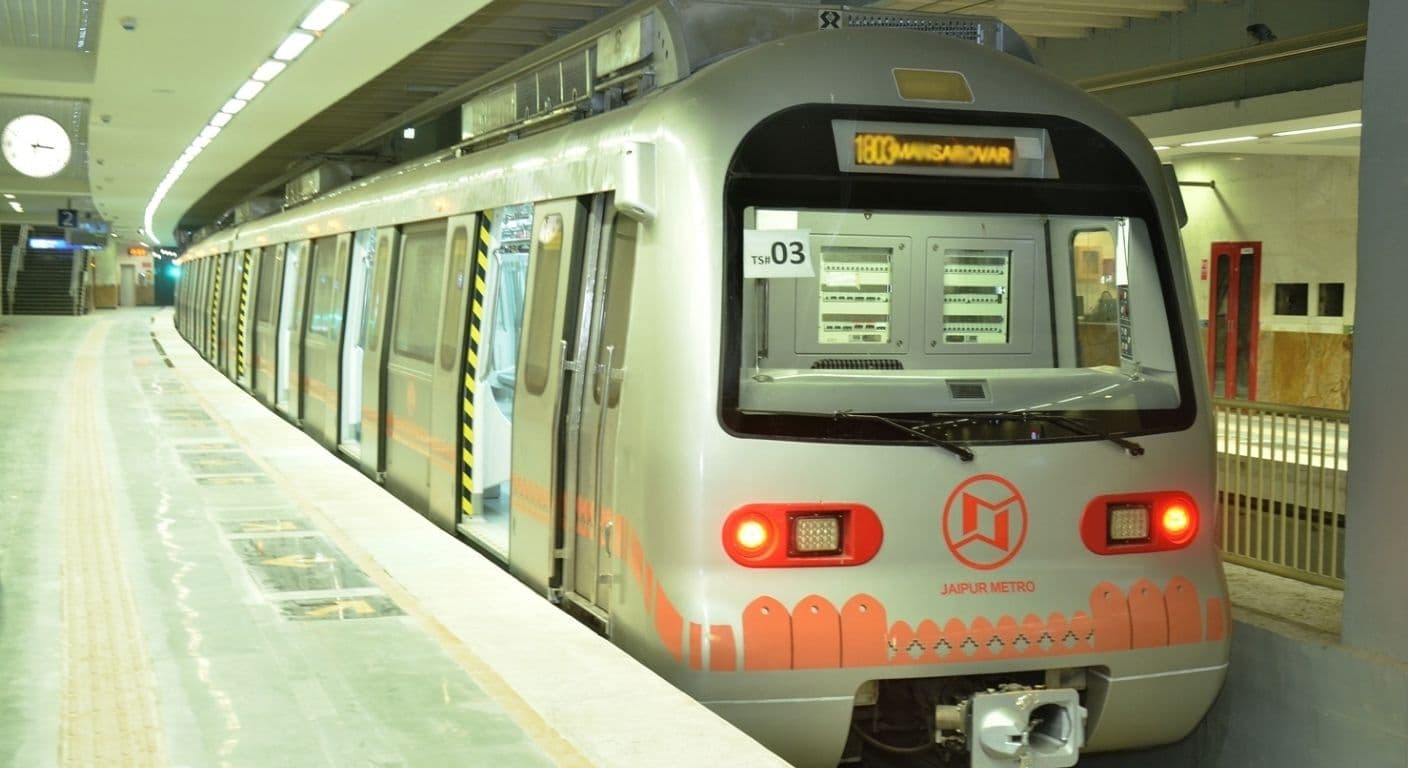
The proposed line is designed to add a full north-south spine to Jaipur's metro map. That matters because the city's current metro service under Phase-1 runs on the 11.64 km east-west corridor from Mansarovar to Badi Chaupar, with 11 stations. Phase-2 would expand the network into parts of the city that combine offices, industrial activity, institutional zones, residential growth and airport-linked movement.
From a commuter point of view, the strongest promise is connectivity between areas that generate daily traffic but are not all efficiently linked by high-capacity public transport today. A corridor spanning Sitapura on one side and VKIA on the other could ease longer cross-city trips, especially if station integration and feeder links are handled well once execution begins.
| Jaipur Metro Phase-2 metric | Figure |
|---|---|
| Corridor length | 41 km |
| Planned stations | 36 |
| Project cost | More than Rs 13,037 crore |
| Route | Prahladpura to Todi Mod |
| Existing Jaipur Metro line | 11.64 km with 11 stations |
| Implementation agency | Rajasthan Metro Rail Corporation Limited |
Why this approval matters for Jaipur
The scale alone makes this one of the city's most significant infrastructure approvals in recent years. A 36-station extension can do more than add track length. It can change how people choose housing, how office and industrial districts connect to labour pools, and how quickly passengers reach major destinations such as the airport, hospital zone and high-density road corridors.
The release also says the airport stretch will include underground stations, an important detail because it suggests the corridor is being planned with more complex urban integration rather than as a simple surface extension. The project will be implemented by Rajasthan Metro Rail Corporation Limited, described as a 50:50 joint venture between the Centre and the Rajasthan government, which gives the plan a clearer institutional route for execution.
Still, approvals are only the first step. The real test for Jaipur will be delivery timelines, station access planning, multimodal integration and whether the final system makes daily travel simpler enough to pull commuters away from private vehicles. If those pieces come together, Phase-2 could become one of the most consequential mobility upgrades the city has seen.
The refinery decision in the same approval round
The same set of approvals also cleared the revised cost of the HPCL Rajasthan Refinery project at Pachpadra at Rs 79,459 crore. While that is not a Jaipur-specific transport project, it remains relevant in the broader Rajasthan development picture because it ties into industrial growth, energy capacity and employment.
The release says the refinery project has already created direct and indirect job opportunities for more than 25,000 young people. For Jaipur readers, that wider context matters because large state projects rarely move in isolation. A big metro approval inside the capital and a major refinery-cost clearance in the same decision cycle signal a broader push around infrastructure, industrial capacity and long-term economic positioning across Rajasthan.