
Rajasthan has outlined a fresh support package for pottery workers and related artisan communities, with a new Pottery Centre of Excellence, free equipment support and wider welfare measures placed on the table at a meeting in Jaipur. The update is aimed at workers linked to mati kala, with the state framing the sector as both a livelihood base and a cultural craft tradition worth modern support.
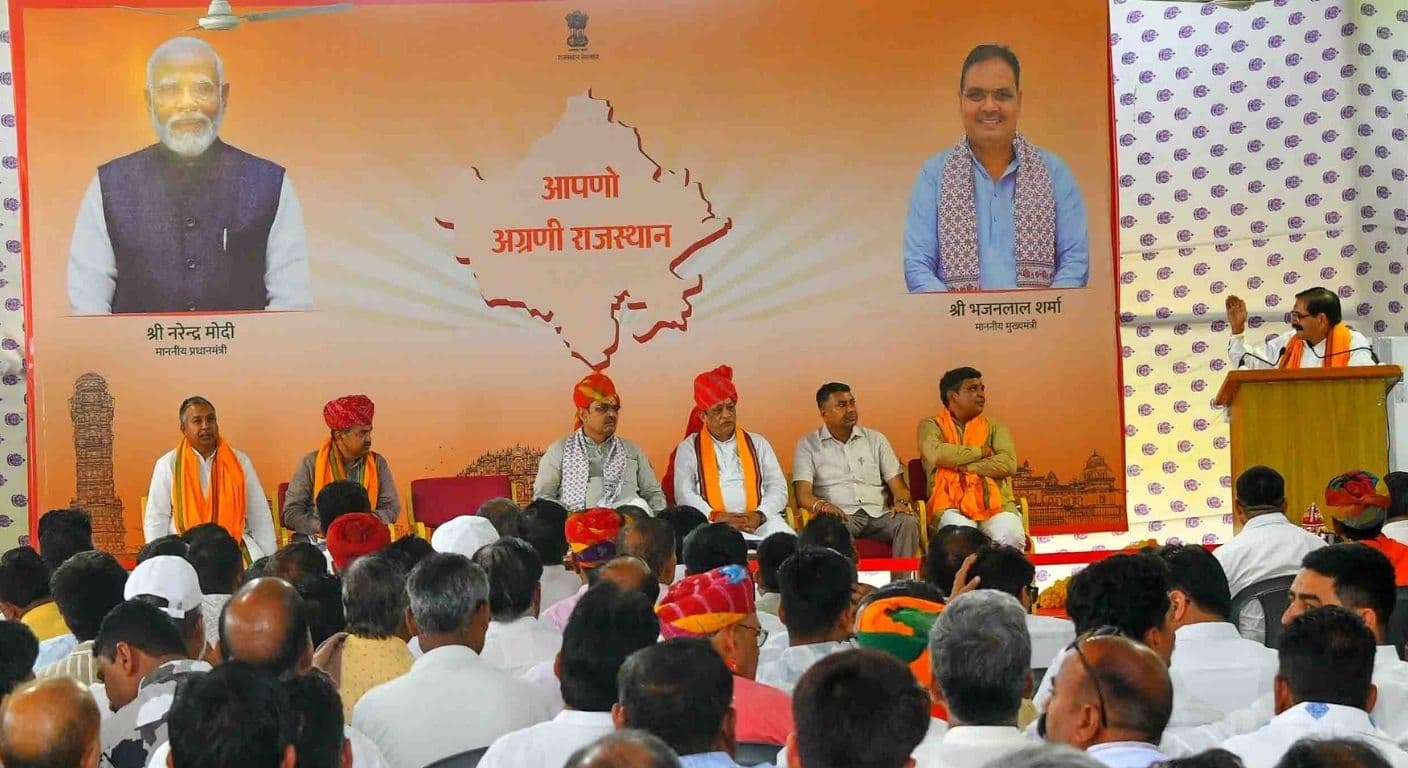
For Jaipur readers, the significance lies in where the push is being coordinated and what it includes. The announcements were discussed at the chief minister's residence in Jaipur, and they go beyond symbolic recognition by linking the pottery sector to training, social security, student support and basic production tools.
Quick Highlights
- Rajasthan says it will establish a Pottery Centre of Excellence for workers linked to clay craft.
- The state says 1,350 pottery workers have been given free sets of electric wheels and clay-kneading machines through the pottery board.
- A Rs 9 crore approval has been issued for a Shilpgram in Dungarpur.
- Under PM Vishwakarma, more than 2 lakh beneficiaries had received training by 2025 and more than 53,000 had received loans, according to the briefing.
- The Mukhyamantri Vishwakarma Pension Yojana provides for a Rs 3,000 monthly pension after the age of 60 for workers such as labourers, street vendors and folk artists.
What the state is promising for pottery workers
The strongest sector-specific announcement is the proposed Centre of Excellence for pottery art and related workers. If implemented well, that could become the main institutional anchor for skill development, product improvement and more modern support for a traditional craft sector that often struggles with market pressure and changing consumer habits.
The equipment support is also more concrete than a policy slogan. Officials said the pottery board has already provided 1,350 workers with free sets of electric wheels and clay-mixing machines. That matters because better tools can directly affect productivity, finishing quality and the viability of self-employment in craft-based work.
| Support measure | What was outlined |
|---|---|
| Pottery Centre of Excellence | Planned as a sector-focused support institution |
| Free equipment support | 1,350 workers given electric wheel and clay-mixing machine sets |
| Shilpgram project | Rs 9 crore approved for Dungarpur |
| PM Vishwakarma training | More than 2 lakh beneficiaries trained by 2025 |
| PM Vishwakarma credit | More than 53,000 beneficiaries given loans |
| Vishwakarma pension | Rs 3,000 per month after age 60 |
How the package goes beyond one craft community
The briefing linked pottery-sector support to a broader artisan and worker welfare framework. Under PM Vishwakarma, the state said carpenters, sculptors, potters, masons and other workers across 18 trades are eligible for loans at a 5 percent interest rate. That places pottery workers inside a larger skilling and credit ecosystem rather than treating them as an isolated group.
The welfare side also extends to education and youth support. The state said monthly support for students staying in hostels and residential schools has been raised to Rs 3,250 per student, while a new system now allows SC, ST and OBC students to receive caste certificates alongside their birth certificates after passing Class 8. Officials also cited wider youth-skilling measures, including about 3.5 lakh youth given skill training, internships for around 2 lakh youth under Mukhyamantri Yuva Sambal Yojana and smart classrooms in 144 government ITIs.
Why this matters now
Traditional craft sectors often survive on skill but struggle on tools, credit, market access and intergenerational continuity. That is why this package matters more if it moves from announcements into actual institutional delivery. A Centre of Excellence, production tools and linked pension and training support can help make craft work more sustainable for younger workers who might otherwise leave the trade altogether.
The next thing to watch is execution: whether the Centre of Excellence is set up on time, whether more workers receive usable equipment, and whether the broader training and pension measures translate into more secure livelihoods for pottery artisans and other traditional workers across Rajasthan.