
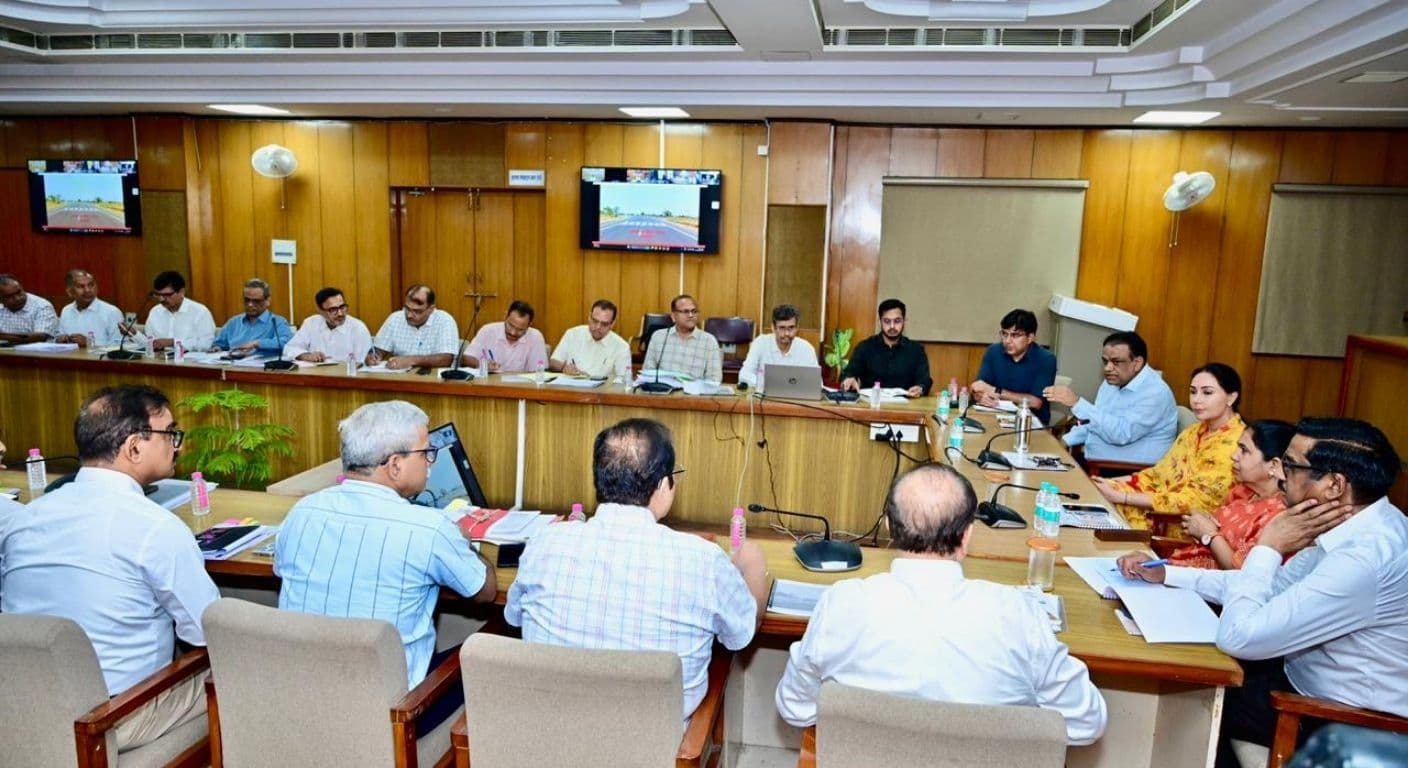
A PWD review in Jaipur has put the spotlight on a problem that often slows public works long before construction starts: weak early cost estimates and repeated design changes. Deputy Chief Minister Diya Kumari told officials that project proposals should carry a more accurate assessment of cost and alignment at the initial stage so budget announcements do not later run into avoidable delays.
For Jaipur readers, the story matters because the review was held in the capital and deals with how major road and bridge projects across Rajasthan are being managed from the top. The message was clear: if projects are to deliver public benefit on time, the state wants fewer revisions, faster execution and better-quality planning before files move forward.
Quick Highlights
- Diya Kumari asked officials to prepare more accurate cost estimates at the proposal stage.
- She also raised concern over repeated alignment changes and related cost escalation in some projects.
- The review covered delayed works including Bayana Bypass, Baran-Atru ROB, Jaitpura-Jaisinghpura, Bhadra Bypass, Nasirabad-Sarwar-Kekri-Deoli road, the Mej river high-level bridge and Salumbar Bypass.
- Officials were told to speed up work while maintaining quality.
- The review also covered projects linked to NH, NHAI, CRIF and RSRDC.
What Jaipur's review meeting focused on
The review was held at Nirman Bhawan in Jaipur and centered on the basic planning discipline behind public works delivery. Kumari said that when budget proposals are sent upward, officials should already have a close estimate of likely project cost and route alignment instead of leaving major revisions for later stages.
That matters because alignment changes and weak initial costing can slow approvals, inflate budgets and push completion further out. In effect, the state is trying to shift more technical scrutiny to the front of the process rather than allowing projects to be repeatedly corrected after public announcements are made.
| Project or issue reviewed | Direction from the meeting |
|---|---|
| Project costing at proposal stage | Prepare a more accurate estimate early to avoid later delay and escalation |
| Alignment changes | Minimise repeated route changes through closer initial scrutiny |
| Bayana Bypass, Bhadra Bypass, Salumbar Bypass | Review delay causes and move work forward faster |
| Baran-Atru ROB and Mej river high-level bridge | Track reasons for delay and accelerate completion |
| Nasirabad-Sarwar-Kekri-Deoli road and Jaitpura-Jaisinghpura | Push progress while maintaining construction quality |
Why the cost-and-alignment warning matters
The most significant part of the meeting may be the warning itself. Public works delays are often blamed on contractors or site conditions, but this review suggests the state is also looking inward at how departments define projects in the first place. If route design keeps changing or cost estimates are not realistic at the time of proposal, execution problems become far more likely later.
That makes this more than a routine progress meeting. It is also a signal that the government wants more disciplined pre-construction planning, especially for projects that sit under budget announcements and carry public expectations of visible, time-bound delivery.
What happens next
Officials were told to speed up construction while maintaining quality standards, and the review also extended across the wider mix of road and infrastructure programmes handled through NH, NHAI, CRIF and RSRDC. The immediate next step is whether the projects specifically flagged in Jaipur begin to show faster movement on the ground.
For the public, the real test will be delivery rather than directives. If better cost estimates and fewer alignment revisions start translating into quicker completion of bypasses, bridges and road links, the Jaipur review will matter as a management intervention rather than just another meeting note.