
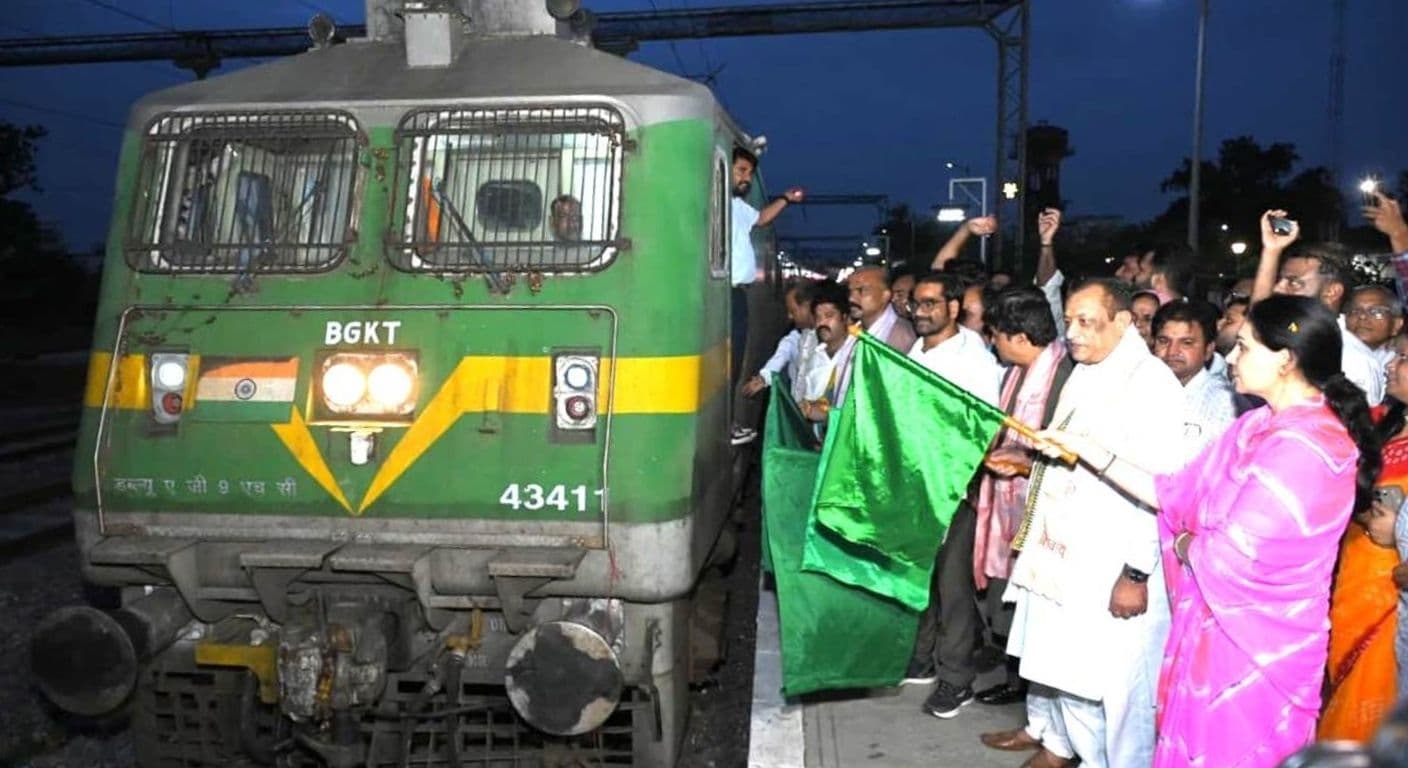
Jaipur flagged off its second special senior citizen pilgrimage train under the 2026 state travel scheme on August 4, 2026, sending 970 pilgrims from Dhehar Ka Balaji railway station toward Rameswaram and Madurai. The departure was marked by Deputy Chief Minister Diya Kumari and Devasthan Minister Joraram Kumawat, while the bigger takeaway for local readers is that the city is now serving as a major dispatch point for a large welfare-linked pilgrimage programme.
The scale of the operation goes beyond a ceremonial flag-off. Officials said the pilgrimage group is travelling with a support contingent that includes supervisory and medical personnel, which matters because long-distance religious travel for senior citizens depends as much on managed logistics and health support as it does on the train itself.
Quick Highlights
- The second special pilgrimage train left Dhehar Ka Balaji railway station in Jaipur on August 4, 2026.
- 970 senior citizens are on the pilgrimage circuit to Rameswaram and Madurai.
- Around 30 officials and staff, including support and medical personnel, are travelling with the group.
- The total onboard count works out to about 1,000 travellers.
- The release describes the journey as an eight-day itinerary.
Where the Jaipur-division pilgrims are coming from
The district-wise split named in the release shows that this is a large Jaipur-region dispatch rather than a small symbolic batch. Dausa accounts for the biggest share of passengers, followed by Khairthal-Tijara and Jaipur. That mix gives the train a wider regional footprint while still keeping Jaipur at the centre of the departure and coordination effort.
| District named in the release | Senior citizens on board |
|---|---|
| Dausa | 528 |
| Khairthal-Tijara | 316 |
| Jaipur | 126 |
Officials also said 30 support personnel are accompanying the group. That includes supervisory and medical staffing, which is a practical detail worth tracking because it directly affects safety, comfort and response capacity during a multi-day journey.
How the pilgrimage itinerary is expected to run
Officials said the train is scheduled to reach Rameswaram on August 6, where pilgrims will visit the temple and get a one-day halt. The next leg is planned for Madurai, where the group is expected to visit the Meenakshi Temple and complete religious rituals before the train turns back toward Jaipur later in the itinerary.
That schedule matters because it shows the trip is being organised as a structured temple circuit rather than a single-stop visit. The combination of rail travel, halts, medical oversight and destination planning suggests the state wants the scheme to feel managed and dependable for older passengers who may not otherwise take on such a long pilgrimage.
Why this matters for Jaipur
For Jaipur, the story is partly about mobility and partly about public welfare. The city is not just hosting a departure ceremony; it is acting as a coordinating hub for a large senior-citizen travel programme that blends religious access with state-backed transport support. If the current trip runs smoothly, that will strengthen confidence in future departures under the same scheme.
The visible scenes at the station, including garlanding and tilak for the travellers, also underline how strongly these departures are being framed around dignity and care for older residents. In practical terms, though, the real test will be execution: safe travel, timely halts, good on-trip support and a comfortable return after the pilgrimage circuit is complete.