
Jaipur's proposed Rajasthan Institute of Medical Sciences (RIMS) is moving into a more active planning phase, with the state government pushing the RUHS upgrade in mission mode. At a high-level review in Jaipur, officials were asked to move ahead in a phased and time-bound manner on staffing, infrastructure, specialist services and digital systems.
For Jaipur readers, this matters because the plan is not being pitched as a routine hospital expansion. Officials are positioning RUHS as the base for a far more advanced institute that could eventually strengthen super-speciality care, support postgraduate medical education and reduce pressure on SMS Hospital and other major facilities in the city.
Quick Highlights
- RUHS is being developed as the base for RIMS in Jaipur.
- The health department has been told to complete project work in a phased and time-bound way.
- A three-specialist-doctor committee is to be formed to guide faster human-resource expansion.
- Priority areas include modern medical equipment, digital health systems and broader specialist services.
- Officials want the institute to evolve into a postgraduate and quaternary referral centre with advanced research capacity.
What the review meeting focused on
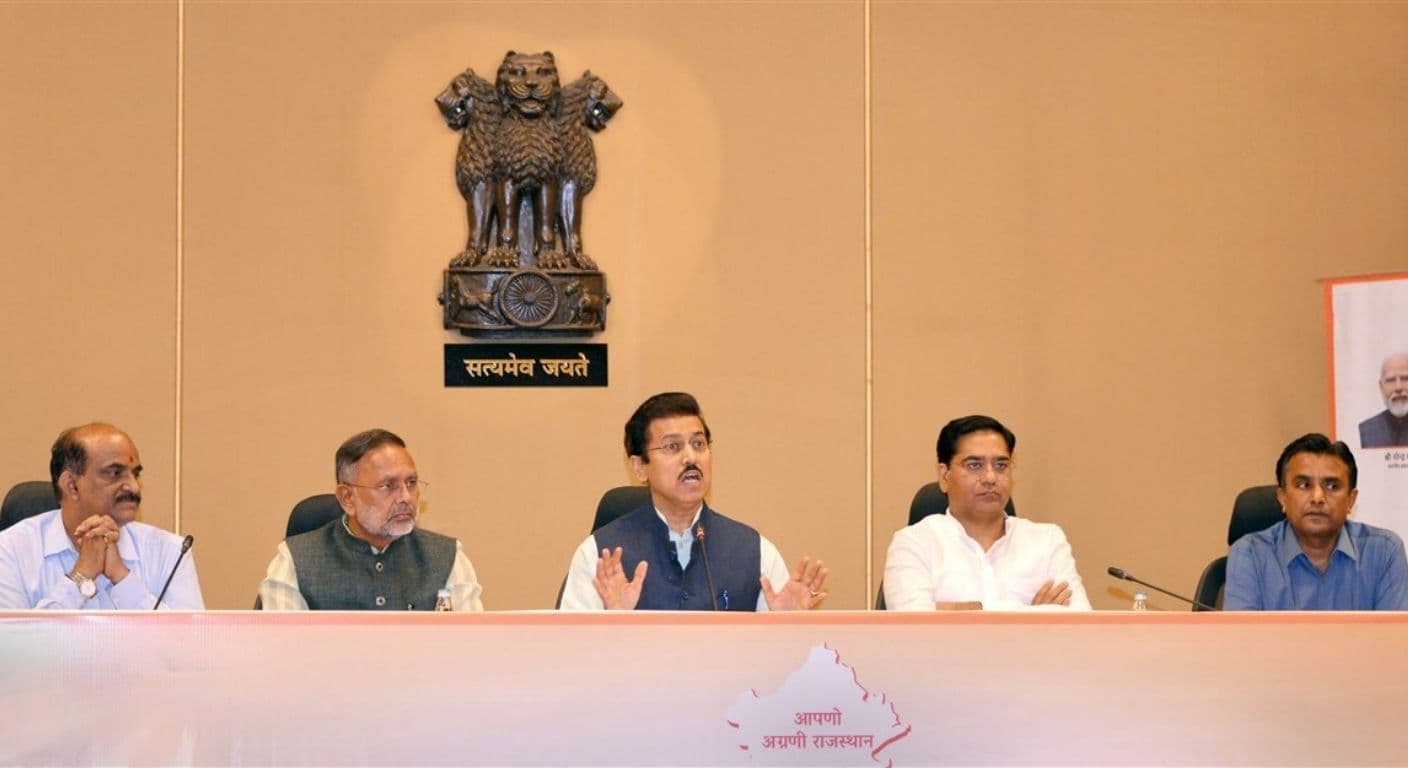
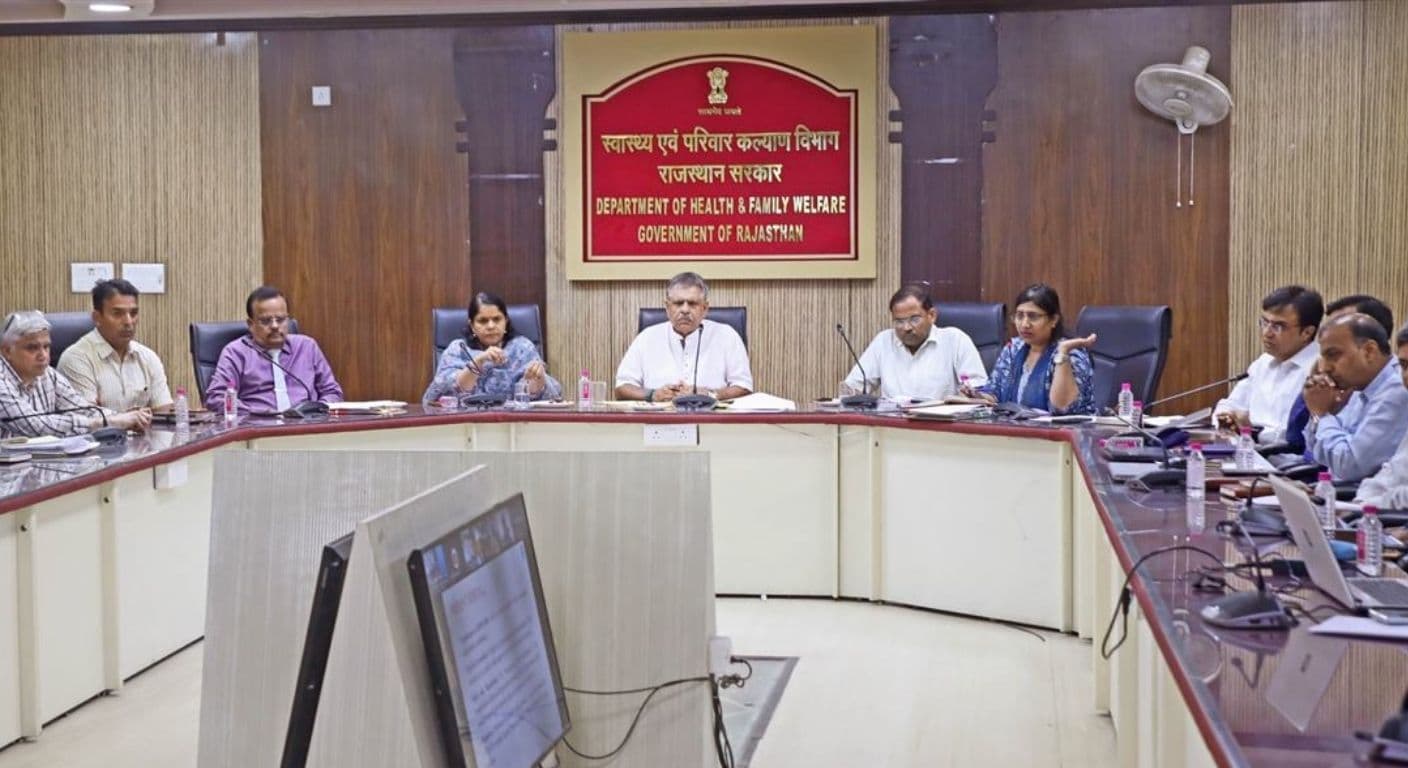
The review meeting, chaired by medical and health minister Gajendra Singh Khimsar, centered on how to turn the RIMS concept into an operational healthcare institution rather than just a budget announcement. Officials discussed the administrative, technical and legal side of the project, while also pushing for quicker expansion of core hospital capacity at RUHS.
One of the clearest operational decisions was the push to strengthen human resources. Officials said staffing at the RUHS hospital should be increased quickly, and a three-member expert committee will be created to guide that process. At the same time, the project was linked to broader goals such as easier patient access, better quality of care and a more technologically capable hospital system.
| Focus area | What is being planned |
|---|---|
| Institutional base | RUHS is being upgraded to serve as the future base for RIMS. |
| Human resources | A three-specialist-doctor committee is to help guide quicker staffing expansion. |
| Clinical capacity | More super-speciality services and advanced diagnostics are being prioritised. |
| Technology | Officials cited digital health systems, AI-based features and robotic technologies as part of the long-term vision. |
| Institutional role | The institute is being positioned as a postgraduate and quaternary referral medical centre. |
Why the RUHS upgrade matters in Jaipur
The local significance is easier to see when placed against Jaipur's current hospital load. Officials said RUHS has already added several super-speciality services and is beginning more advanced diagnostic capabilities, which has helped drive up both OPD and IPD patient numbers. That suggests demand for higher-end public-sector care in the city is already rising.
If the RIMS plan is executed well, Jaipur could gain a stronger second layer of advanced government medical care beyond its existing flagship institutions. That would matter not only for city residents but also for patients referred in from elsewhere in Rajasthan, especially if more complex cases can be absorbed without concentrating nearly all tertiary-care pressure on a few hospitals.
What officials want RIMS to become
The long-term ambition is larger than a hospital modernisation project. Officials described RIMS as an autonomous, high-end super-speciality institute that could combine medical services, research and postgraduate education in one framework. They also said the planned institute is being envisioned on the lines of AIIMS Delhi, with a stronger role in advanced clinical care and research.
That does not mean Jaipur gets a finished world-class institute overnight. What this update shows is that the government has moved into the difficult middle stage: staffing design, legal structure, technical planning and service expansion. For now, the most important sign is that RUHS is no longer being discussed only as an existing university-linked hospital, but as the proposed foundation for a much bigger medical-services and referral network inside Jaipur.