
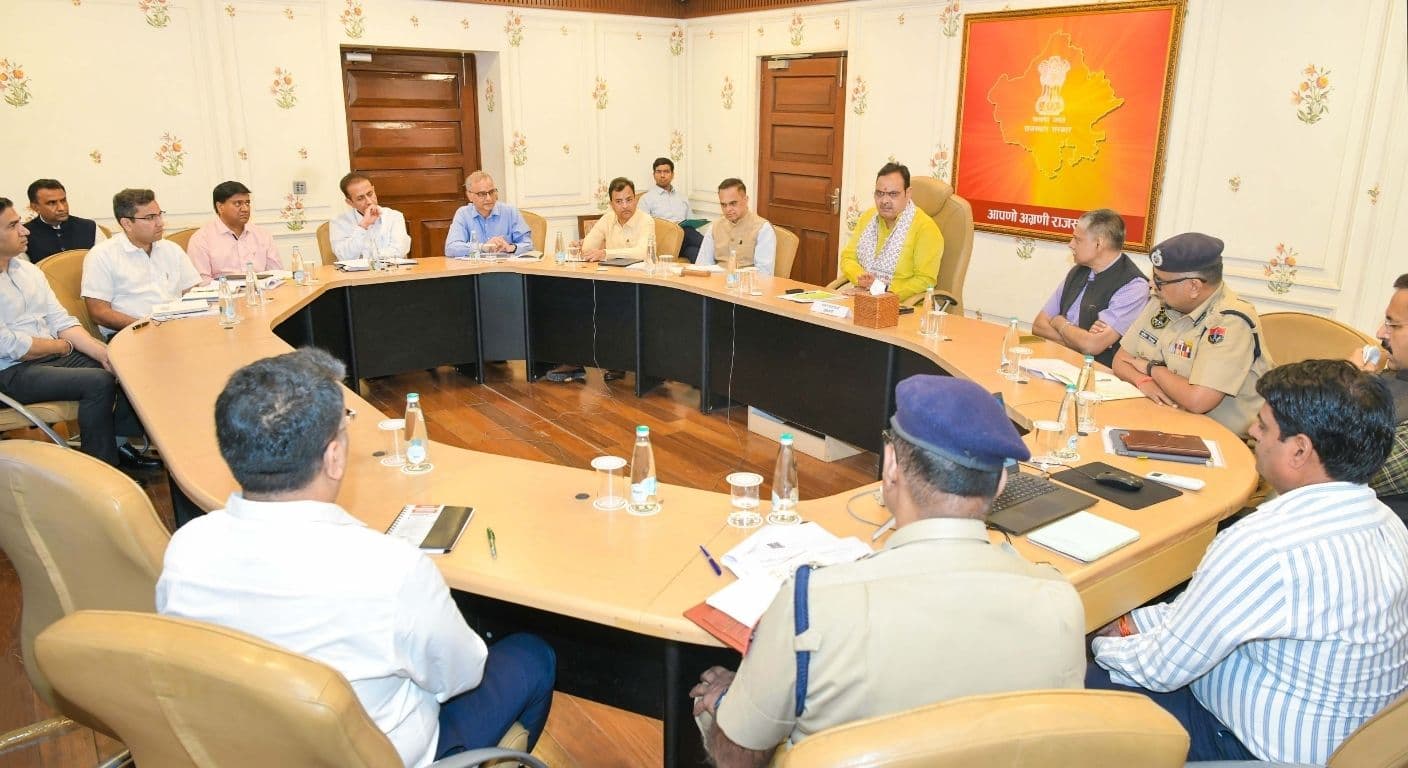
Jaipur's traffic-improvement drive is being pushed onto a wider city-management footing, with plans for a new integrated command centre for real-time traffic control and fresh pressure on agencies to speed up major road and railway-overbridge works. The directions were issued during a high-level review focused on easing congestion and making city travel safer and more predictable.
For Jaipur residents, the significance is not just one project but the combination of measures now being grouped together: faster completion of ROBs and elevated roads, new traffic-flow interventions on busy corridors, tighter parking management and closer coordination between JDA, the transport department, traffic police and the municipal corporation.
Quick Highlights
- A new integrated command centre has been proposed for real-time traffic management in Jaipur.
- Priority works include the CBI Phatak, Saligrampura Phatak and Civil Lines Phatak ROBs.
- The Gopalpura and Sanganer elevated roads have been asked to move faster.
- An effective traffic-management plan has been sought for JLN Marg.
- Mahal Road, Sikar Road and New Sanganer Road have been targeted for double U-turn planning to improve flow.
- Irregular median openings are to be closed and parking operations are to be brought under tighter control.
What Jaipur has been asked to accelerate now
The most immediate part of the push is around infrastructure already under way. Officials were directed to speed up work on the CBI Phatak, Saligrampura Phatak and Civil Lines Phatak railway overbridges, along with the Gopalpura and Sanganer elevated roads. The emphasis was not only on pace but also on finishing these works with full quality control.
That matters because these are the kinds of projects commuters feel every day. Delays in overbridges and elevated-road construction usually spill into long diversions, bottlenecks and inconsistent journey times. A push to complete them faster could have a more visible effect on city movement than smaller piecemeal fixes alone.
| Traffic action area | What has been prioritised |
|---|---|
| Real-time city management | Plan a new integrated command centre with JDA, transport, traffic police and civic coordination |
| Immediate build-out works | CBI Phatak, Saligrampura Phatak and Civil Lines Phatak ROBs; Gopalpura and Sanganer elevated roads |
| Route-specific planning | Prepare a stronger traffic-management plan for JLN Marg |
| DPR priorities | Aranya Bhawan-Jagatpura elevated road and Dravyavati elevated corridor |
| Fresh feasibility review | Purani Chungi underpass on Ajmer Road and a proposed ROB between Ram Mandir, Railway Yard and Railway Circle |
| Signal-flow changes | Double U-turn planning on Mahal Road, Sikar Road and New Sanganer Road; wider use of free-left turns |
How the traffic-flow plan could affect daily travel
Some of the most practical changes are aimed at how vehicles move through major corridors before larger construction works are finished. The plan calls for work on double U-turn systems to help move parts of Mahal Road, Sikar Road and New Sanganer Road toward a more signal-free setup. It also calls for the free-left-turn arrangement at Rambagh Circle to be extended to other busy junctions where it can reduce waiting time and queue build-up.
The wider traffic-cleanup side is just as important. Officials were told to close irregular median openings, make designated U-turn points functional, prioritise lane-setting and roundabout works at identified junctions, and improve pedestrian crossing systems. School-zone safety measures such as clearer signboards, speed control and zebra crossings were also pushed up the priority list.
Why parking and enforcement are part of the same story
Jaipur's congestion problem is not only about road width or flyovers. Poorly managed parking, weak lane discipline and inconsistent enforcement also amplify pressure on already busy corridors. That is why the review linked traffic engineering with parking management, asking for parking locations across the city to be operated in an orderly and rules-based manner.
The push also includes public-awareness measures. Traffic police were asked to work with voluntary organisations, use FM-based messaging and send short rule summaries along with challans. Officials also presented ongoing tools such as the VOC mobile app, ITMS systems and drone-based traffic operations. If these pieces are coordinated well rather than run in silos, Jaipur could get a more responsive traffic-management system instead of only a longer list of isolated projects.