
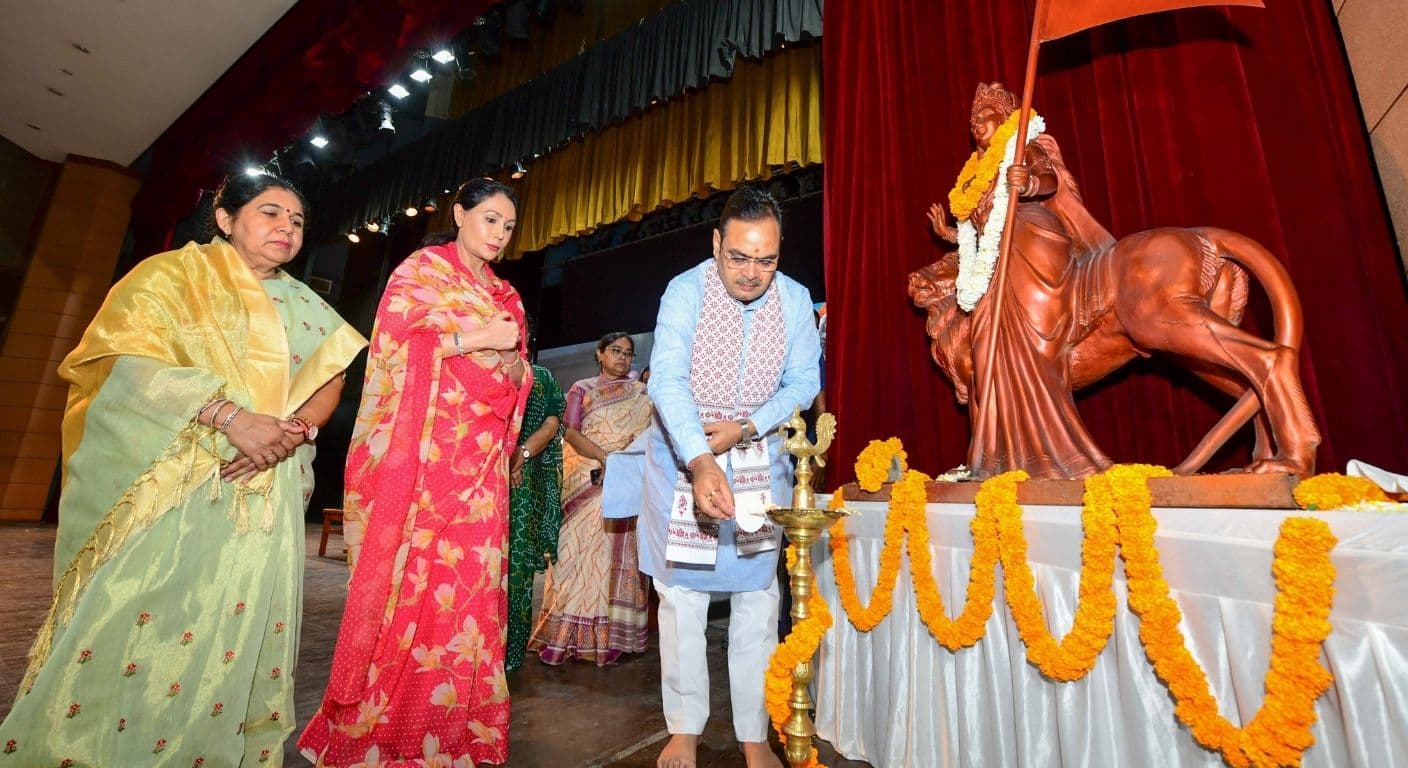
A conference at Birla Auditorium in Jaipur turned the spotlight on two intertwined themes: a larger role for women in elected bodies and a wider state push around welfare, safety and economic support. The sharpest policy takeaway was the continued emphasis on the Nari Shakti Vandan framework, which is meant to bring 33% reservation for women in Parliament and state assemblies.
But the Jaipur conference did not frame representation as a standalone headline. It bundled that message with a long list of programme figures, including more than 20 lakh women trained, over 16 lakh Lakhpati Didis, and a safety network that now includes 600 Kalika patrolling units and 65 anti-Romeo squads. That made the event as much about administrative scale as political symbolism.
Quick Highlights
- The Jaipur conference highlighted the 33% reservation framework for women in Parliament and assemblies.
- Rajasthan said more than 20 lakh women have received training, with over 16 lakh counted under the Lakhpati Didi initiative.
- The state said more than 6.5 lakh girls have benefited under the Lado Protsahan scheme.
- Support under PM Matru Vandana was described as increasing from Rs 5,000 to Rs 6,500.
- The government cited 4 lakh women covered under the Maa Voucher sonography scheme.
- Officials highlighted 600 Kalika units and 65 anti-Romeo squads as key parts of the women's safety push.
The numbers highlighted at the Jaipur conference
The event used a cluster of scheme figures to argue that the representation message is being backed by delivery on the ground. Those figures ranged from girls' welfare and maternity support to public-safety infrastructure and cooking-gas subsidy support.
- 33% reservation was presented as the central representation goal for women in legislatures.
- More than 20 lakh women were said to have received training, with over 16 lakh counted under the Lakhpati Didi initiative.
- More than 6.5 lakh girls were said to have benefited under the Lado Protsahan scheme.
- Support under PM Matru Vandana was described as rising from Rs 5,000 to Rs 6,500.
- The Maa Voucher scheme was described as reaching more than 4 lakh women.
- The safety push was linked to 600 Kalika patrolling units and 65 anti-Romeo squads.
- Officials also cited more than Rs 1,000 crore in cooking-gas subsidy under the state scheme.
Taken together, the figures were meant to show that the Jaipur event was not only about political messaging. It was also designed to present a measurable welfare and safety record alongside the representation pitch.
Why the Jaipur event matters
For Jaipur readers, the significance lies in where this message was delivered. When the state uses a capital-city platform to combine a constitutional representation issue with welfare and safety metrics, it signals that the story is not only symbolic. It is also about how empowerment is being measured, sold and eventually judged.
That matters because the hardest part comes after the speech. A reservation framework can reshape representation over time, but the credibility of the broader push depends on whether scheme benefits actually reach women across districts, whether safety claims hold up in public data, and whether training translates into durable incomes instead of one-time headline numbers.
What else was tied to the message
The event also stretched beyond women's policy alone. It linked the empowerment theme to a wider jobs and entrepreneurship agenda, with the government saying it is working toward 4 lakh government jobs and 6 lakh private-sector jobs. It also said more than 1.25 lakh appointments have already been issued and another 1.25 lakh government recruitments are moving forward.
That broader framing matters because it turns the Jaipur conference into more than a single-issue gathering. It becomes a larger pitch about representation, welfare, public safety and economic participation all moving together. For readers, the next real test will be whether those promises remain event-stage talking points or become measurable changes on the ground.