
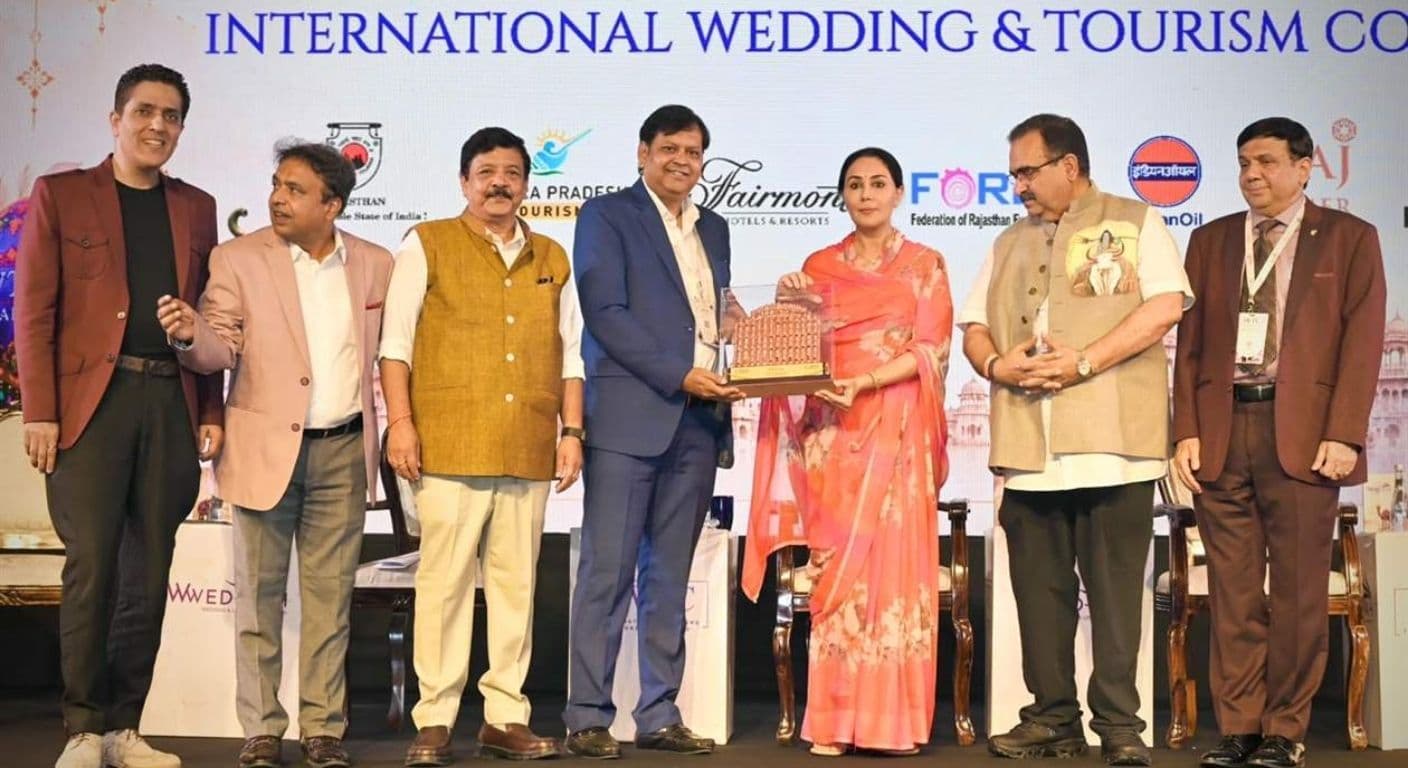
Rajasthan wants to turn wedding tourism into a year-round business instead of a market that peaks for only part of the year. At an International Wedding and Tourism Conclave in Kukas, Jaipur on July 19, 2026, Deputy Chief Minister and Tourism Minister Diya Kumari said the state should market itself as a full-season wedding destination and bring more locations into the circuit beyond the usual marquee cities.
The message is not that the Pink City will lose its wedding edge. If anything, the strategy suggests Jaipur could remain the anchor of Rajasthan's wedding economy while planners, hotels, decorators, transport operators and artisans gain more chances to work across a wider state network.
Quick Highlights
- Rajasthan has been pitched as a year-round wedding destination, not just a six-month seasonal market.
- Jaipur, Jodhpur and Udaipur remain the state's best-known destination-wedding hubs.
- The state wants more focus on Shekhawati, Jaisalmer, Banswara, Dungarpur, Bharatpur and Pushkar.
- Officials say broader wedding tourism can support artisans, hotels, transport businesses and event-industry workers.
- The push was outlined at a tourism conclave held in Kukas, Jaipur.
Why the wedding map is widening
Jaipur, Jodhpur and Udaipur already carry much of Rajasthan's destination-wedding reputation, but the state now appears keen to widen that brand. The logic is straightforward: if more places are wedding-ready, Rajasthan can market different settings to different budgets and tastes instead of leaning too heavily on a few established hotspots.
That broader map also helps the state tell a richer tourism story. Instead of presenting wedding travel through only palace-city imagery, officials are now pointing to heritage towns, desert backdrops, nature-led destinations, wildlife appeal and spiritual settings as part of one larger events portfolio.
| Destination cluster | Wedding-tourism appeal highlighted in the push |
|---|---|
| Jaipur, Jodhpur, Udaipur | Already established and globally recognised destination-wedding hubs. |
| Shekhawati | Havelis and heritage character that can support a distinctive wedding setting. |
| Jaisalmer | The desert landscape offers a very different Rajasthan wedding backdrop. |
| Banswara and Dungarpur | Natural beauty that could help the state diversify beyond palace-led wedding imagery. |
| Bharatpur | Wildlife-linked appeal that can add a niche destination option. |
| Pushkar | A religious and spiritual atmosphere that gives the location its own identity. |
What it could mean for Jaipur's event economy
A year-round wedding strategy could matter for Jaipur even when ceremonies happen elsewhere. Many of the state's planners, designers, hospitality teams, logistics operators and vendor networks are coordinated from Jaipur or rely on Jaipur-based business relationships. A larger destination circuit can create more assignments across the calendar instead of concentrating demand in a narrower peak season.
The state also explicitly tied the idea to jobs. Officials said stronger wedding tourism through the year can create opportunities for local artisans, hotels, transport providers and people connected to the event industry. If the model works, Jaipur could benefit both as a host city and as the operational center for wedding services delivered across Rajasthan.
What to watch next
The pitch will matter only if it turns into destination-ready execution. New wedding locations need more than branding; they need venue discovery, smoother visitor movement, hospitality depth, strong service standards and enough promotion to convince planners that the logistics will hold up during real events.
If those pieces move together, Rajasthan could eventually market itself not just through a few familiar wedding cities but as a broader, more resilient wedding-travel portfolio with Jaipur still at the center of the story.