
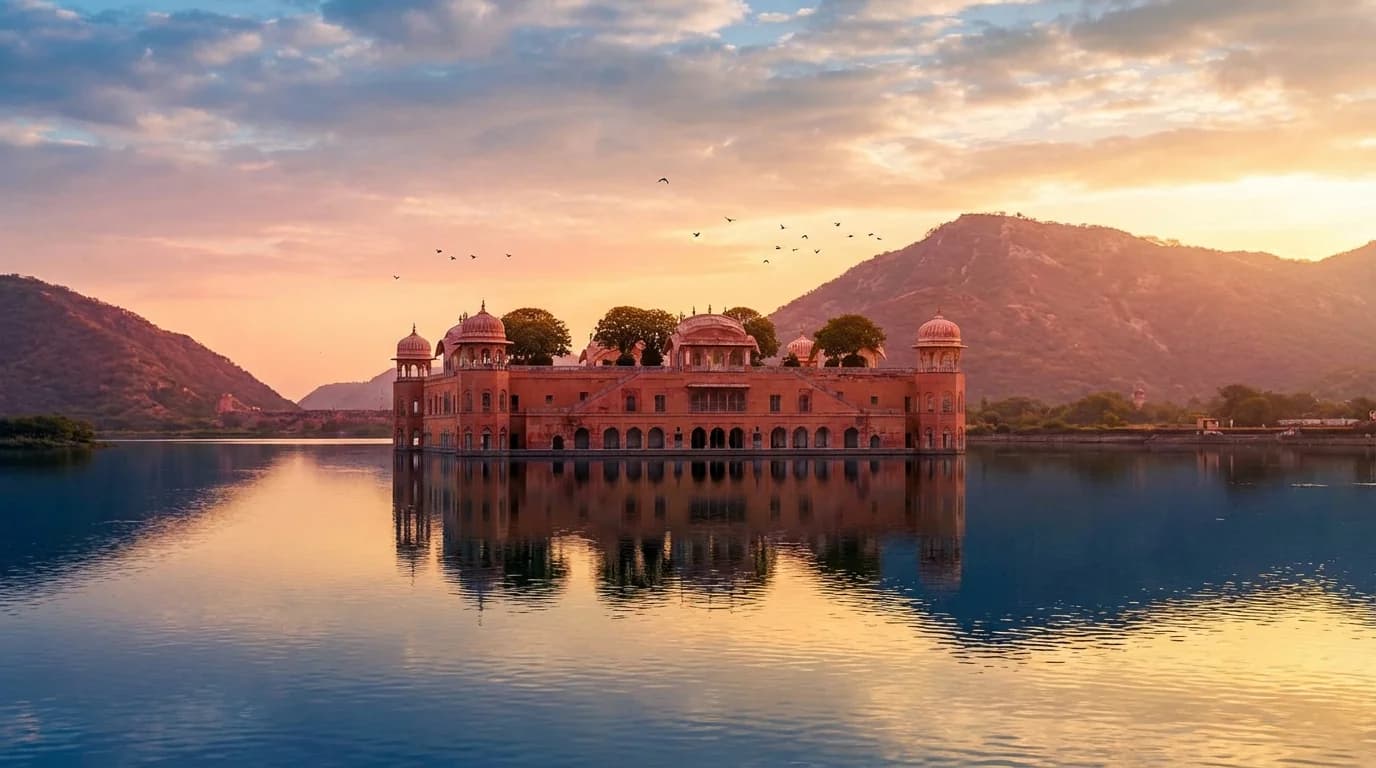
Picture this: a magnificent palace seemingly floating on a shimmering lake, with the Aravalli Hills painting a perfect backdrop. That's Jal Mahal for you—one of Jaipur's most enchanting and photogenic landmarks! Whether you're a history buff, photography enthusiast, or just someone who loves beautiful places, Jal Mahal is a must-visit on your Jaipur itinerary.
Let me take you on a complete journey through everything you need to know about this stunning water palace!
What is Jal Mahal? The Floating Palace of Jaipur
Jal Mahal, which literally means "Water Palace," is an architectural marvel that rises elegantly from the middle of Man Sagar Lake. Built with red sandstone, this five-story palace creates a mesmerizing sight—especially when you realize that four of its five floors are submerged underwater!
While you can't enter the palace itself (more on that later), the view from the lakeside is absolutely breathtaking. On a clear day, when the palace reflects perfectly in the calm waters with mountains in the background, you'll understand why photographers from around the world flock here!
A Glimpse into History: The Story Behind Jal Mahal
The history of Jal Mahal is as fascinating as its appearance!
The Origins
- Built: Around 1699 (though some sources say 1750s)
- Commissioned by: Maharaja Madho Singh I and later renovated by Maharaja Jai Singh II of Amber
- Original Purpose: Royal hunting lodge for duck shooting parties
- The Lake: Man Sagar Lake was created in the 16th century by building a dam
Why Was It Built?
The Rajput kings loved their hunting expeditions, and Jal Mahal served as a luxurious retreat where the royal family could relax while enjoying duck hunting on Man Sagar Lake. Imagine the kings and queens spending leisurely afternoons here, surrounded by water and mountains—quite the royal lifestyle!
The Restoration Journey
For many years, Jal Mahal fell into disrepair, suffering from sewage problems and water logging. The lake became polluted, and the palace deteriorated. However, in the early 2000s, an ambitious restoration project brought this beauty back to life!
The restoration used traditional materials and techniques:
- Special mortar mix of lime, sand, and surkhi (brick powder)
- Organic materials like jaggery, guggal (resin), and methi (fenugreek) powder
- Revival of the lake ecosystem
- Creation of a bird sanctuary around the area
Today, thanks to these efforts, Jal Mahal stands proud again—a testament to Rajasthan's commitment to preserving its heritage!
Architecture: A Perfect Blend of Rajput and Mughal Styles
What makes Jal Mahal architecturally special? Let's break it down:
The Structure
- Material: Red sandstone (the signature material of Jaipur's heritage buildings)
- Floors: Five stories total, with only the top floor visible above water
- The four submerged floors create an illusion that the palace is floating!
The Domes and Chhatris
The palace is adorned with beautiful domed structures:
- Four Octagonal Domes: One at each corner of the palace
- Central Dome: A large rectangular dome in Bengali style graces the terrace
- These chhatris (dome-shaped pavilions) are quintessentially Rajput architectural elements
Chameli Bagh: The Rooftop Garden
At the top of the palace is Chameli Bagh, an aromatic terrace garden that once provided:
- Panoramic views of the Aravalli Hills
- A fragrant retreat with jasmine (chameli) and other flowers
- Cool breezes and a perfect spot for royal relaxation
Architectural Style
Jal Mahal beautifully combines:
- Rajput Elements: Red sandstone, chhatris, jharokhas (overhanging balconies)
- Mughal Influences: Arched doorways, garden concept, symmetrical design
This fusion reflects the cultural exchange between Rajput and Mughal rulers—a common theme in Jaipur's architecture!
Visiting Jal Mahal: Everything You Need to Know
Location and How to Reach
Address: Amer Road, Jaipur, Rajasthan
Distance from City Center: 4 km north of Jaipur
How to Get There:
- From Jaipur Airport: 18 km (about 30-40 minutes drive)
- From Railway Station: Approximately 25 minutes by car
- Auto-rickshaw: Around ₹150-200 from city center
- Taxi: ₹200-300 from city center
- Local Bus: Available on the Jaipur-Amer route
Pro Tip: Jal Mahal is on the way to Amber Fort, so you can easily combine both in one trip!
Timings and Entry Fee
Visiting Hours: 6:00 AM to 6:00 PM (daily)
Entry Fee: FREE! Yes, you read that right—no charge to visit!
Important to Note: While there is no entry fee to the lakeside promenade, entry inside the palace itself is not permitted. The palace is closed to the public, but you can enjoy stunning views from the beautifully maintained pathway along the lake.
Can You Enter Jal Mahal?
Unfortunately, no. The Government of Rajasthan has restricted public access to the palace interior. This decision was made to:
- Preserve the restored structure
- Protect the fragile architecture from wear and tear
- Maintain the palace for future generations
But don't be disappointed! The lakeside view is spectacular, and many visitors say that seeing the palace from outside, with its perfect reflection in the water, is even more beautiful than being inside would be.
Boat Rides on Man Sagar Lake
Current Status: This is a bit unclear. Some sources say boat rides are currently not available, while others mention they are offered with prices ranging from ₹50-200 per person.
My Advice: When you visit, check with the local authorities or your tour guide about the current status of boat rides. Policies can change, and sometimes special permissions or organized tours may offer boat access.
Best Time to Visit Jal Mahal
By Season
Winter (October to March) - BEST TIME
Why Visit:
- Perfect weather (15-25°C)
- Clear skies for photography
- Comfortable for spending time outdoors
- Peak tourist season
What to Expect: More crowds but pleasant weather makes it worth it!
Monsoon (July to September)
Why Visit:
- Lake is full of water
- Lush green hills in the background
- Dramatic cloudy skies for moody photographs
- The palace looks stunning against rain-washed scenery
What to Expect: Occasional rain, humid weather, but absolutely gorgeous views!
Summer (April to June)
Why Visit:
- Fewer tourists
- Early morning and evening visits are pleasant
What to Expect: Hot temperatures (35-45°C), so avoid midday visits. Best for sunrise photography!
By Time of Day
Early Morning (6:00 AM - 8:00 AM)
Perfect for:
- Sunrise photography
- Peaceful atmosphere with fewer crowds
- Spotting migratory birds
- Cool, pleasant weather
Late Afternoon to Sunset (4:00 PM - 6:00 PM)
Perfect for:
- Golden hour photography
- Stunning sunset views
- Cooler temperatures
- The palace lit up as evening approaches
Evening (After Sunset)
Perfect for:
- Illuminated palace view
- Romantic atmosphere
- Spectacular reflection in the lake
- The lit-up palace against a dark sky is magical!
Photography Tip: Visit during both sunrise and sunset if possible—each offers completely different but equally beautiful views!
Photography Tips: Capturing the Perfect Shot
Jal Mahal is a photographer's dream! Here's how to get those Instagram-worthy shots:
Best Photography Spots
- Main Viewing Platform: The designated seating area along the promenade offers the classic front view
- Left Side of the Lake: Walk along the pathway for different angles
- Elevated Spots: Find slightly higher ground for a better perspective
- Through the Arches: Frame the palace through architectural elements along the pathway
Golden Hour Magic
- Sunrise: Soft, warm light from the east
- Sunset: Dramatic golden and orange hues
- The reflection in the lake during golden hour is absolutely breathtaking!
Monsoon Photography
- Overcast skies create dramatic, moody shots
- Lush green Aravalli Hills provide a stunning backdrop
- The full lake enhances the "floating palace" effect
Equipment Recommendations
- Wide-angle lens: To capture the palace with the hills and sky
- Telephoto lens: For detailed shots of the palace architecture
- Tripod: Essential for sunset and low-light photography
- Smartphone: Honestly, even phone cameras capture amazing shots here!
Photography Don'ts
- Avoid harsh midday sun (11 AM - 3 PM) when shadows are unflattering
- Don't rely on flash—natural light is your friend here
- Respect local rules about commercial photography (may require permits)
Things to Do at Jal Mahal
Since you can't enter the palace, here's how to make the most of your visit:
1. Take Amazing Photos
This is the main attraction! The palace is incredibly photogenic from every angle. Spend time walking along the promenade to find your perfect shot.
2. Relax by the Lake
The lakeside has beautiful seating areas where you can:
- Sit and enjoy the peaceful view
- Have a picnic (bring your own snacks)
- Read a book with this stunning backdrop
- Simply soak in the royal ambiance
3. Bird Watching
Man Sagar Lake and the surrounding area have become a haven for birds, especially during winter when migratory birds visit. Bring binoculars to spot:
- Cormorants
- Coots
- Kingfishers
- Various migratory water birds
4. Shopping from Local Vendors
Along the lakeside promenade, you'll find vendors selling:
- Traditional Rajasthani Jewelry: Colorful bangles, necklaces, earrings
- Mojris: Traditional Rajasthani footwear
- Handicrafts: Miniature paintings, puppets, textiles
- Souvenirs: Magnets, keychains, postcards
Bargaining Tip: Start at 50% of the asking price and negotiate from there!
5. Try Traditional Dress Photography
Local photographers offer a fun experience where you can:
- Dress up in traditional Rajasthani attire (colorful turbans, royal costumes)
- Get professional photos with Jal Mahal in the background
- Price: Usually ₹100-300 depending on the package
6. Enjoy Camel Rides
Some vendors offer short camel rides along the lakeside for that quintessential Rajasthan experience:
- Short rides: ₹50-100
- Photo opportunity: ₹20-50
7. Visit During Festivals
Jal Mahal becomes extra special during:
- Jaipur Literature Festival: Special events sometimes held nearby
- Teej Festival: Colorful celebrations in the monsoon season
- Diwali: Beautiful illumination and fireworks
Nearby Attractions: Making a Day of It
Jal Mahal is perfectly positioned for a full day of sightseeing. Here are the must-visit nearby attractions:
Within 5 km:
1. Amber Fort (4 km)
- Distance: 10-minute drive
- Why Visit: Magnificent hill fort with stunning architecture
- Time Needed: 2-3 hours
- Combo Tip: Perfect combo—visit Jal Mahal for sunrise, then Amber Fort!
2. Kanak Vrindavan Garden (1.4 km)
- Distance: Short walk or 5-minute drive
- Why Visit: Beautiful terraced garden with temples
- Time Needed: 1 hour
3. Garh Ganesh Temple (3.7 km)
- Distance: 10-minute drive
- Why Visit: Temple with panoramic city views
- Time Needed: 30-45 minutes
Within 10 km:
4. City Palace (4.4 km)
- Why Visit: Royal residence with museums and courtyards
- Time Needed: 2-3 hours
5. Hawa Mahal (6.2 km)
- Why Visit: Iconic "Palace of Winds" with 953 windows
- Time Needed: 1 hour
6. Jantar Mantar (6.1 km)
- Why Visit: UNESCO World Heritage astronomical observatory
- Time Needed: 1-1.5 hours
7. Jaigarh Fort (6.6 km)
- Why Visit: Home to the world's largest cannon, stunning views
- Time Needed: 1.5-2 hours
8. Albert Hall Museum (6 km)
- Why Visit: Beautiful architecture, diverse collection
- Time Needed: 1.5 hours
Suggested Itineraries:
Half Day (Morning):
- 6:00 AM - Jal Mahal for sunrise (1 hour)
- 7:30 AM - Breakfast at a local dhaba
- 9:00 AM - Amber Fort (2-3 hours)
- 12:00 PM - Return to city
Full Day:
- 6:00 AM - Jal Mahal sunrise
- 8:00 AM - Breakfast
- 9:00 AM - Amber Fort
- 12:00 PM - Lunch
- 2:00 PM - City Palace
- 4:00 PM - Hawa Mahal
- 5:30 PM - Return to Jal Mahal for sunset
Practical Tips for Visiting
What to Wear
- Comfortable shoes: You'll be walking along the promenade
- Sun protection: Hat, sunglasses, sunscreen (especially in summer)
- Modest clothing: Respectful attire is appreciated (covering shoulders and knees)
- Light, breathable fabrics: Jaipur can get hot!
What to Bring
- Camera or smartphone with full battery
- Water bottle (stay hydrated!)
- Snacks (limited food options nearby)
- Cash for shopping and tips
- Binoculars (for bird watching)
Safety Tips
- Keep valuables secure
- Be cautious when shopping—don't carry too much cash
- Stay on designated pathways
- Be mindful of monkeys (they can be mischievous!)
- Watch out for traffic when crossing the road
Facilities Available
- Parking: Available nearby (₹20-50)
- Restrooms: Limited; use facilities before arriving
- Seating: Multiple benches along the promenade
- Food: Small snack vendors, but better to eat elsewhere
Local Food Options Nearby
While there aren't many restaurants right at Jal Mahal, here are some options:
Quick Bites:
- Street Vendors: Chai, samosas, pakoras (₹20-50)
- Snack Stalls: Cold drinks, chips, biscuits
Restaurants (5-10 minutes away):
- 1135 AD (at Amber Fort): Fine dining in a heritage setting
- Local Dhabas: Authentic Rajasthani thalis (₹150-300)
- Roadside Restaurants: North Indian cuisine
Pro Tip: Consider having breakfast at your hotel before the sunrise visit, then enjoy lunch at one of the restaurants near Amber Fort!
Interesting Facts About Jal Mahal
- Four Floors Underwater: Only one of five floors is visible above water—the rest create mysterious chambers beneath the lake!
- No Stairs to Ground Floors: The submerged floors are inaccessible, creating an eerie underwater palace
- Bird Paradise: The restoration created wetlands that attract over 150 species of birds, including migratory ones from Siberia
- Royal Hunting Lodge: Maharajas used it primarily for duck hunting parties, not as a residence
- Restoration Marvel: The 2000s restoration used traditional organic materials and techniques dating back centuries
- Man Sagar Lake: The lake was created artificially in the 16th century by building a dam across the Dharbawati River
- Perfect Symmetry: The palace is perfectly symmetrical from all four sides
- Movie Fame: Featured in several Bollywood films and international documentaries
- UNESCO Consideration: Discussions have been held about including it in UNESCO World Heritage Sites
- Evening Illumination: The palace is beautifully lit up after dark, creating a fairy-tale appearance
Frequently Asked Questions
1. Can you go inside Jal Mahal?
No, entry inside Jal Mahal is currently not permitted to the public. The palace is closed to preserve its restored structure and architecture. However, you can enjoy beautiful views from the lakeside promenade.
2. Is there an entry fee for Jal Mahal?
No, visiting Jal Mahal from the lakeside is completely free. There is no ticket required to view the palace, take photos, or walk along the promenade.
3. How much time should I spend at Jal Mahal?
Most visitors spend 30 minutes to 1 hour at Jal Mahal. If you are into photography or bird watching, you might want to spend 1-2 hours, especially during sunrise or sunset.
4. Is Jal Mahal worth visiting?
Absolutely! Even though you cannot enter the palace, the view is spectacular and makes for amazing photographs. It is a peaceful spot and perfect for combining with a visit to nearby Amber Fort.
5. Are boat rides available at Jal Mahal?
This varies. Some sources say boat rides are not currently available, while others mention they are offered (₹50-200 per person). It is best to check locally when you visit, as policies may change.
6. What is the best time of day to visit Jal Mahal?
Early morning (6:00-8:00 AM) for sunrise and late afternoon (4:00-6:00 PM) for sunset are the best times. The lighting is perfect for photography, and the weather is pleasant. Evening visits to see the illuminated palace are also magical!
7. Can I fly a drone at Jal Mahal?
Drone flying in Jaipur, especially near heritage sites, is generally restricted and requires special permissions. Check with local authorities before bringing a drone, as unauthorized drone use can result in fines or confiscation.
8. Is Jal Mahal open during monsoon?
Yes, Jal Mahal is open year-round (6 AM to 6 PM). Monsoon season (July-September) can be a beautiful time to visit as the lake is full and the surrounding hills are lush green.
9. Is there parking available at Jal Mahal?
Yes, parking facilities are available near Jal Mahal. Parking fees are typically ₹20-50 for cars and ₹10-20 for two-wheelers.
10. How far is Jal Mahal from Amber Fort?
Jal Mahal is approximately 4 km from Amber Fort, which is about a 10-minute drive. They are both on the same road (Amer Road), making it easy to visit both in one trip.
11. Are there food options at Jal Mahal?
There are small snack vendors near Jal Mahal selling chai, samosas, and cold drinks. For proper meals, you will need to go to nearby restaurants (5-10 minutes away) or the restaurants at Amber Fort.
12. Is Jal Mahal suitable for kids?
Yes! Kids usually enjoy seeing the palace floating in the water, feeding fish (if visible), and the camel rides available nearby. It is a safe, open area perfect for families. The walk along the promenade is easy and stroller-friendly.
13. Can we see fish in the lake?
Yes, Man Sagar Lake has fish, and sometimes you can see them near the shore. Some visitors enjoy feeding them (though this is not officially encouraged).
14. What is the history of Man Sagar Lake?
Man Sagar Lake was created in the 16th century by building a dam across the Dharbawati River. The dam was built to address the water shortage in the area and to create a water reservoir for the city.
15. Is there a light and sound show at Jal Mahal?
Currently, there is no regular light and sound show at Jal Mahal. However, the palace is beautifully illuminated in the evening, creating a stunning view. During special events or festivals, there may be additional lighting displays.
Final Thoughts: Why Jal Mahal Should Be on Your Jaipur Itinerary
Jal Mahal may not allow you to walk through its halls or climb its staircases, but what it offers is something equally precious—a moment of tranquility, a feast for the eyes, and a connection to Rajasthan's royal past.
Standing by Man Sagar Lake, watching the sun paint the sky in shades of orange and pink while the palace seems to float serenely on the water, you will understand why this place has captivated visitors for centuries. It is not just about the architecture or history—it is about the feeling, the atmosphere, the magic.
Whether you are a photography enthusiast chasing the perfect golden hour shot, a history lover wanting to connect with Rajput heritage, or simply a traveler seeking beautiful experiences, Jal Mahal delivers. Best of all, it is free, easily accessible, and perfect for all ages!
My recommendation: Visit Jal Mahal twice during your Jaipur trip if possible—once at sunrise for that peaceful, golden morning light, and once in the evening to see the palace illuminated against the night sky. Trust me, each visit will give you a completely different but equally magical experience!
So pack your camera, put on comfortable shoes, and head to this floating marvel. Jal Mahal is waiting to enchant you with its timeless beauty! Have you visited Jal Mahal? Share your experience and favorite photos in the comments below!