
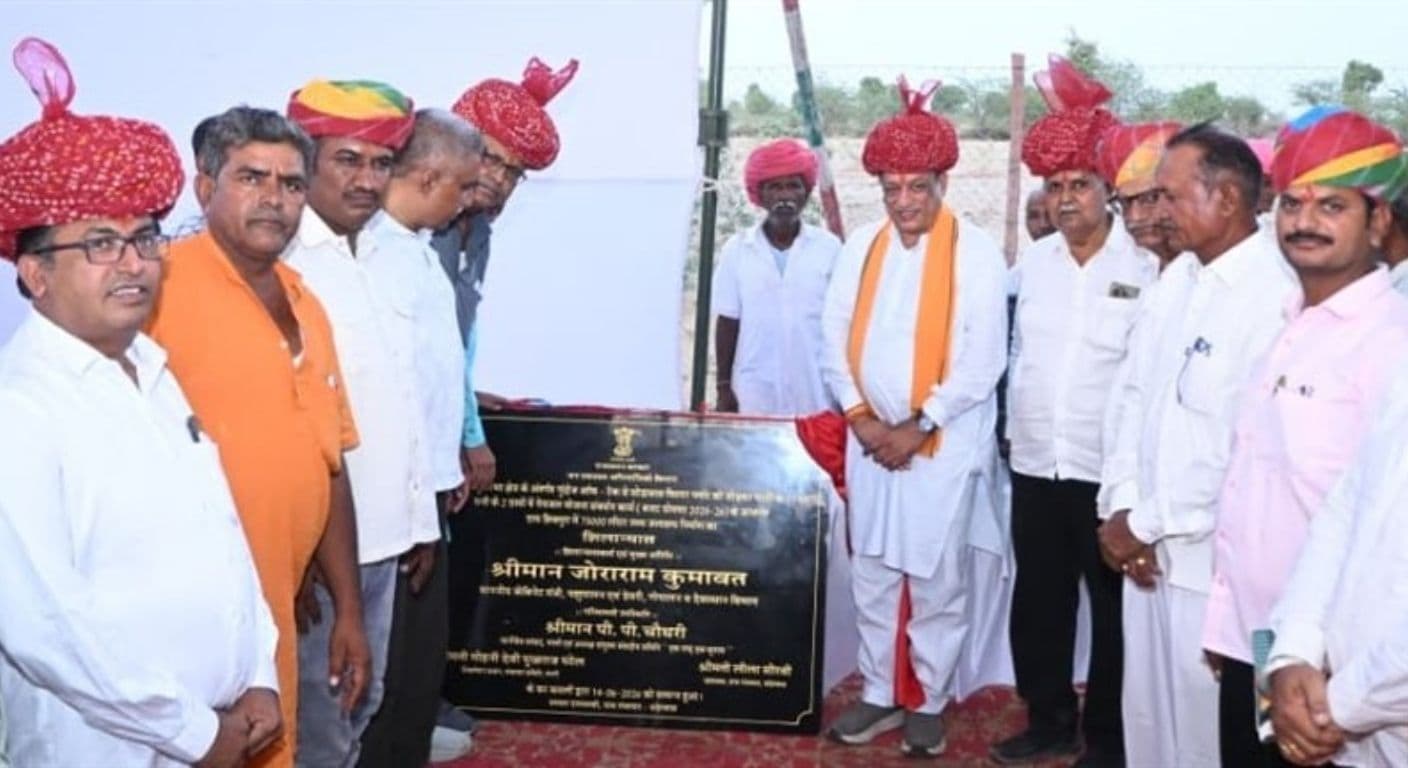
A 75,000-litre drinking-water reservoir is being built in Shivpura under a wider water-supply strengthening plan in Pali district's Sumerpur assembly area. Officials said the new GLR, or elevated reservoir, along with linked network work will help improve access to cleaner drinking water across 13 villages.
The project is being framed as more than a single new structure. It is part of a broader network push tied to the state's 2025-26 budget announcements, with officials presenting it as a long-pending local water fix rather than a stand-alone ceremonial start.
Quick Highlights
- A new 75,000-litre GLR is to be built in Shivpura.
- Officials said the strengthened scheme will benefit 13 villages.
- The project falls under the state's 2025-26 budget announcements.
- The plan includes linking the Guda Endla off-take to the Sodawas filter plant.
- The coverage is split across 11 villages in the Pali area and 2 villages in the Rani area.
What is being built
The most concrete element announced on June 15 was the land-pujan for the new 75,000-litre reservoir. In practical terms, that kind of storage addition matters because village water systems are often constrained not only by source availability but also by the ability to hold, regulate and distribute supply consistently.
Officials said the scheme is meant to deliver cleaner and more reliable drinking water to villages that have been dealing with long-running supply problems. They also tied it to the wider goal of building stronger last-mile water infrastructure under the state's Har Ghar Jal push.
| Sumerpur water project item | Current detail |
|---|---|
| New reservoir capacity | 75,000 litres |
| Location | Shivpura in the Sumerpur assembly area, Pali district |
| Total village coverage | 13 villages |
| Pali-area coverage | 11 villages |
| Rani-area coverage | 2 villages |
| Network link | Guda Endla off-take to Sodawas filter plant |
Why the network link matters
The reservoir is only one part of the story. The wider plan also includes connecting the Guda Endla off-take with the Sodawas filter plant, which suggests the government is trying to strengthen the supply chain from treatment to final delivery rather than only adding storage at one point.
That matters because rural drinking-water stress is often caused by weak network design as much as by limited raw supply. If the filtering and transmission side improves along with the new reservoir, the project has a better chance of becoming a stable service upgrade instead of a partial patch.
What to watch next
The next checkpoint is implementation speed and network follow-through. The new reservoir is the visible piece, but the actual public benefit will depend on whether the linked filter-plant and distribution work is completed in sync and whether the promised 13-village coverage materializes as planned.
If the project moves on schedule, it could become a useful small-scale example of how budget-announcement water works translate into rural service improvements. If delays creep in, the announcement will still read well on paper but take longer to change everyday water access on the ground.