
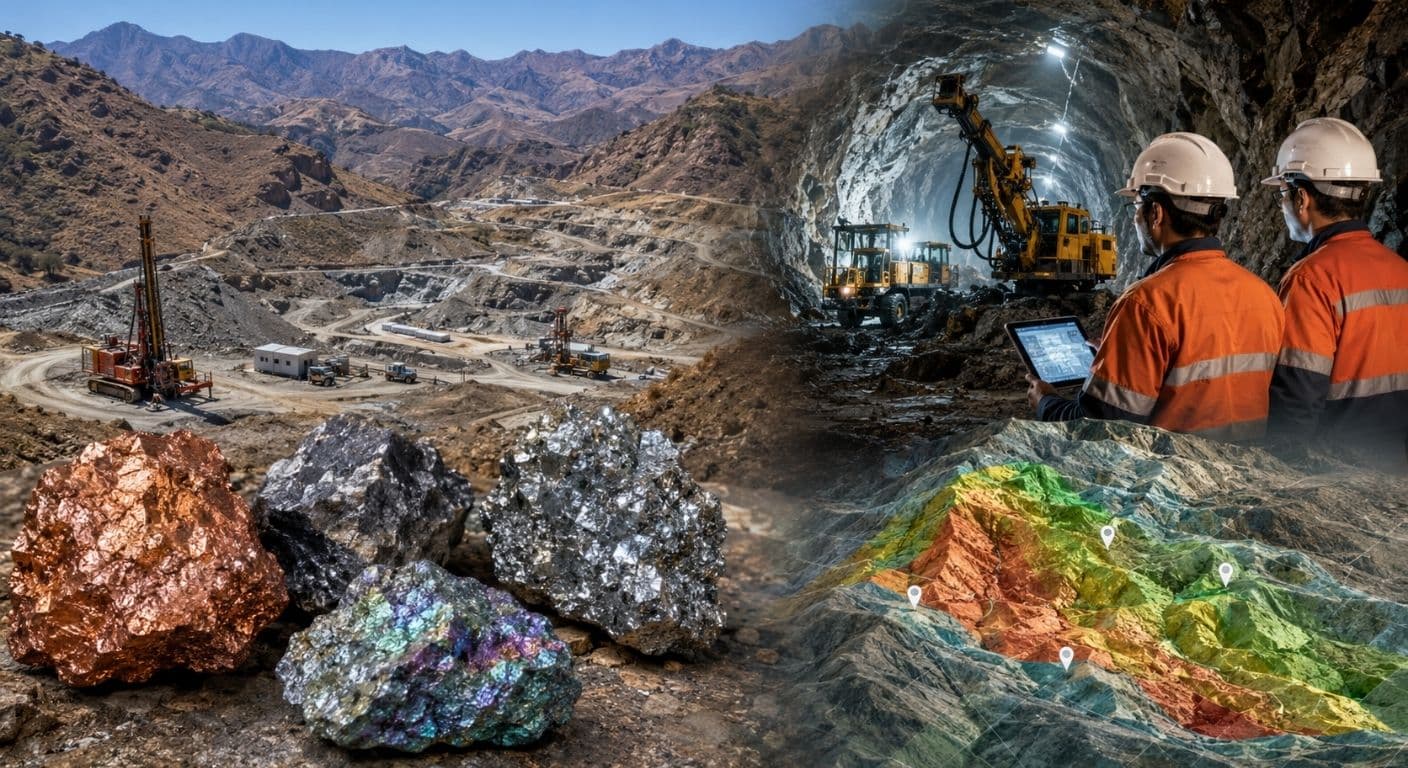
Rajasthan on Friday, August 14, 2026 signaled a sharper mining push in the Deri-Basantgarh belt near Abu Road in Sirohi after early indicators pointed to possible deposits of copper, lead, zinc and associated minerals. The immediate goal is not large-scale extraction yet. It is a faster technical effort to understand how much mineralisation may be present and whether the belt can support a broader mining programme.
That distinction matters because this is still an exploration-stage story, not a confirmed reserve announcement. What the state has right now are promising signals and older datasets that it wants rechecked with modern methods before moving deeper into mine planning.
Quick Highlights
- Rajasthan is preparing a detailed exploration roadmap for the Deri-Basantgarh area after early indicators of copper, lead, zinc and associated minerals.
- The focus zone sits near Abu Road in Sirohi and forms part of the wider Ambaji-Deri-Basantgarh polymetallic belt.
- Rajasthan State Mines and Minerals Ltd. has been asked to share existing exploration data with specialist institutions and speed up the next phase of technical work.
- Modern methods such as electromagnetic surveys have been flagged to improve reserve and quality assessment.
- Officials indicated that any future mining in the belt would likely rely on underground methods.
What the state wants to do next
Senior mines officials have asked Rajasthan State Mines and Minerals Ltd. (RSMML) to move quickly on the technical groundwork. That includes pooling the exploration results already available for the area, getting them reviewed by specialist institutions and, if needed, using outside exploration-management support to shape the next phase.
| Focus area | Current direction |
|---|---|
| Minerals in focus | Copper, lead, zinc and associated minerals |
| Core location | Deri-Basantgarh and nearby areas near Abu Road, Sirohi |
| Geological setting | Ambaji-Deri-Basantgarh polymetallic belt in the southern Delhi Fold zone |
| Lead execution agency | RSMML with support from expert institutions as needed |
| Technical tools flagged | Expert data review and electromagnetic surveys |
| Mining mode mentioned | Likely underground mining if the project advances |
The technical push is meant to answer the two questions that matter most in any base-metals story: how much material may be there and what its quality may be. Without that, even an encouraging mineral belt can remain more of a geological promise than an operating project.
Why the belt is getting attention
The area being discussed sits in a zone long treated as geologically important for base metals. Officials also noted that mining projects are already operating around Ambaji on the Gujarat side, which adds to the case for a deeper look at the Rajasthan stretch of the belt.
If the next round of assessment confirms stronger potential, the project could widen Rajasthan's base-metals pipeline beyond auction headlines and into a more production-focused phase. But that outcome depends on further exploration, not just on administrative intent.
What to watch now
The next signals will be procedural rather than visual: whether RSMML quickly shares its existing datasets, whether outside experts are brought in and whether modern geophysical work begins on schedule. Officials have also indicated that any eventual mining in the area would likely use underground methods, which suggests the project will depend heavily on technical planning from the start.
For now, the story is best understood as Rajasthan moving from promising geological indicators toward structured exploration. That is an important step for the state's mining strategy, but it is still a step before confirmed reserves and commercial output.