
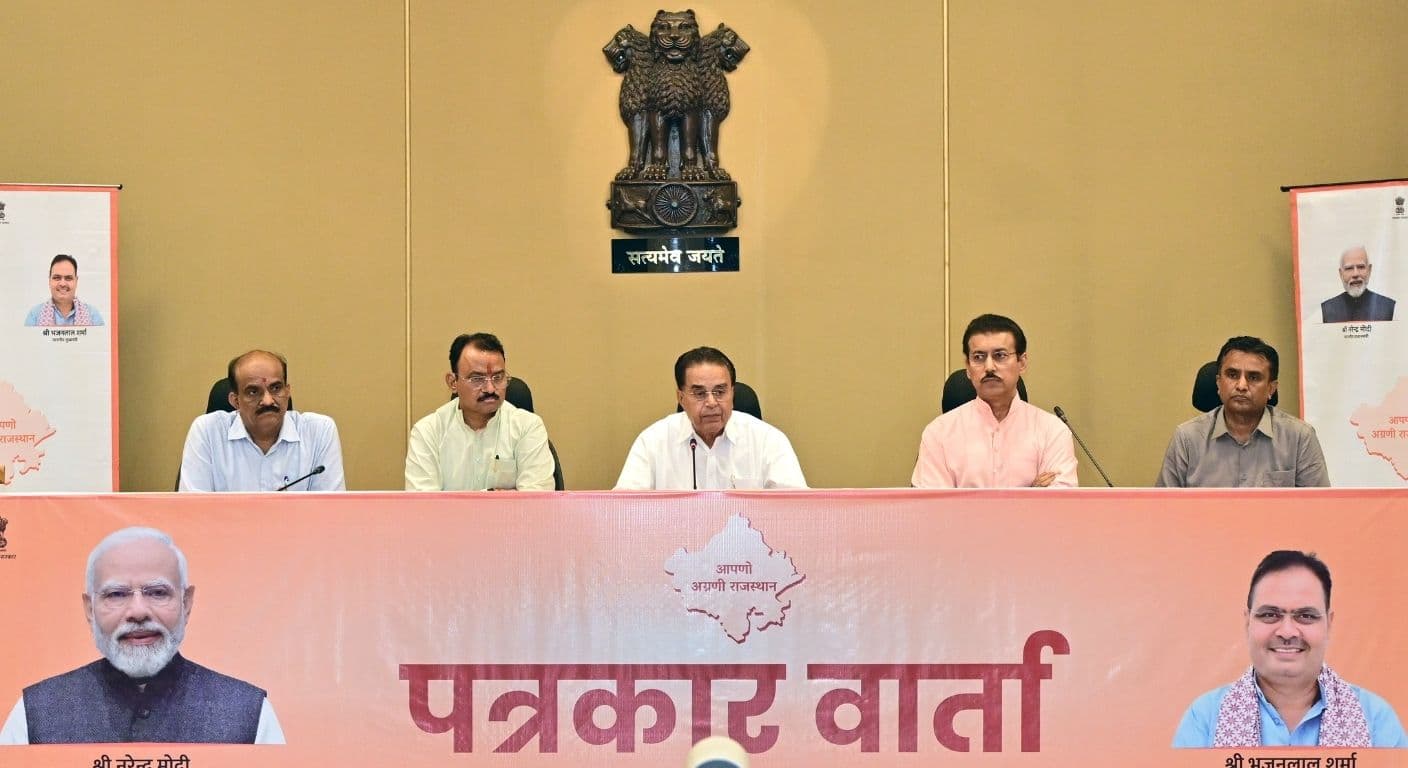
Rajasthan's cabinet has approved a wide policy package with implications across local governance, agriculture, labour, rural livelihoods and clean energy. The headline political move is the decision to hold upcoming Panchayati Raj and Urban Local Body elections under the One State-One Election framework, while the economic package alongside it includes new rules on farm processing, food parks, wages, industrial relations and green-cover expansion.
Taken together, the decisions suggest the state is trying to push multiple long-running priorities at once: synchronised local elections, stronger rural value addition, more structured labour regulation, faster clean-energy implementation and a bigger plantation drive. The package also includes a new 125-day rural employment guarantee, fresh land approvals for large energy and cement projects, and district-level monitoring on monsoon preparedness and farm-input supply.
Quick Highlights
- Rajasthan cleared One State-One Election for upcoming local-body and panchayat polls.
- The cabinet approved OBC political-representation recommendations, clearing the way for the reservation lottery process.
- The state approved the Rajasthan Agriculture and Food Processing Policy, 2026 and the Rajasthan Food Park Development Policy, 2026.
- The Code on Wages (Rajasthan) Rules, 2026 and Rajasthan Industrial Relations Rules, 2026 were cleared with changes around wages, working hours, online compliance and dispute resolution.
- A new rural mission promises a statutory guarantee of 125 days of employment per household in a financial year.
- Green and energy decisions include a Tree Outside Forest Policy, mandatory plantation on 10 percent of allotted renewable-project land and land approvals for 922 MW of solar capacity.
The biggest political decision
The most consequential decision in the package is the move to align Urban Local Body and Panchayati Raj elections under One State-One Election. The state's argument is that separate election cycles interrupt development work, absorb administrative capacity and increase costs. By synchronising them, the government is signalling that it wants a more predictable local-governance calendar.
The cabinet also approved the recommendations of the Rajasthan State Other Backward Classes Political Representation Commission, which were received on August 5, 2026. That approval clears the way for adding OBC reservation provisions alongside existing SC and ST provisions in the relevant local-body laws, and allows the lottery process for reserved seats to begin.
Farm, jobs and labour decisions in one package
The economic side of the cabinet agenda is broad. The Rajasthan Agriculture and Food Processing Policy, 2026 is meant to expand agro-processing, promote rural entrepreneurship and increase farmers' income through value addition. The policy covers segments such as fruits and vegetables, spices, cereals, oilseeds, pulses, dairy products, animal feed, honey and storage infrastructure.
Officials said the policy includes capital subsidy of 60 percent on loans up to Rs 50 lakh, 50 percent on loans between Rs 50 lakh and Rs 1 crore and 40 percent on loans above Rs 1 crore, subject to a maximum subsidy of Rs 1.5 crore. There is also an additional 5 percent incentive for FPOs, entrepreneurs from TSP areas, Scheduled Castes, Scheduled Tribes and women entrepreneurs.
The cabinet also approved the Rajasthan Food Park Development Policy, 2026, which proposes a district-wise cluster model for food parks and integrated facilities for storage, processing, preservation and transport. In parallel, the cabinet cleared the Viksit Bharat-Guarantee for Employment and Livelihood Mission (Rural), which promises 125 days of work per rural household in a financial year, with digital monitoring and an emphasis on participation by women and vulnerable groups.
| Area | What the cabinet approved |
|---|---|
| Local elections | Upcoming ULB and Panchayati Raj polls under One State-One Election, with OBC representation recommendations approved |
| Farm processing | New Agriculture and Food Processing Policy, 2026 with tiered capital subsidy up to Rs 1.5 crore |
| Food parks | District cluster model and policy framework for world-class food parks |
| Wages | CPI-linked DA, 48-hour weekly cap, paid weekly holiday and rest-break rules |
| Industrial relations | Online compliance, faster dispute timelines, secret-ballot recognition for negotiating unions |
| Rural jobs | 125-day employment guarantee for rural households |
On the labour side, the new wage rules introduce a more formal minimum-wage formula and fix Dearness Allowance revisions twice a year on April 1 and October 1. They also set a 48-hour weekly limit, cap the daily spread in a six-day week at 10.5 hours including breaks, require a 30-minute rest break after every five consecutive working hours and provide paid weekly holidays with overtime provisions.
The Rajasthan Industrial Relations Rules, 2026 go in a similar direction on process reform. Labour compliance and grievance handling are to move online, timelines have been prescribed for disputes, negotiating unions are to be chosen through secret ballot, and retrenchment and closure forms have been simplified.
Green cover, clean energy and investment moves
The cabinet also used the meeting to reinforce Rajasthan's environmental and energy agenda. The new Tree Outside Forest Policy is linked to Mission Hariyalo Rajasthan, under which the state says it aims to plant 50 crore saplings in five years. It said nearly 20 crore saplings have already been planted in about two years, with a fresh target of 10 crore during the current monsoon season.
Renewable-energy land-allotment rules were amended to require developers to keep 10 percent of allotted land reserved for plantation. The same changes fix land norms at 2 hectares per MW for solar and wind projects and 2.5 hectares per MW for hybrid projects. Separately, amendments to the Rajasthan Integrated Clean Energy Policy, 2024 replace fixed registration fees for battery-storage projects with capacity-based slabs, exempt some projects with storage equal to at least 50 percent of installed capacity from registration fees, and cut the maximum transmission-evacuation timeline from three years to two years.
The state says it has already commissioned more than 49,000 MW of renewable capacity and is targeting 125 GW by 2030. The cabinet also approved land allotment for 922 MW of solar projects in Bikaner and Jaisalmer, including a 700 MW project at Bodana and a 200 MW project at Randha.
Industrial approvals were part of the package too. The cabinet cleared land for two cement projects in Jaisalmer, including around 254 hectares for Star Cement North East Limited with expected investment of about Rs 6,200 crore, and nearly 107 hectares for UltraTech Cement Limited. It also raised disturbance charges for relocation of 198 salt mines affected by the Pachpadra refinery project from Rs 7.85 crore to Rs 9.81 crore.
What happens next
Some of these decisions now move into execution quickly. The reservation lottery process for local-body seats can begin after the OBC recommendations approval, while district-level political and administrative attention will also turn toward the next cycle of local elections. The Har Ghar Tiranga 2026 campaign is scheduled from August 9 to August 17, 2026, tied this year to 150 years of Vande Mataram.
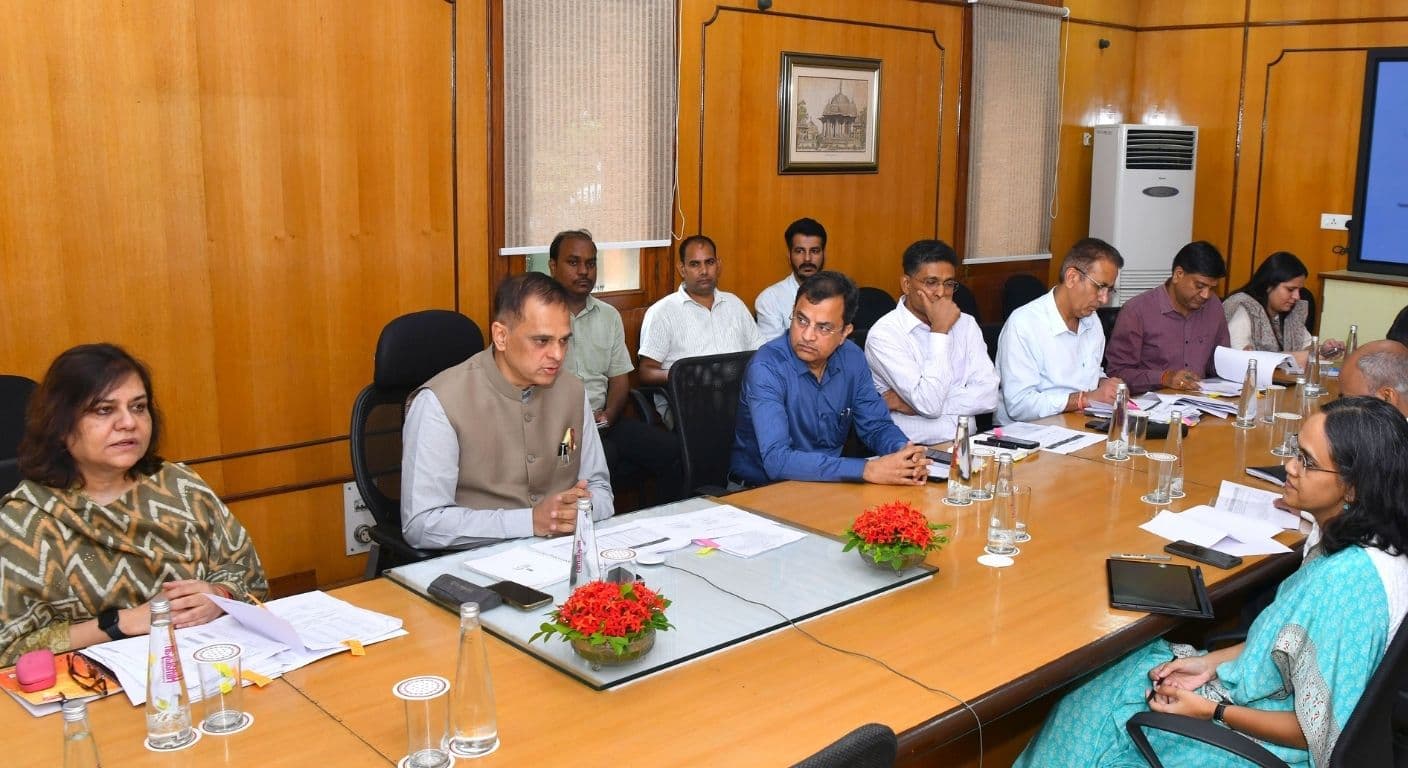
The council of ministers also decided that ministers would visit districts under their charge to review monsoon preparedness, electricity, drinking water, roads, healthcare and disaster management arrangements. Those visits will also include checks on whether farmers are getting uninterrupted supplies of fertilisers, certified seeds and other critical inputs during the crop season.