
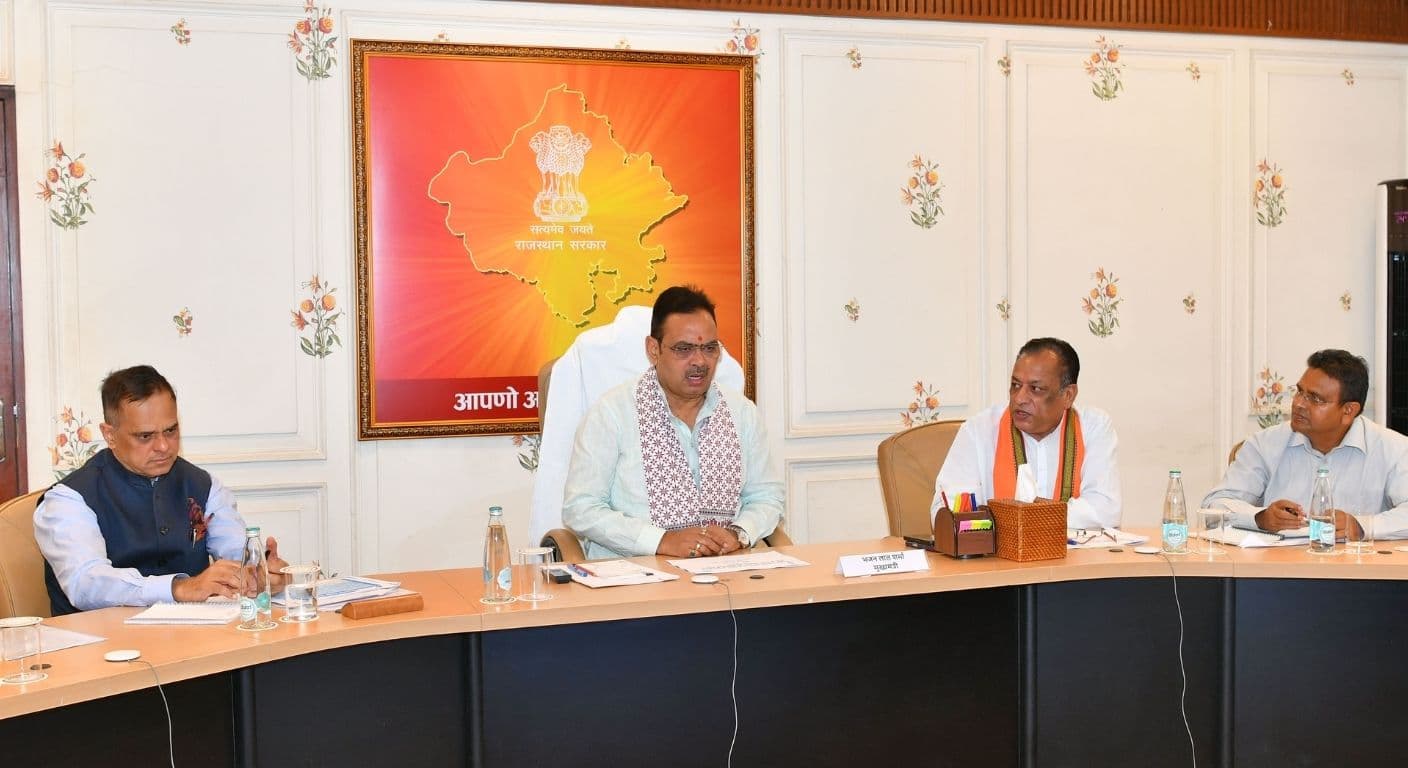
Rajasthan has set a much larger growth target for its dairy sector, with plans to raise daily milk procurement from about 45 lakh litres to 65 lakh litres in the first phase and 85 lakh litres per day in the second phase. The wider push also includes expanding the Saras retail network, lifting the milk purchase rate and investing in additional processing capacity across districts.
For Jaipur readers, the story matters because the latest dairy review was held in Jaipur and the state is also looking at Saras retail expansion inside government-facing urban spaces such as collectorate and office canteens, hospitals and transport hubs. That gives the plan both a rural-income angle and a visible city-level consumer angle.
Quick Highlights
- Rajasthan currently procures about 45 lakh litres of milk per day.
- The state has set phased targets of 65 lakh litres and then 85 lakh litres per day.
- The milk purchase rate has been increased from Rs 50 to Rs 52 per kg fat.
- About Rs 530 crore is being spent on new dairy plants and expansion of existing units.
- The Saras brand is set for expansion through Saras Smart, Saras Cafe and Saras Signature Plaza.
How the dairy growth plan is being framed
The state is presenting dairy as more than a cooperative-sector support programme. The message coming out of the review is that milk production, collection and processing are being treated as a core part of rural economic strengthening. That matters because the dairy chain spreads income across producers, village-level collection systems, processing units and retail channels rather than concentrating returns in a single location.
| Dairy expansion item | Current position or target |
|---|---|
| Current daily milk procurement | 45 lakh litres |
| Phase 1 target | 65 lakh litres per day |
| Phase 2 target | 85 lakh litres per day |
| Milk purchase rate | Raised from Rs 50 to Rs 52 per kg fat |
| Processing-capacity expansion | About Rs 530 crore |
| Retail formats under discussion | Saras Smart, Saras Cafe, Saras Signature Plaza |
The increase in the fat-based purchase rate is especially important because it directly affects the payout producers receive. Combined with the plan to deepen milk collection in new areas through additional dairy cooperative societies, it suggests the state wants to expand both procurement volume and the producer base at the same time.
Why the Saras retail expansion matters in Jaipur and beyond
The consumer-facing part of the review is just as notable as the procurement targets. The state discussed expanding the Saras brand through newer retail formats and using them to strengthen visibility at religious and tourism centres such as Khatu Shyamji, Salasar, Nathdwara, Pushkar and Ajmer. That is a branding move, but it is also a distribution move because it brings packaged dairy products closer to high-footfall locations.
There is also an urban-services angle that could be more visible in Jaipur. The review covered Saras Smart parlours through Rajeevika in collectorate and government office canteens, along with expansion plans for government hospitals, roadways bus stands and RTDC hotels. If implemented well, that would push Saras from being a familiar dairy label into a stronger everyday retail presence inside public and semi-public spaces.
What to watch next
The main execution test is whether the collection targets, processing investments and retail rollout move together. Raising procurement without enough chilling, transport and processing support can strain the system, while expanding retail without consistent quality can hurt brand trust. That is why the review also stressed stronger anti-adulteration steps and tighter quality monitoring from collection through final sale.
If the state can actually push procurement from 45 lakh towards 85 lakh litres a day, keep producer returns attractive and build a larger Saras retail network at the same time, Rajasthan could turn dairy into one of its more visible rural-growth stories. If the rollout slows, the target numbers will remain ambitious on paper but harder to feel on the ground.