
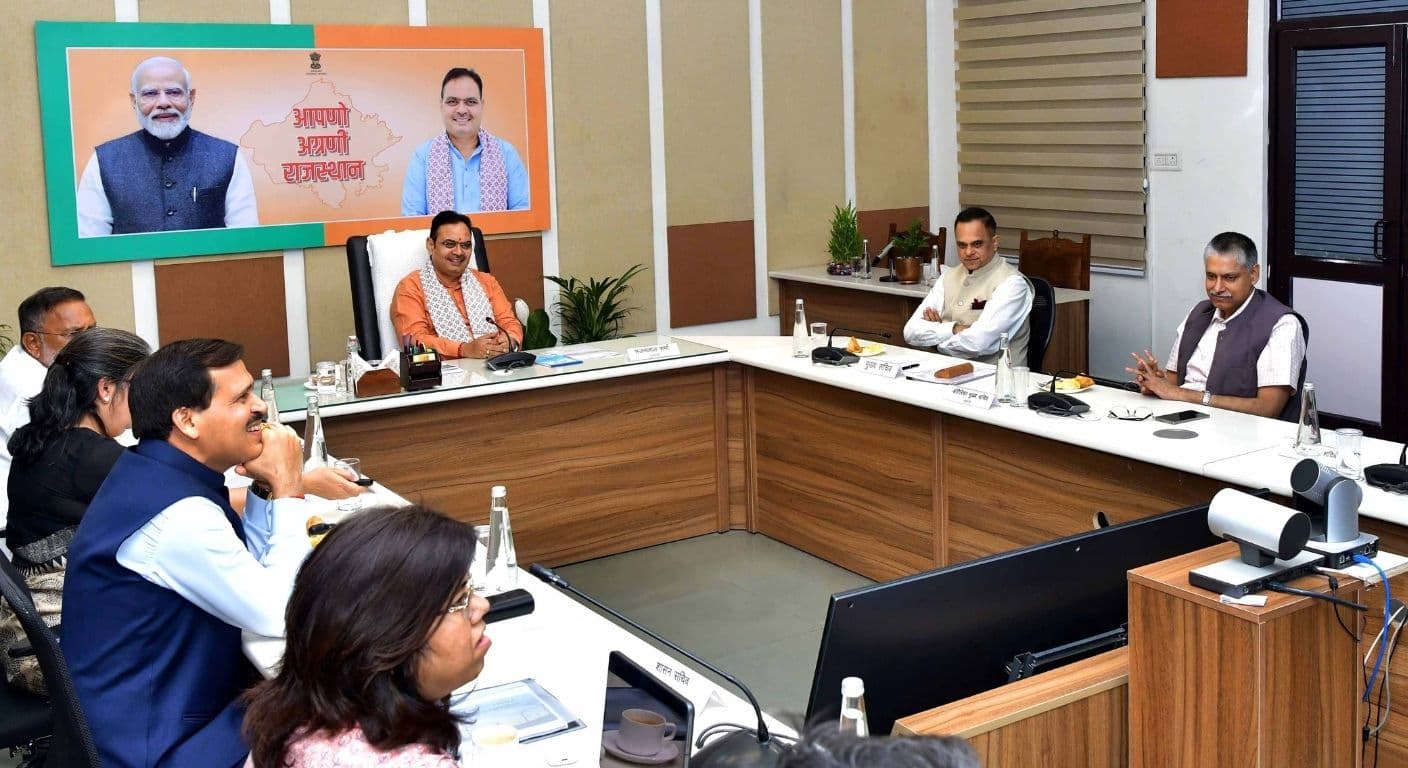
Rajasthan has set a new visible milestone for its power sector: extending daytime electricity for farmers across the state by 2027. At an energy department review in Jaipur, Chief Minister Bhajan Lal Sharma said farmers in 24 districts are already receiving power during the day, and the government now wants to take that model statewide.
The bigger message from the meeting was not just about farm supply hours. The government linked the 2027 target to a broader push for reliable, adequate electricity for agriculture, households and industry, while also treating pump storage and battery storage as priority projects for the next phase of the state's energy system.
Quick Highlights
- Farmers in 24 districts are already receiving daytime electricity.
- Rajasthan aims to extend daytime farm power statewide by 2027.
- The government said power generation capacity has improved while power losses have come down.
- Pump storage and battery storage projects have been marked as priority infrastructure.
- The supply push is meant to support farmers, households and industries together.
Why the daytime power target matters
Daytime power for agriculture matters because it changes both cost and quality of rural electricity use. Farmers with daytime supply can operate irrigation and farm equipment in safer, more manageable hours, while utilities can align farm demand more effectively with solar-rich periods. If Rajasthan succeeds in expanding this model statewide by 2027, it could reshape how agricultural power demand is handled across the state.
For Jaipur readers, this is also an administrative story with wider impact. The review happened in the capital, where state-level energy priorities are set and monitored. That means decisions taken here will influence not just rural supply scheduling, but also how Rajasthan balances farm demand with urban households, industrial use and renewable expansion.
The meeting's most concrete markers were straightforward: 24 districts already have daytime farm power, the statewide target is 2027, and the main infrastructure priorities are pump storage and battery storage. The government also argued that improved management has raised generation capacity and reduced power losses, though it did not attach fresh public numbers to those gains in this update.
Why storage is central to the next phase
The storage push is one of the most important parts of the announcement. The government described pump storage projects as cost-effective and useful over long durations, while battery storage was presented as a way to support cleaner energy and improve the quality of future supply. That matters because Rajasthan's renewable growth is strongest when the grid can store energy and shift it to the hours when consumers actually need it.
In practical terms, storage is what can help turn renewable generation into dependable power. Without enough of it, a state can add clean energy capacity but still struggle with timing mismatches and supply quality. By asking officials to speed up these projects, the government is signaling that the next energy challenge is not just producing more electricity, but managing it better across the day.
What to watch next
The immediate question is whether the 2027 farm-power target gets backed by a clear rollout plan district by district. The announcement is politically and administratively significant, but its credibility will depend on how quickly storage projects, grid improvements and supply planning move from review meetings into on-ground execution.
If that happens, Rajasthan could build a more stable model in which farmers get daytime supply while households and industry also see better reliability. If progress on storage slows, the target may prove harder to sustain at scale. That makes implementation, not just intention, the real story to watch from here.