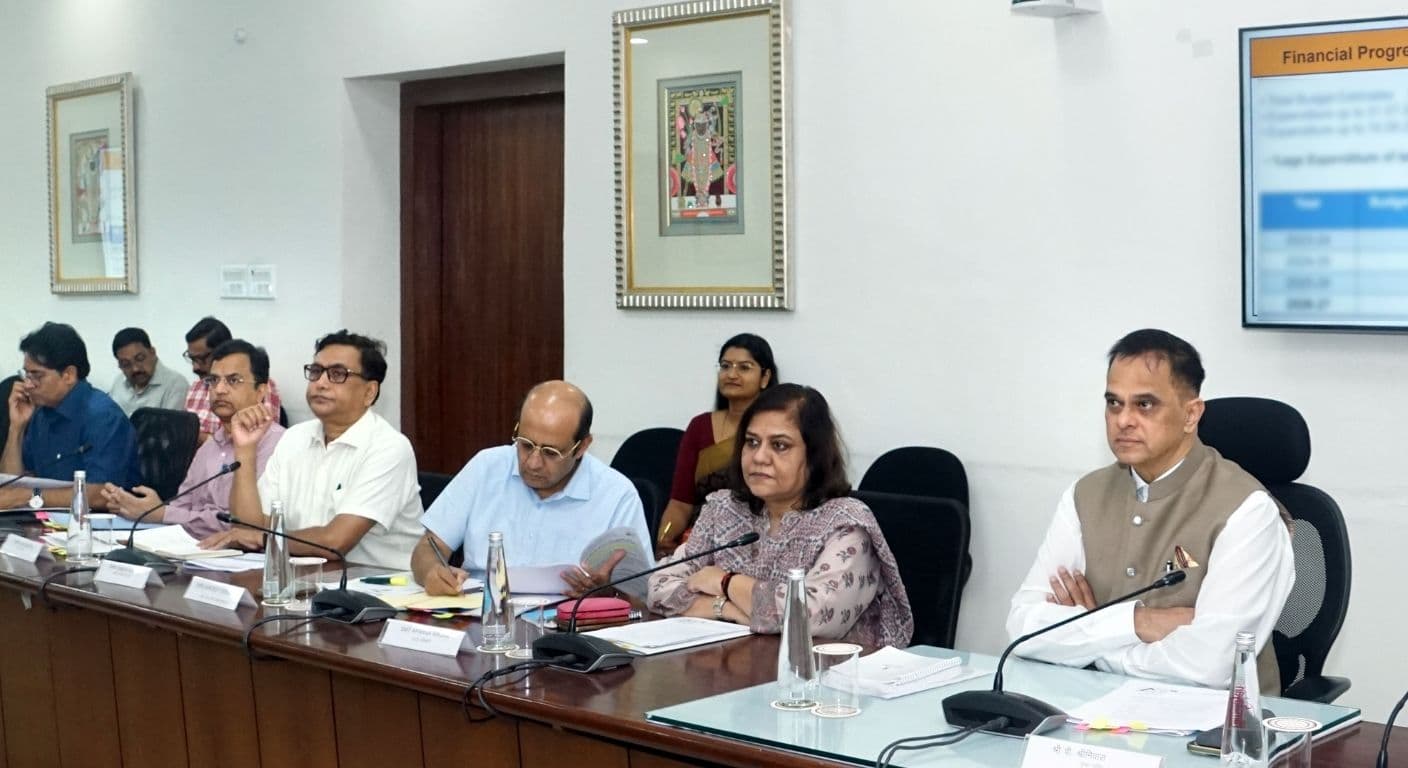

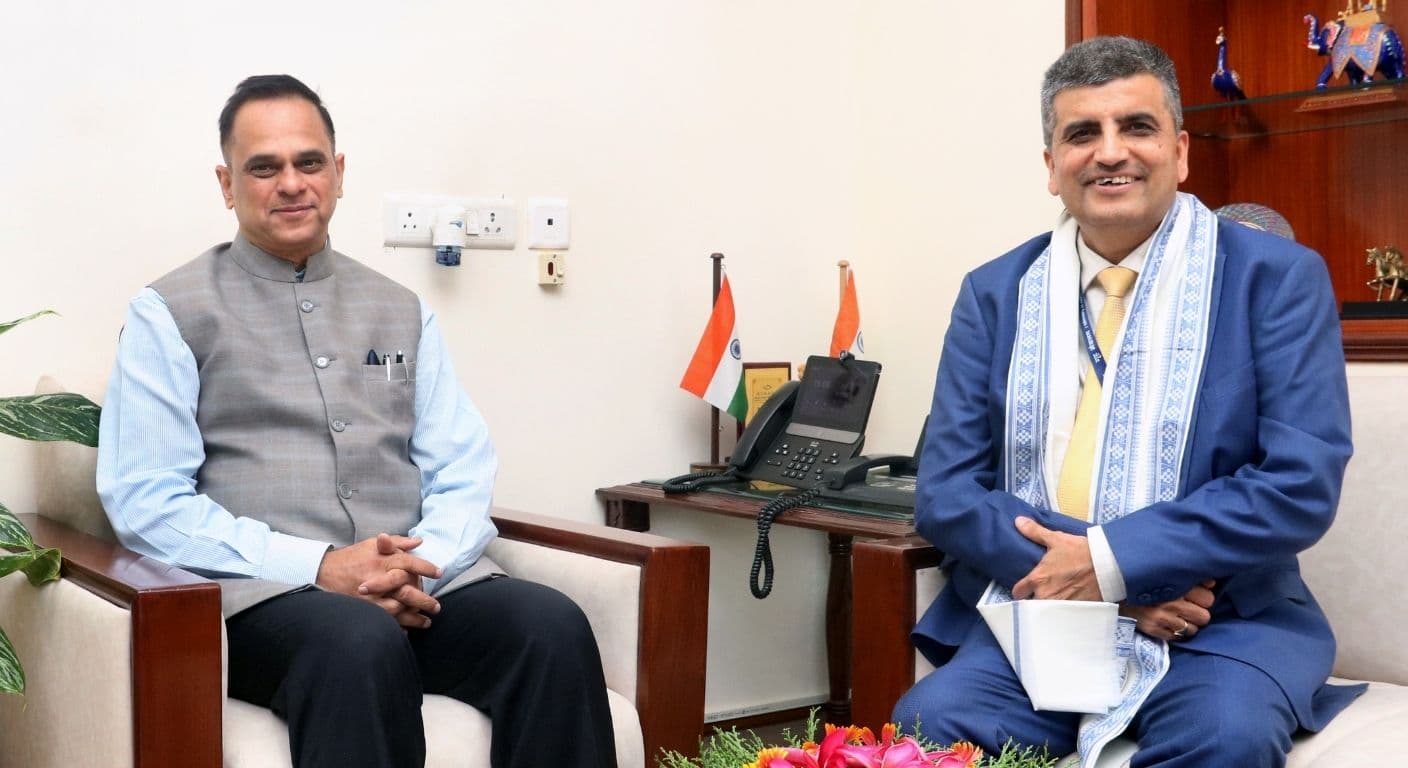
Rajasthan has opened a fresh policy push around insurance access and claims processing, with a Jaipur Secretariat meeting on Wednesday, August 12, 2026 reviewing everything from low-cost life and accident cover to RGHS claim-system integration and pending motor accident compensation. The discussion between Chief Secretary V. Srinivas and IRDAI Chairman Ajay Seth was framed around the broader goal of Insurance for All by 2047.
For Jaipur, the importance lies in the practical issues touched in one sitting. The meeting did not just revisit a long-range slogan. It examined how more people could be brought under basic insurance cover, how health claims could move more cleanly across systems, and how accident-related relief could reach claimants faster.
Quick Highlights
- The August 12 Jaipur meeting reviewed Rajasthan's roadmap toward Insurance for All by 2047.
- Officials discussed wider accidental and life insurance coverage under PMSBY and PMJJBY.
- The state explored linking RGHS with the National Health Claims Exchange to improve health-claim processing.
- Commercial vehicle insurance coverage, including mandatory third-party insurance, was also on the agenda.
- Pending motor vehicle accident claims were discussed with a focus on quicker settlement through Lok Adalats.
- A follow-up coordination meeting is to be organised by the State Insurance and Provident Fund Department.
What the meeting focused on
The clearest public-interest thread was insurance reach. The meeting looked at ways to expand coverage under Pradhan Mantri Suraksha Bima Yojana and Pradhan Mantri Jeevan Jyoti Bima Yojana, especially for people who remain uninsured or financially vulnerable. In practical terms, that points to a push for broader participation in basic accident and life cover rather than a discussion limited to the already insured.
The second major track was claims infrastructure. Officials discussed the possibility of integrating Rajasthan Government Health Scheme claims with the National Health Claims Exchange. If that eventually moves forward, the state expects better interoperability, greater transparency and smoother processing in health claims rather than fragmented handling across separate systems.
| Discussion track | What was examined |
|---|---|
| Basic insurance coverage | Wider enrolment under PMSBY and PMJJBY for uninsured and vulnerable groups |
| Health claim processing | Possible RGHS-NHCE integration to improve interoperability, transparency and efficiency |
| Commercial vehicles | Stronger insurance coverage across the state, including mandatory third-party cover |
| Motor accident compensation | Faster disposal of pending claims through Lok Adalats |
| Next administrative step | A follow-up meeting to be organised by the SIPF Department with health, transport, NHA, traffic, hospital and insurance stakeholders |
Why RGHS and accident claims matter
The RGHS angle matters because claim processing often becomes the point where public schemes feel either functional or frustrating. A cleaner exchange structure could reduce friction between institutions, improve visibility in claim movement and make settlement less opaque for patients and providers. The release does not say integration has been approved or scheduled for rollout, but it does show the state is treating claims architecture as a policy priority rather than a back-office detail.
The motor-accident side is equally practical. Pending accident claims affect families, injured persons, drivers and vehicle owners in very direct ways. A push to move these cases faster through Lok Adalats suggests the state wants quicker relief in matters where long delays can deepen financial stress after a crash.
What this could mean for the wider state
The meeting also looked at insurance coverage for commercial vehicles, including mandatory third-party protection. That gives the discussion a road-safety and compliance dimension in addition to social protection. If enforcement and coverage both improve, the benefits would extend beyond policy paperwork to passengers, operators and accident claimants across Rajasthan.
Just as important, the planned follow-up meeting is meant to bring together a wider set of players, including the National Health Authority, the Health and Transport departments, traffic police, hospital associations and major insurance providers. That signals the state sees the issue as a coordination problem across institutions, not as a single-department file.
What happens next
The next step is the follow-up meeting to be organised by the State Insurance and Provident Fund Department. That is where the broad discussion may begin turning into specific administrative action points.
For now, the August 12 Jaipur meeting is best read as a roadmap-setting exercise with several practical public-service implications. The real test will be whether it leads to measurable movement on insurance penetration, claim transparency and faster accident compensation rather than remaining a high-level policy conversation.