
Rajasthan is preparing a much larger diabetic eye-screening push under Mission Madhu Netra-AI, a state-backed campaign that uses artificial intelligence to flag retinal damage before patients lose vision. The rollout matters for Jaipur readers because the first list of centres includes Sanganer and nearby towns such as Dausa, Lalsot and Kotputli, bringing the programme closer to the Jaipur region instead of keeping screening limited to major tertiary hospitals.
According to details reported by Dainik Bhaskar, the state plans to expand the campaign to hospitals in 40 cities with support from the Union health ministry and AIIMS Delhi after a pilot produced encouraging early results.
Quick Highlights
- Mission Madhu Netra-AI is planned for hospitals in 40 cities across Rajasthan.
- A 2025 pilot screened 865 patients and found 139 cases ranging from mild to severe diabetic retinopathy.
- AI-enabled fundus cameras can analyse retinal images in seconds and classify disease severity.
- Severe patients can receive an anti-VEGF injection worth about Rs 16,000 under the Chief Minister's free medicine scheme.
Diabetic retinopathy is one of the most serious eye complications linked to diabetes because the damage can progress quietly. The report says only about 10 percent of diabetes patients undergo regular eye checks even though delayed diagnosis can lead to permanent vision damage.
How the AI screening works
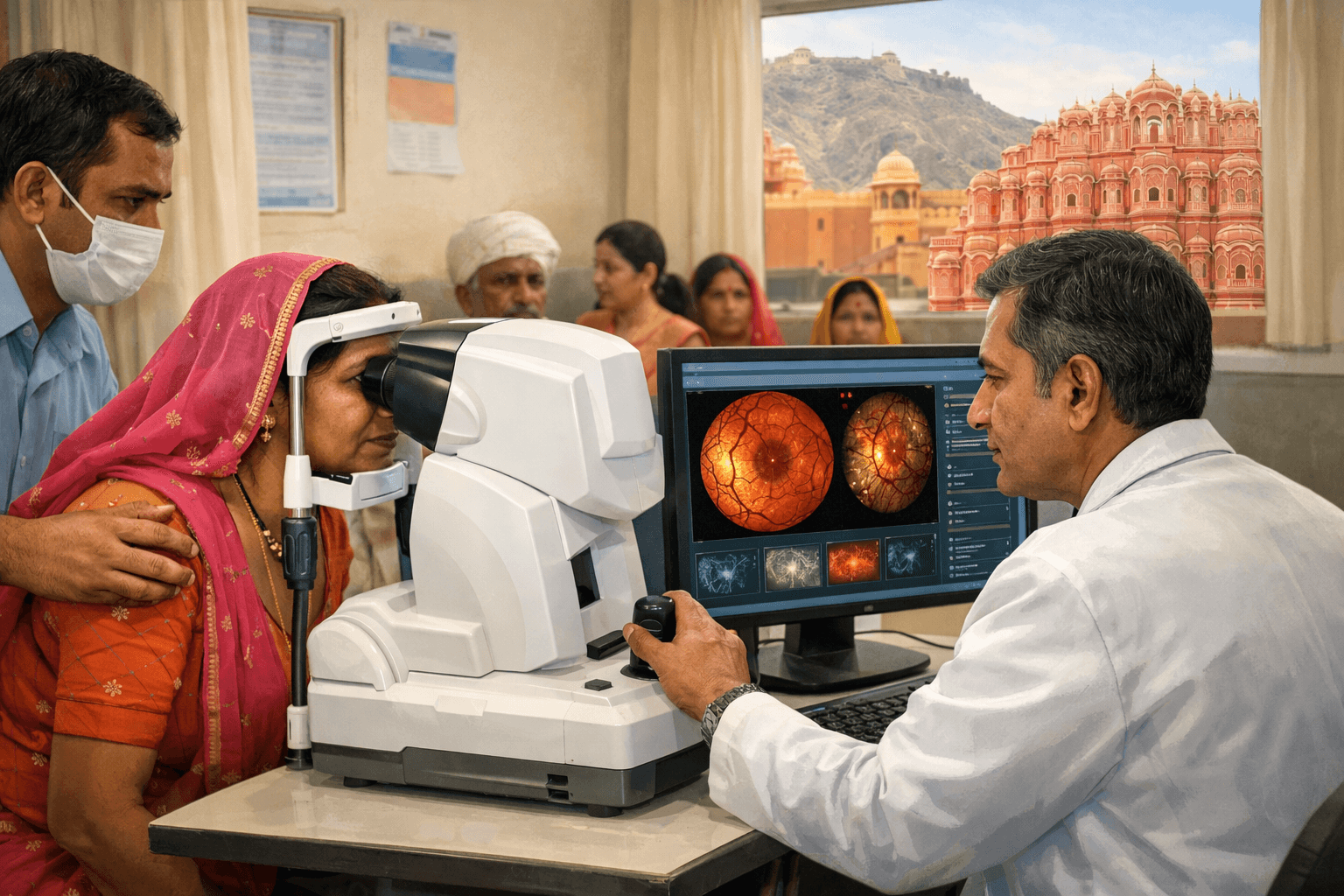
The programme relies on AI-enabled fundus cameras that capture images of the retina and upload them to an analysis platform. Instead of waiting for a lengthy manual review, doctors can get a machine-assisted report within seconds that places patients into broad categories such as no retinopathy, mild, moderate or severe disease.
That is meant to reduce the screening burden on specialist eye doctors while helping hospitals identify which patients need faster follow-up. In practical terms, it turns a retinal photo into a quick triage tool rather than leaving diabetic eye damage undetected until it becomes harder to treat.
Pilot results pushed the state toward expansion
The health department reportedly had five fundus camera machines as far back as 2018, but they were not fully used for years. In 2025, those machines were linked to AI for a pilot at five hospitals. So far, 865 patients have been screened, and 139 were found to be in mild, moderate or severe stages, allowing treatment to begin earlier.
Rajasthan has now decided to extend the model to more district hospitals. The Centre has supplied eight fundus camera machines, and the state health department is ordering more for 32 districts. Ophthalmologists and optometrists are also being trained to use the equipment effectively.
Among the cities named for the wider rollout are Dausa, Lalsot, Kotputli, Sanganer, Tonk and Neem Ka Thana, giving the Jaipur belt a clear stake in the programme even though the campaign is statewide.
Separate eye-care push for premature babies
The report also points to a second eye-care expansion focused on premature babies, who can face a serious condition known as retinopathy of prematurity. The health department says indirect ophthalmoscopy equipment is being installed in district hospitals so newborns at risk can be screened within the first month of life.
For diabetic patients, the treatment angle matters too. The report says people in the most severe stage can receive anti-VEGF injections under the Chief Minister's free medicine scheme, potentially protecting eyesight in cases where delay could mean permanent damage. If the 40-city rollout holds, Mission Madhu Netra-AI could become one of Rajasthan's most practical uses of AI in public healthcare so far.