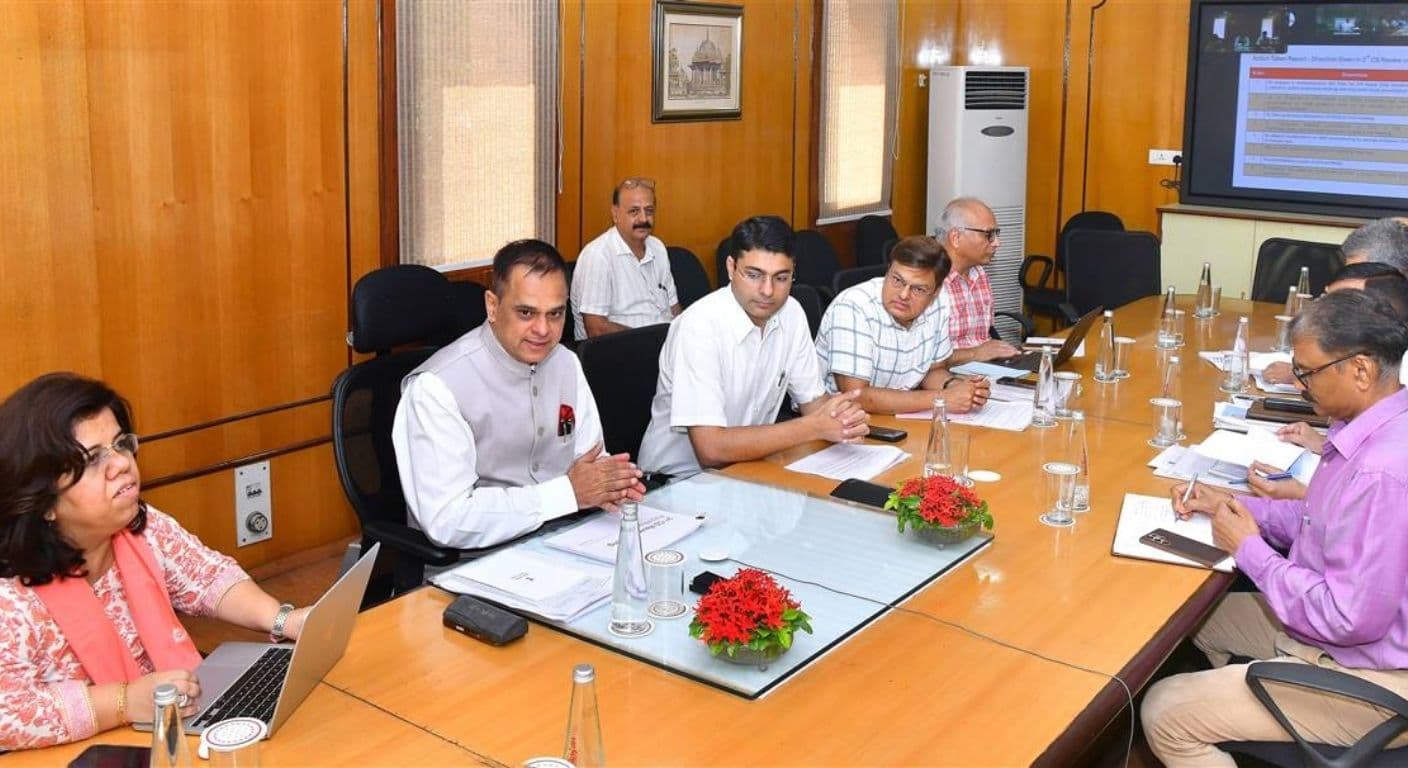

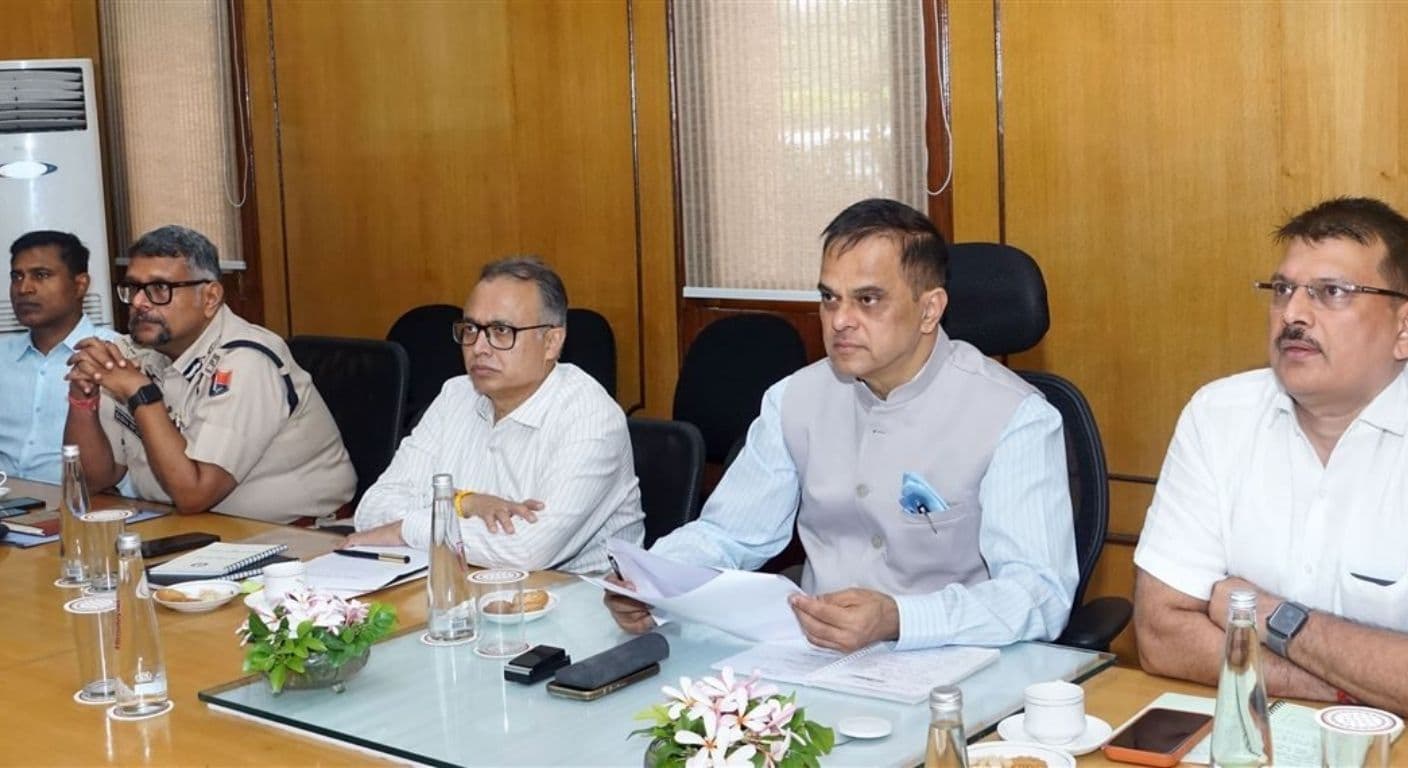
Rajasthan has ordered monthly district-level law-and-order reviews, tougher action in organized-crime hotspots and closer cyber and social-media monitoring as part of a fresh crime-control push led from Jaipur. At a high-level review on July 15, 2026, Chief Secretary V. Srinivas said the state should keep tightening law and order, improve crime control and maintain a safer public environment through visible, coordinated enforcement.
The most important shift in the review is that it moved beyond a general call for vigilance and into an operating checklist for districts. Collectors and police superintendents were told to meet every month, senior officers were asked to stay active in the field, and police leadership pushed a more proactive model that aims to stop crime patterns earlier rather than only reacting after incidents escalate.
Quick Highlights
- District collectors and police superintendents were told to hold monthly law-and-order review meetings.
- The state reiterated a zero-tolerance policy and warned against any collusion with or protection for criminals.
- Officials were asked to identify organized-crime hotspots and run special enforcement drives there.
- District-wise reports on rising and falling crime trends must be submitted within 15 days.
- Senior officers were told to conduct regular field visits, while police leadership called for proactive policing.
- The review also emphasized action on illegal mining, narcotics crime, illegal encroachments, cyber crime and rumor-spreading on social media.
What districts were told to do
The review placed coordination at the center of the law-and-order strategy. District administrations were told to make joint collector-police reviews a regular monthly practice so complex cases can be tracked and resolved faster. The message was that district-level coordination should not be left to crisis moments alone.
Officials were also told that complaints of collusion with criminals or improper protection should not arise at any level. Where such cases surface, the state wants strict action in line with its zero-tolerance stance. The review also called for regular CLG meetings at police-station level, with senior officers attending wherever possible, so community-level communication stays active alongside formal policing.
| Priority area | Direction from the review |
|---|---|
| District coordination | Hold monthly collector-SP reviews and resolve complex cases through closer coordination. |
| Crime hotspots | Identify organized-crime pockets and run focused special drives. |
| Officer presence | Ensure regular field visits by senior police officers. |
| Crime tracking | Submit district-wise crime increase and decrease reports within 15 days. |
| Community interface | Conduct regular CLG meetings at police-station level with senior participation where possible. |
| Zero tolerance | Take strict action where there is any sign of criminal protection or collusion. |
Why proactive policing and cyber monitoring were stressed
Director General of Police Rajeev Kumar Sharma told the review that policing should become more proactive than reactive. That means districts with worsening crime trends are expected to be monitored more closely by their police superintendents instead of waiting for bigger incidents or public pressure to force action.
The review also widened the law-and-order lens beyond conventional street crime. Officials were asked to monitor social media daily, act quickly against rumor-spreading and elements trying to disturb social harmony, and strengthen public awareness against cyber crime. For Jaipur readers, that matters because digital misinformation and online fraud now affect public safety as directly as many offline crimes.
Mining, narcotics and pressure groups also under watch
The meeting paired the law-and-order review with a harder line on several recurring pressure points. Officials were told to keep tighter watch on illegal mining, stop local mafia elements from placing unnecessary pressure on industrial units, and improve both quantitative and qualitative action in narcotics-linked crime by tracing supply sources more effectively.
Police were also told to identify illegal encroachments carried out by offenders and move ahead with demolition action as permitted under rules. Districts where caste tension has the potential to flare up were asked to remain on special alert, prepare lists of disruptive antisocial elements and maintain regular dialogue with respected local citizens who can help preserve social harmony.
Women, children and the public-facing side of enforcement
The review did not frame safety only as a policing statistic. It also called for self-defense training for women and weekly district-level awareness programmes linked to crimes against women and children. That gives the directive a preventive and public-outreach side, not just an enforcement one.
The next checkpoint is the district response. If monthly reviews actually begin, hotspot drives are visible, and cyber and social-media monitoring turns faster, the review could produce a more structured law-and-order model across Rajasthan. If not, it will remain another high-level Jaipur meeting whose success depends on follow-through in the districts.