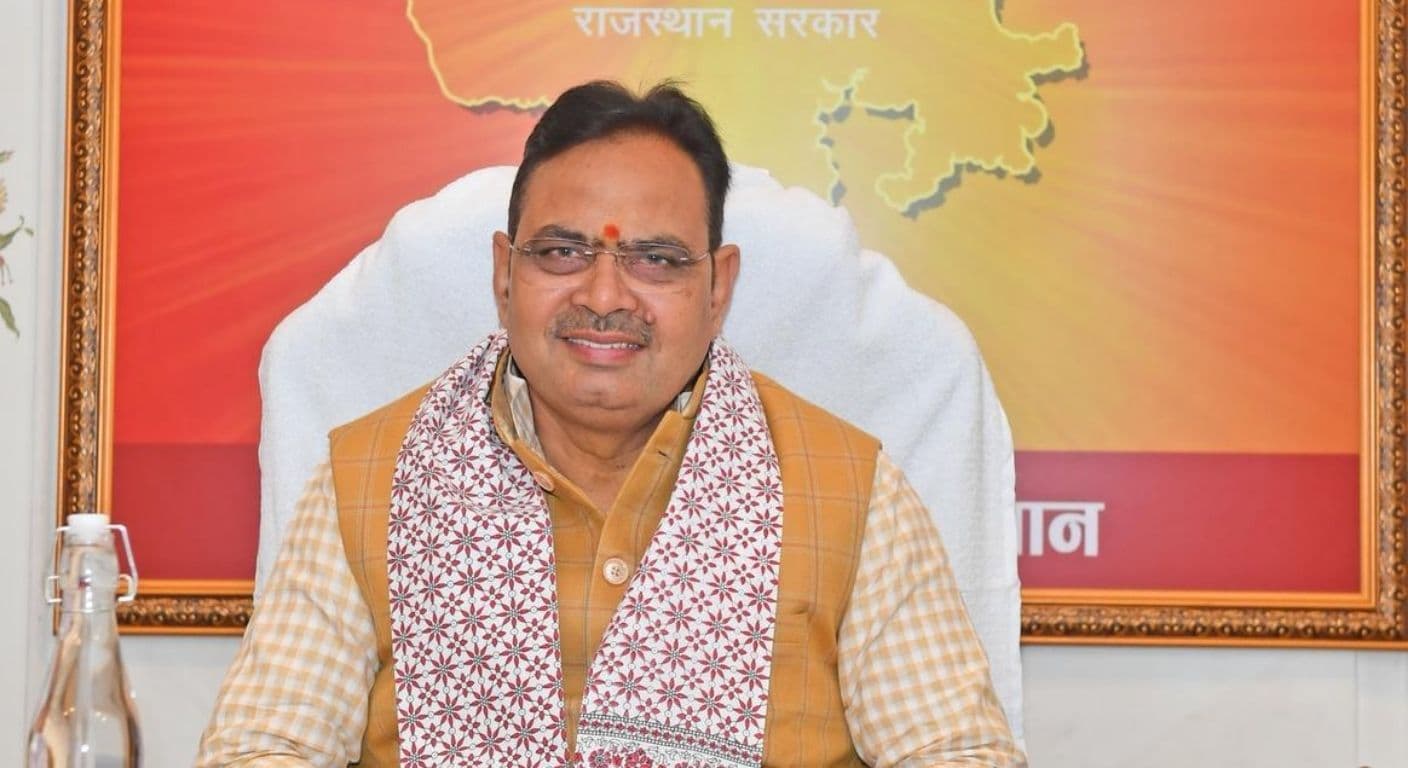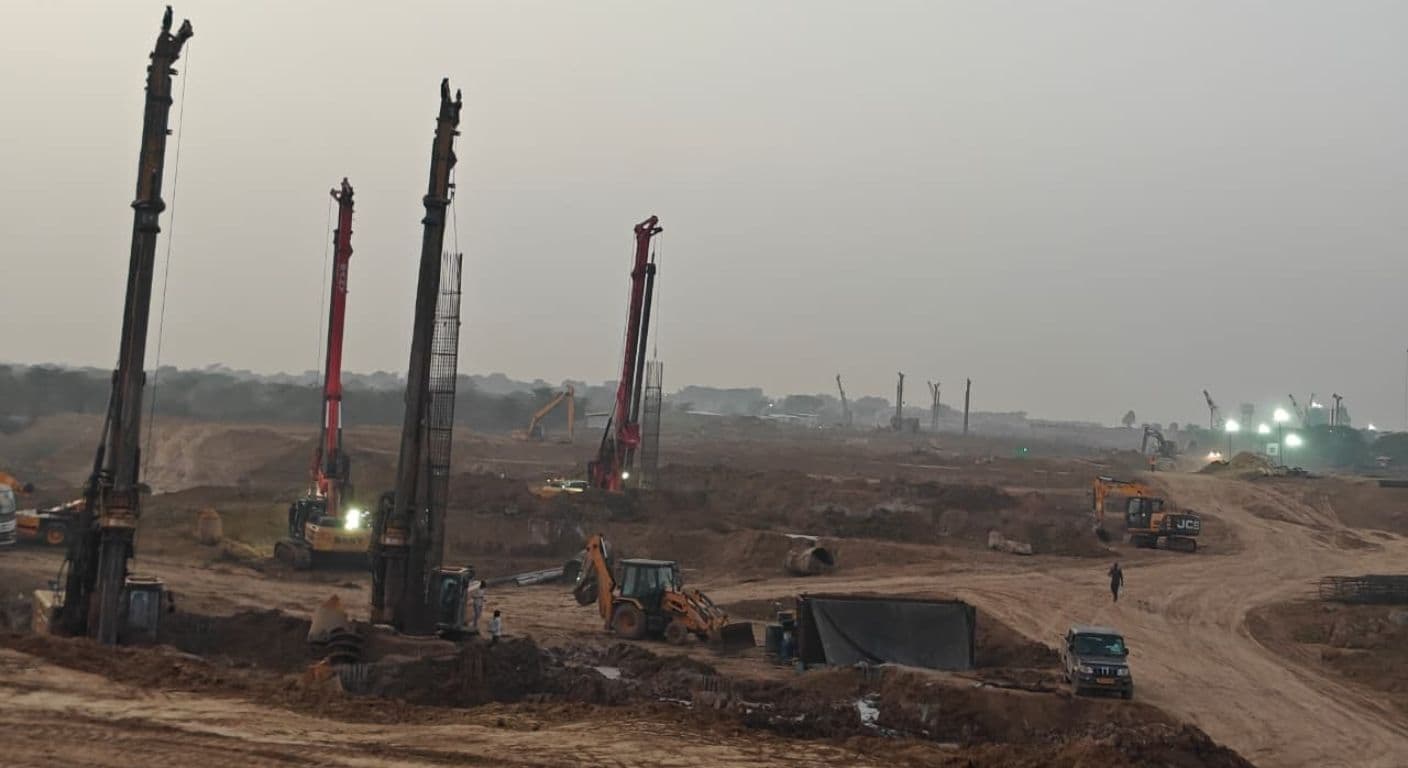

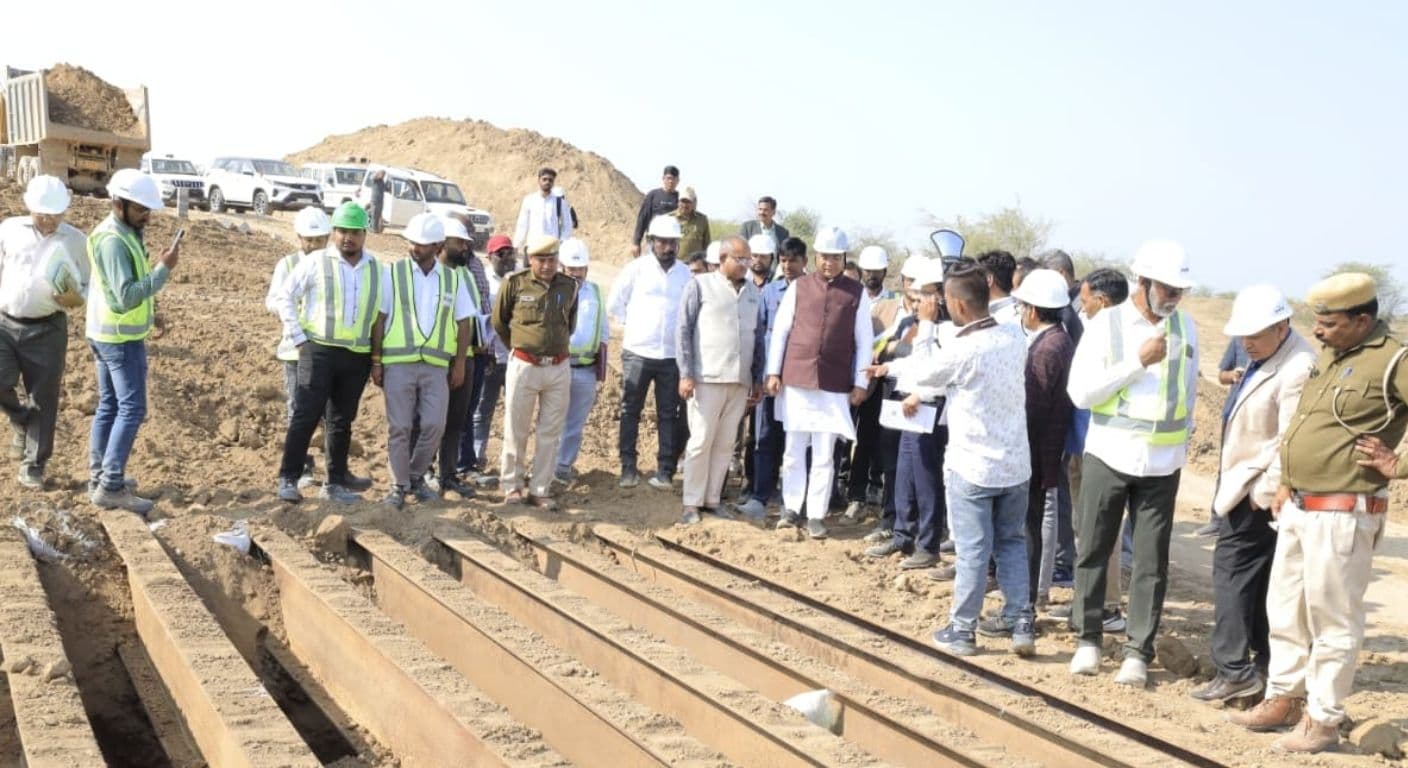
The revised Parvati–Kalisindh–Chambal Link Project, also known as the Ram Jal Setu Link Project, is set to become a lifeline for 17 districts of Eastern Rajasthan. Water Resources Minister Shri Suresh Singh Rawat inspected the ongoing works of the Chambal Aqueduct on Monday at Guhata in Bundi district, reviewing progress and interacting with engineers and workers at the site.
During the visit, the Minister walked nearly two kilometres to closely examine each construction point of the aqueduct. He directed officials and the executing agency to ensure strict adherence to quality standards and timely completion, emphasising that no compromise would be tolerated on safety or workmanship.
Shri Rawat stated that under the visionary leadership of Chief Minister Shri Bhajanlal Sharma, the state government is making continuous efforts to strengthen water security. The Chambal Aqueduct, he said, will prove to be a major milestone in Rajasthan’s journey towards water self-sufficiency, with all works being executed in mission mode.
Key Features of the Chambal Aqueduct Project
The aqueduct is being constructed over the Chambal River with a total length of 2.3 kilometres and is scheduled for completion by June 2028. The project began in May 2025 and is being developed at an estimated cost of ₹2,330 crore under Package-2 of Phase One of the Ram Jal Setu Link Project.
The aqueduct will connect Pipalda Samel village in Digod tehsil of Kota district on one end and Guhata village in Indragarh tehsil of Bundi district on the other. Structurally, the aqueduct measures 2,280 metres in length, with an internal width of 41.25 metres and a height of 7.7 metres.
Water Transfer and Multi-Purpose Benefits
Once completed, water from the Navnera Barrage on the Kalisindh River will be lifted through a pump house and released into the Mej River. From there, it will be routed via the Mej Barrage to the Galwa Dam, and further supplied to Bisalpur and Isarda dams. This integrated water transfer system will significantly improve drinking water availability, irrigation capacity, and industrial water supply across the region.
In addition to water conveyance, the aqueduct will also provide an alternative route for public movement, adding infrastructural value beyond its core purpose.
A Vision for Long-Term Water Security
The Water Resources Minister praised the dedication of engineers and workers for maintaining momentum and complying with safety norms. He reiterated that the project reflects the Chief Minister’s commitment to public welfare and long-term solutions to water scarcity.
The Eastern Rajasthan Canal Project (ERCP) has been expanded into the revised Parvati–Kalisindh–Chambal Link Project, with an overall investment of approximately ₹90,000 crore. In its first phase alone, the project will ensure drinking water supply to around 3.25 crore people across 17 districts, while also supporting irrigation and industrial growth—thereby giving a new direction to Rajasthan’s economic and social development.
Following the inspection, Shri Rawat held a review meeting with departmental engineers to assess progress and reinforce timelines for upcoming milestones.