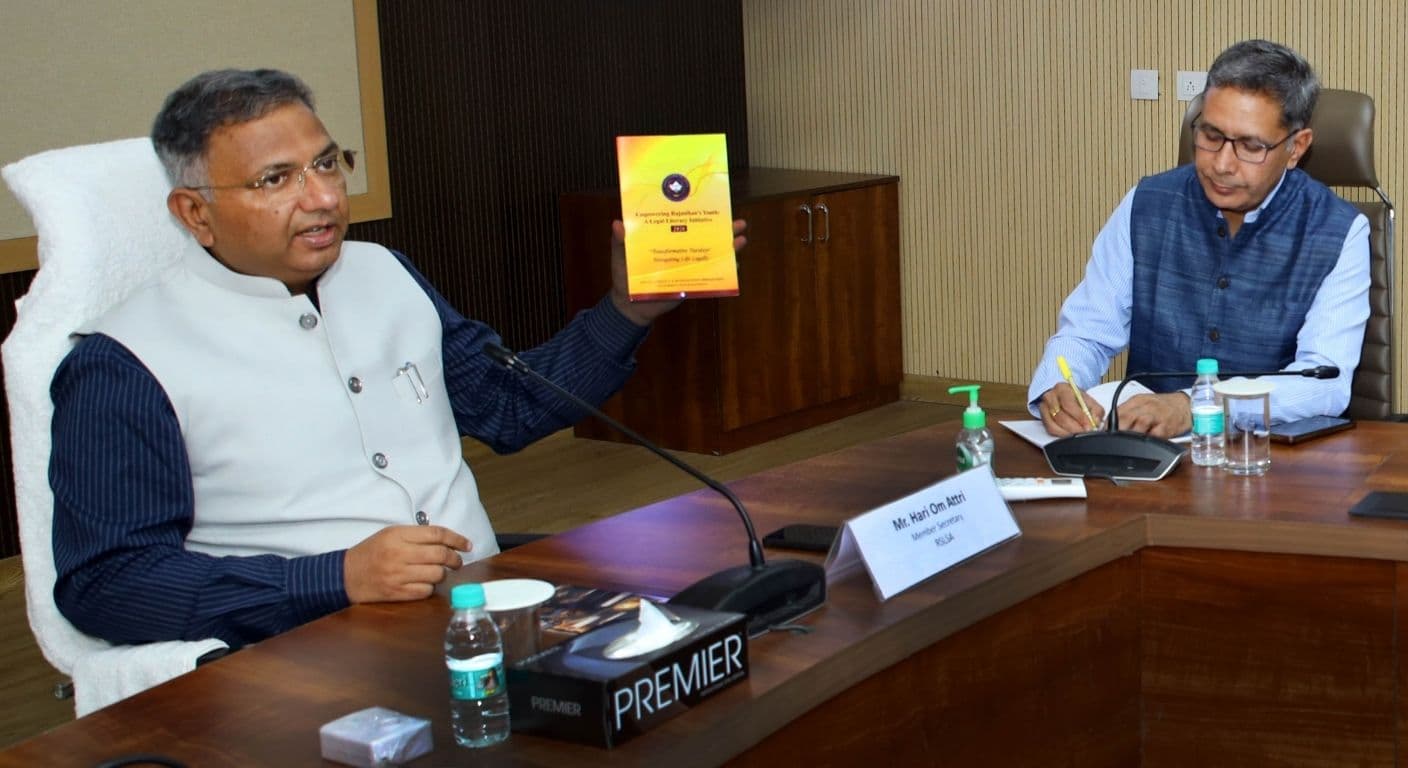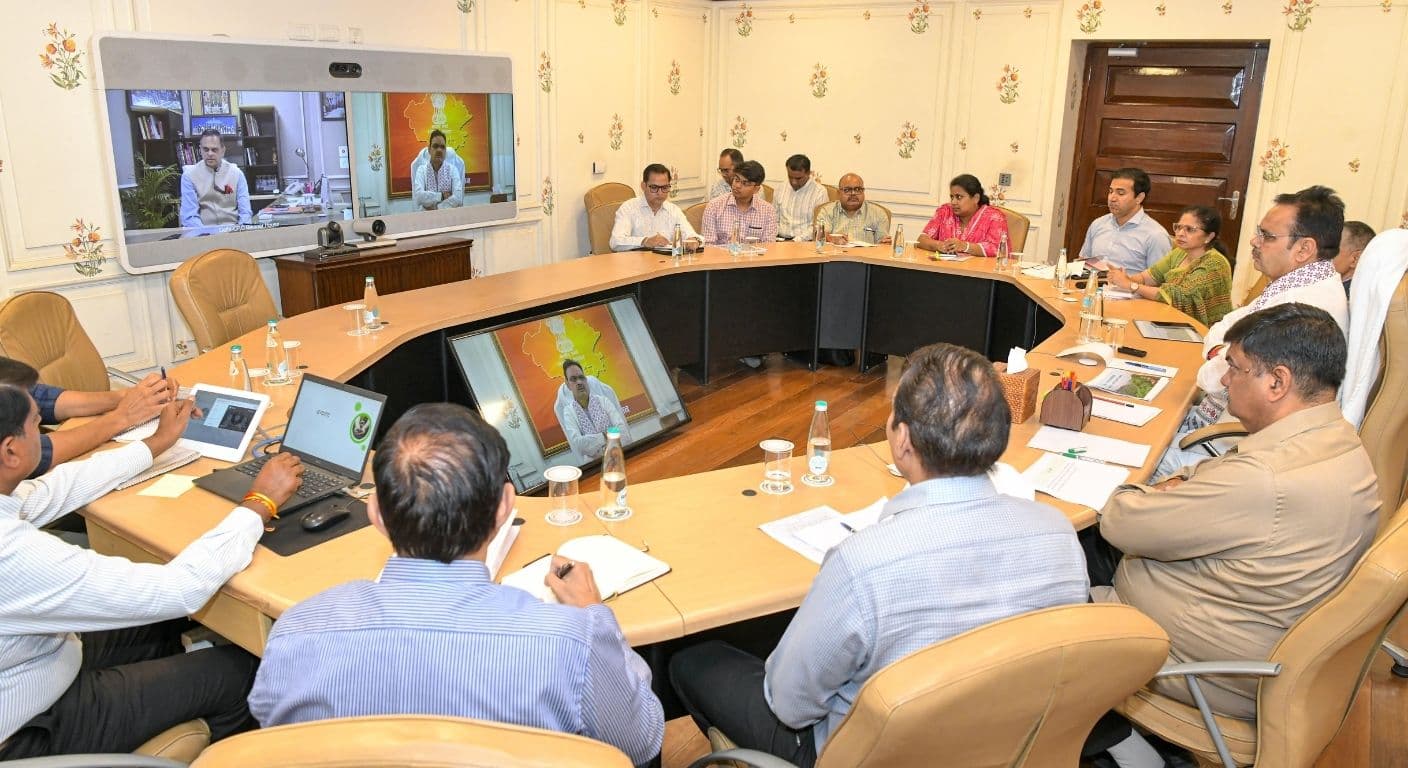

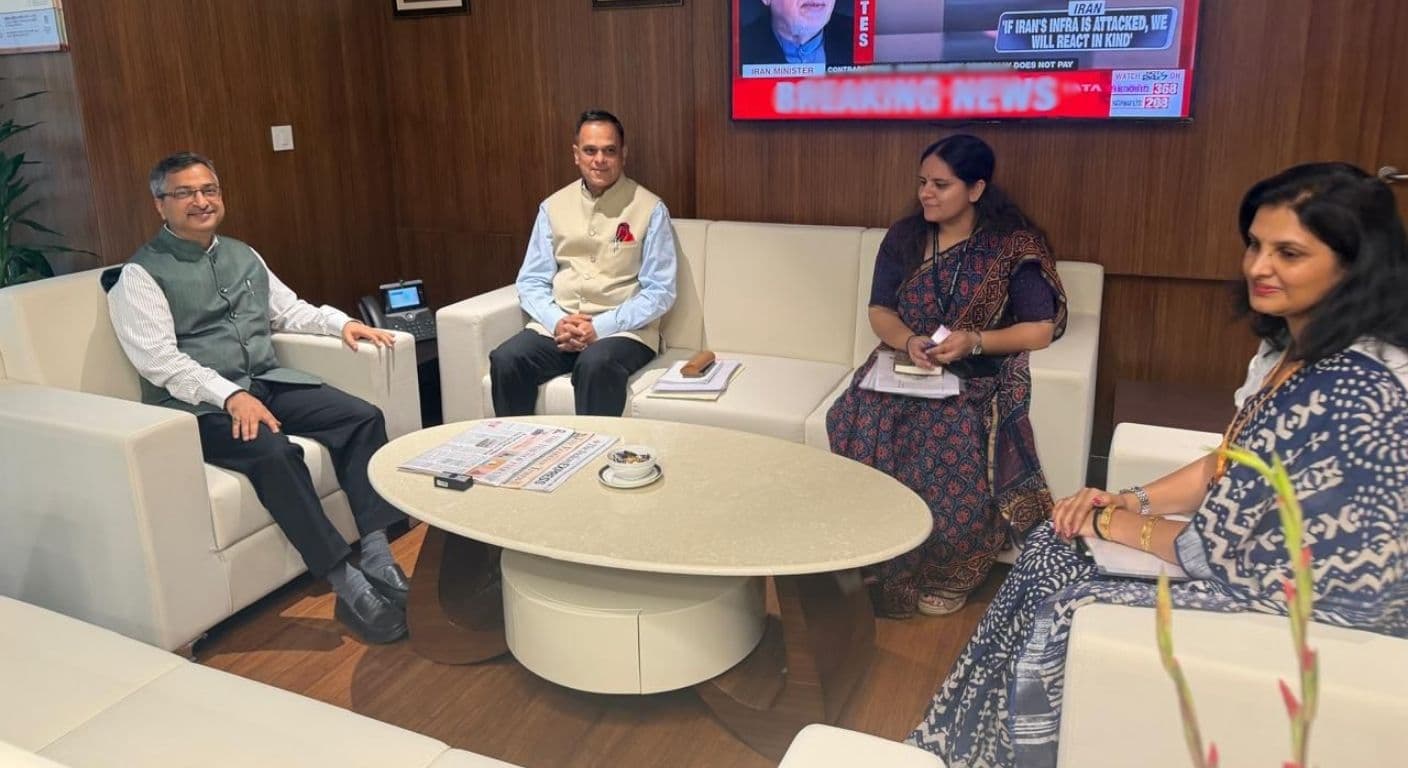
Rajasthan used a high-level round of meetings in New Delhi to push movement on some of its biggest pending development priorities. Chief Secretary V. Srinivas met the Cabinet Secretary and several senior Union officials to review issues spanning energy, water, mining, education, textiles and skill development.
The most direct Jaipur-linked takeaway is the discussion on the Skill India International Centre at Jaipur, which was raised alongside wider state programmes tied to jobs and growth. But the visit went much further, touching everything from energy security and solar rollout to the Modified Parbati-Kalisindh-Chambal project, PM SHRI schools and a broader push for faster Centre-state coordination.
Quick Highlights
- Chief Secretary V. Srinivas held meetings in Delhi on April 6, 2026 with senior Union officials.
- Rajasthan raised issues linked to energy security, PKC water infrastructure, mining reforms, school systems and skill development.
- The state separately discussed faster implementation of PM-KUSUM Component C and PM Surya Ghar Muft Bijli Yojana.
- The Skill India International Centre at Jaipur was part of the discussions with the skill development ministry.
- The visit also covered PM SHRI Schools, Vidya Samiksha Kendra, Kasturi Cotton and a proposed PM Mitra Park in Rajasthan.
What Rajasthan raised with Delhi
The Delhi visit was less about ceremonial calls and more about project follow-through. In the meeting with the Cabinet Secretary, Rajasthan highlighted recent releases under centrally sponsored schemes, briefed the Union side on steps taken to maintain energy security during the West Asia crisis and reviewed progress under Deregulation and Compliance Reduction Phase 2.
Energy reforms formed another major pillar of the trip. In talks with Prime Minister's Advisor Tarun Kapoor, the state discussed progress on its 12-point energy sector reform agenda, with specific attention on scaling PM-KUSUM Component C and the PM Surya Ghar Muft Bijli Yojana. That makes the visit important not just as an administrative exercise but as part of Rajasthan's larger effort to keep power reform, rooftop solar adoption and rural energy programmes moving at pace.
| Meeting area | Main issue raised |
|---|---|
| Cabinet Secretariat | Scheme releases, energy security and deregulation progress |
| Energy reform discussions | 12-point reform agenda, PM-KUSUM Component C and PM Surya Ghar rollout |
| Water resources | Timely approval of the Modified Parbati-Kalisindh-Chambal Project and stronger river basin governance |
| Mining | Reform roadmap to raise revenue and curb illicit mining |
| Skill development | State skill roadmap, PM Setu, PM Kaushal Yojana and the Skill India International Centre at Jaipur |
| School education | PM SHRI Schools, Vidya Samiksha Kendra and the 2026-27 roadmap |
| Textiles | Kasturi Cotton promotion and a proposed PM Mitra Park in Rajasthan |
Why the water, mining and education files matter
Three parts of the agenda stand out because they depend heavily on intergovernmental coordination. The first is the Modified Parbati-Kalisindh-Chambal Project, which remains one of Rajasthan's most important water-linked infrastructure priorities. The second is the push for mining reforms that can raise state revenue while tightening action against illicit mining. The third is the education track, where Rajasthan discussed strengthening school systems through PM SHRI Schools, Vidya Samiksha Kendra and the planning cycle for 2026-27.
That mix shows the state is trying to move both hard infrastructure and service-delivery reforms at the same time. Instead of a single-project visit, the Delhi round bundled together fiscal, administrative and sectoral files that could affect power supply, water security, school quality and job-linked training over the next few years.
Why Jaipur has a direct stake in the visit
For Jaipur, the clearest local angle is the discussion around the Skill India International Centre at Jaipur. If that project moves faster, the city could gain a stronger institutional base for international-facing skill training and employment-linked programmes. That gives the Delhi visit a more visible urban takeaway than a routine intergovernmental review usually would.
More broadly, Jaipur remains the command center where these state-level priorities are tracked, coordinated and translated into implementation. So even when the outcomes are statewide, the capital is where many of the administrative and project decisions will be followed up. The next thing to watch is whether these Delhi meetings turn quickly into approvals, operational clearances and measurable progress on the ground.