
Rajasthan's revenue review for the opening stretch of FY 2026-27 shows a strong start, with total receipts reaching Rs 45,958 crore by July 2026. Officials said that marks an 11.69 percent increase over the same period a year earlier, and means the state has already achieved 24.05 percent of its full-year budget estimate within the first four months of the financial year.
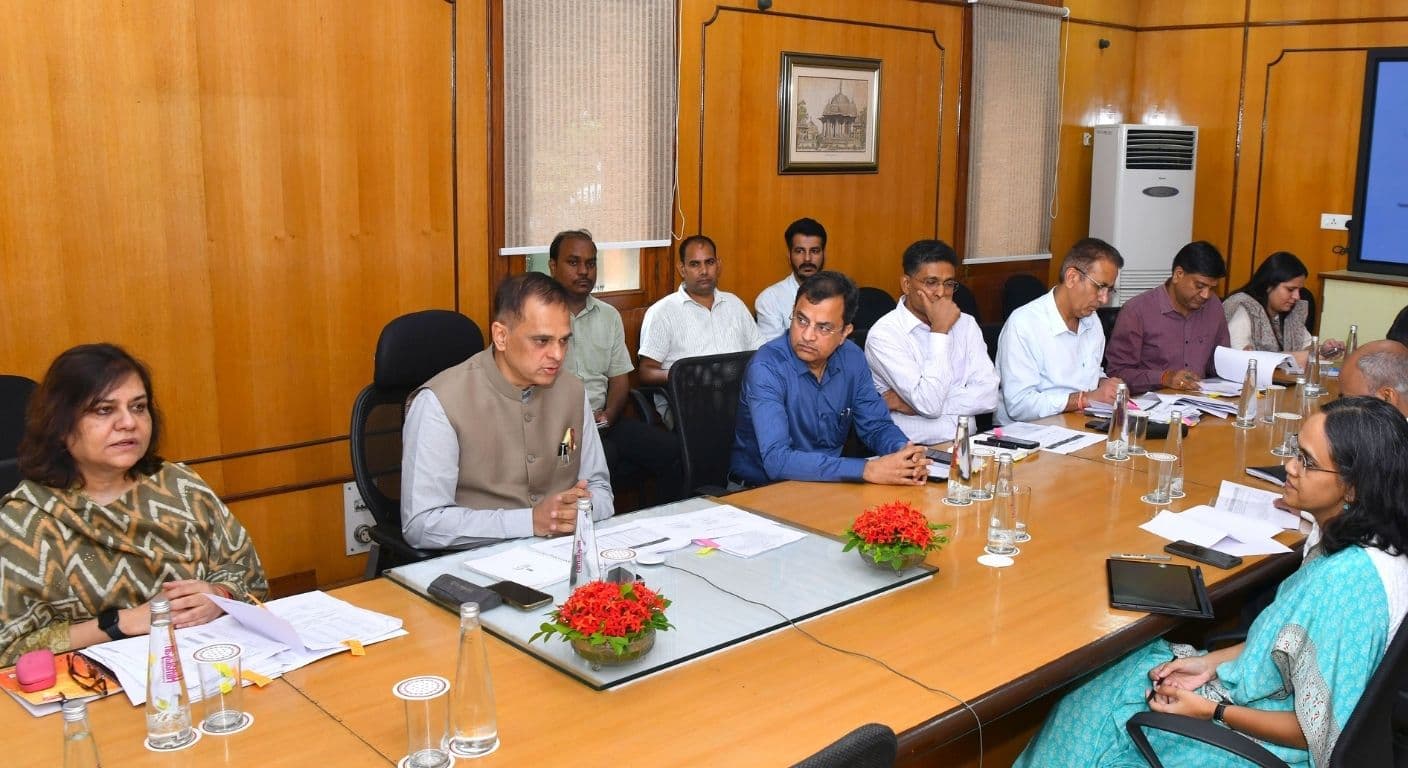
The numbers were reviewed on Friday, August 7, 2026 in a meeting chaired by chief secretary V. Srinivas. The wider takeaway is that the state is not only reporting higher collections across several major departments, but also linking that performance to tighter compliance checks, digital integration and more aggressive anti-evasion action.
Quick Highlights
- Rajasthan said total revenue receipts reached Rs 45,958 crore by July 2026.
- The April-July total was up 11.69 percent from the same period last year.
- The state said it had already achieved 24.05 percent of its full-year budget estimate in the first four months.
- Urban Development and Housing recorded the sharpest rise at 95.34 percent.
- Officials said action against non-existent firms flagged 63 firms and blocked Rs 259.71 crore in fake input tax credit.
Which departments drove the growth
The review shows that this was not a one-sector jump. Multiple revenue-earning departments posted double-digit gains between April and July 2026, suggesting that the improvement was spread across property-linked collections, energy demand, mining, transport and broader tax inflows.
The standout figure came from Urban Development and Housing, which posted a 95.34 percent rise. The petroleum sector rose 34.03 percent and had already achieved 41.18 percent of its annual target. Registration and Stamps grew 28.89 percent, which the review linked to simplified and more rational rates along with stronger online-service integration.
| Revenue area | Reported change or note |
|---|---|
| Urban Development and Housing | 95.34 percent growth |
| Petroleum | 34.03 percent growth; 41.18 percent of annual target achieved |
| Registration and Stamps | 28.89 percent growth |
| Mines | 17.93 percent gain |
| Labour cess | 17.70 percent improvement |
| Transport | 13.58 percent growth |
| VAT | 13.40 percent growth |
| GST | 9.54 percent growth |
| Excise | 7.54 percent overall growth; 18 percent July monthly growth |
Mining revenue was helped by higher zinc and limestone production along with firmer LME-linked pricing, while transport collections were supported by e-detection and tighter checking drives. The review also said VAT benefited from stronger demand in the fuel and energy space, and GST improved on the back of faster business activity and more effective monitoring.
Enforcement is part of the story too
The review was not presented as a passive collection update. Officials said tax-evasion enforcement remains active, and highlighted a drive against non-existent firms that identified 63 firms and blocked Rs 259.71 crore in fake input tax credit before it could flow through the system.
That matters because it suggests part of the revenue improvement is coming not just from growth in activity, but from tighter scrutiny of leakages. For a state trying to protect its tax base early in the financial year, preventing fraudulent claims can be almost as important as pushing up headline collections.
What the state wants departments to do next
The chief secretary directed departments to keep close watch on high-value revenue matters and related court cases, and asked them to study best practices from Gujarat, Andhra Pradesh and Karnataka. The review specifically referred to tools such as risk-based audit, AI-supported appeal review and predictive analysis using e-way bill data.
Another key instruction was to build a stronger integrated digital portal for major revenue-earning departments on the lines of the state's ITMS approach, along with better data integration across systems such as DISCOM, RERA and IGRS. The idea is straightforward: if departments share cleaner data and track large-value cases more consistently, the state can reduce revenue leakage while pushing collections higher through the rest of the year.