
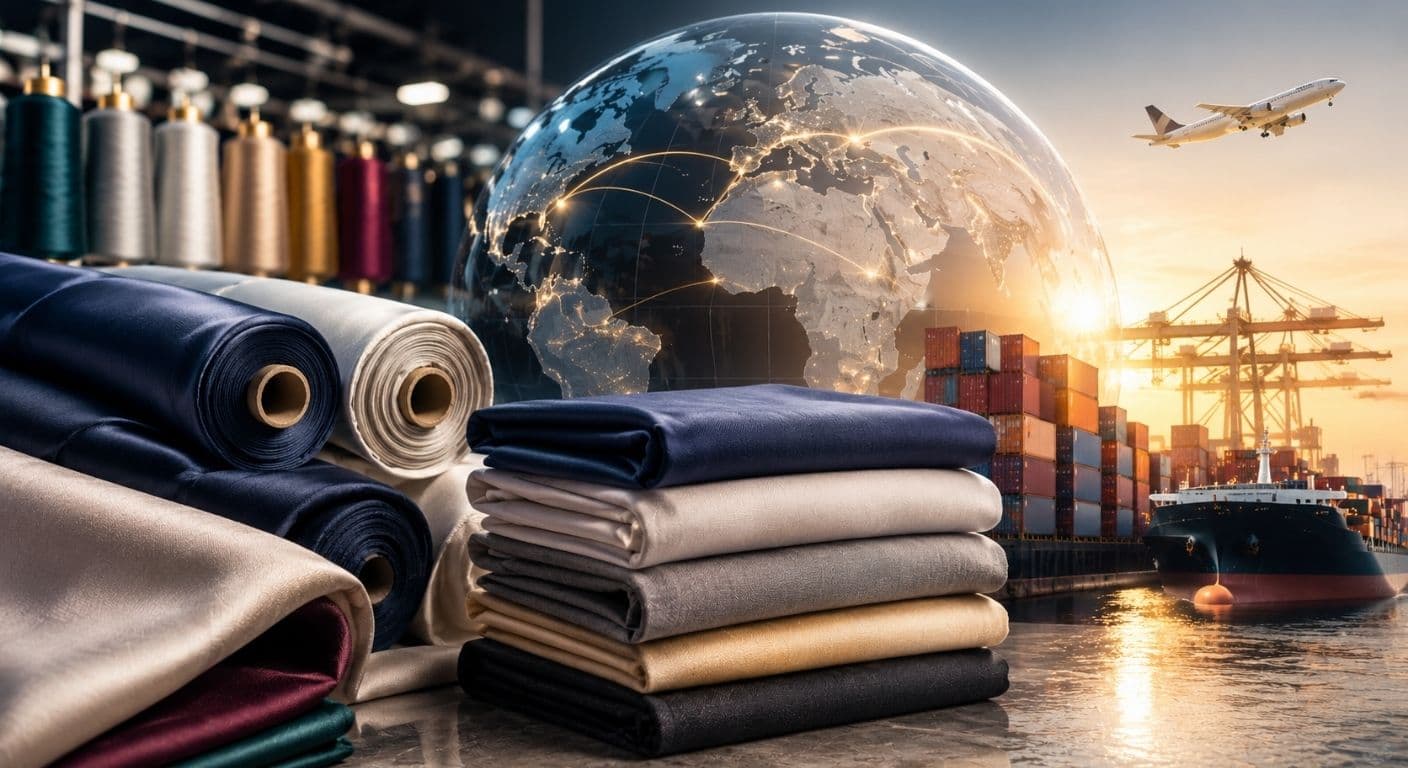
Rajasthan has opened a new policy push around its textile economy, setting a 2030 goal to raise textile exports by up to four times while also creating a dedicated state textile cell to push implementation. The package is not just a headline target: it also includes a state-level textile export action plan and new district-level plans for 11 districts, with Jaipur included among the seven officially identified champion districts.
For Jaipur, that matters because the city is already part of the state's textile, apparel and trade ecosystem, and it now sits inside a more structured export-growth roadmap. Instead of announcing a single subsidy or factory project, the state is trying to build a coordination system that removes bottlenecks, tracks data, connects exporters with policy support and turns the 2025 textile and apparel policy into something more operational.
Quick Highlights
- Rajasthan has set a 2030 target to multiply textile exports by three to four times, with the release headline framing the goal as fourfold.
- A dedicated state-level textile cell has been created under the policy push.
- The state has prepared a textile export action plan for Rajasthan and district-level plans for 11 districts.
- The seven champion districts named in the rollout include Jaipur, along with Ajmer, Bhilwara, Banswara, Chittorgarh, Jodhpur and Kota.
- A two-day textile summit is planned for October 2026.
- Rajasthan says textiles and related sectors contributed about Rs 13,500 crore out of more than Rs 97,171 crore in total state exports in 2024-25.
What the new textile push includes
The new textile cell is supposed to do more than issue circulars. According to the release, it will identify on-ground obstacles in industrial areas, interact with industry experts, entrepreneurs and exporters, study major textile centres in India and abroad, take part in national and international textile exhibitions, and compile sector-wide data for analysis. That makes the cell sound like a coordination and problem-solving unit rather than a purely symbolic body.
The state is also linking the move to wider industrial policy. The release says roughly 15 sector-based policies have already been brought in to support industrial development, and textiles are being treated as a focus area under the Rajasthan Textile and Apparel Policy 2025 and the broader investment-promotion framework.
| Push area | What has been announced |
|---|---|
| Export target | Raise textile exports by three to four times by 2030 |
| State structure | Create a dedicated textile cell for implementation and coordination |
| Planning layer | Prepare a state export action plan plus 11 district-level plans |
| District focus | Jaipur is among the 7 champion districts in the rollout |
| Industry outreach | Engagement with experts, entrepreneurs and exporters, plus exhibition participation and sector studies |
| Next milestone | A proposed two-day textile summit in October 2026 |
Why Jaipur is part of the story
Jaipur's relevance is not incidental. The city is explicitly listed among the seven champion districts chosen for the district-level textile export action-plan rollout. That matters because Jaipur is already part of the state's value chain through apparel activity, design-led production, block printing, trade linkages and export services, even when other districts dominate specific manufacturing niches.
If the action plans move beyond paperwork, Jaipur businesses could feel the effect through faster coordination, stronger export handholding and better visibility inside the state's textile-growth strategy. The real value will depend on whether the district plans actually help firms deal with land, infrastructure, compliance, logistics, market access and technology barriers that often slow expansion.
What the export numbers suggest
The release places textiles inside a much bigger export picture. Rajasthan says its total exports in 2024-25 were more than Rs 97,171 crore, with textiles and related sectors contributing about Rs 13,500 crore, or more than 13 percent of the total. That is large enough to justify a focused export strategy rather than treating textiles as only a traditional or heritage sector.
The state also highlights raw-material and production depth. It says Rajasthan ranks first in wool production with about 47 percent contribution, ranks fifth in cotton production, and currently has more than 1,800 textile and apparel units. Together, those figures support the state's argument that textiles still have headroom to grow as an export engine.
What to watch next
The next test is execution. A target for 2030, a dedicated cell and an October summit can all create momentum, but the more important question is whether exporters and textile units actually start seeing easier problem resolution, better market support and clearer district-level follow-through over the next few quarters.
For Jaipur readers, the practical checkpoint will be whether the city's champion-district status turns into visible initiatives rather than remaining a planning label. If the new system starts helping firms move faster on export readiness, technology access and business coordination, this policy story could become far more consequential than a standard government release.