
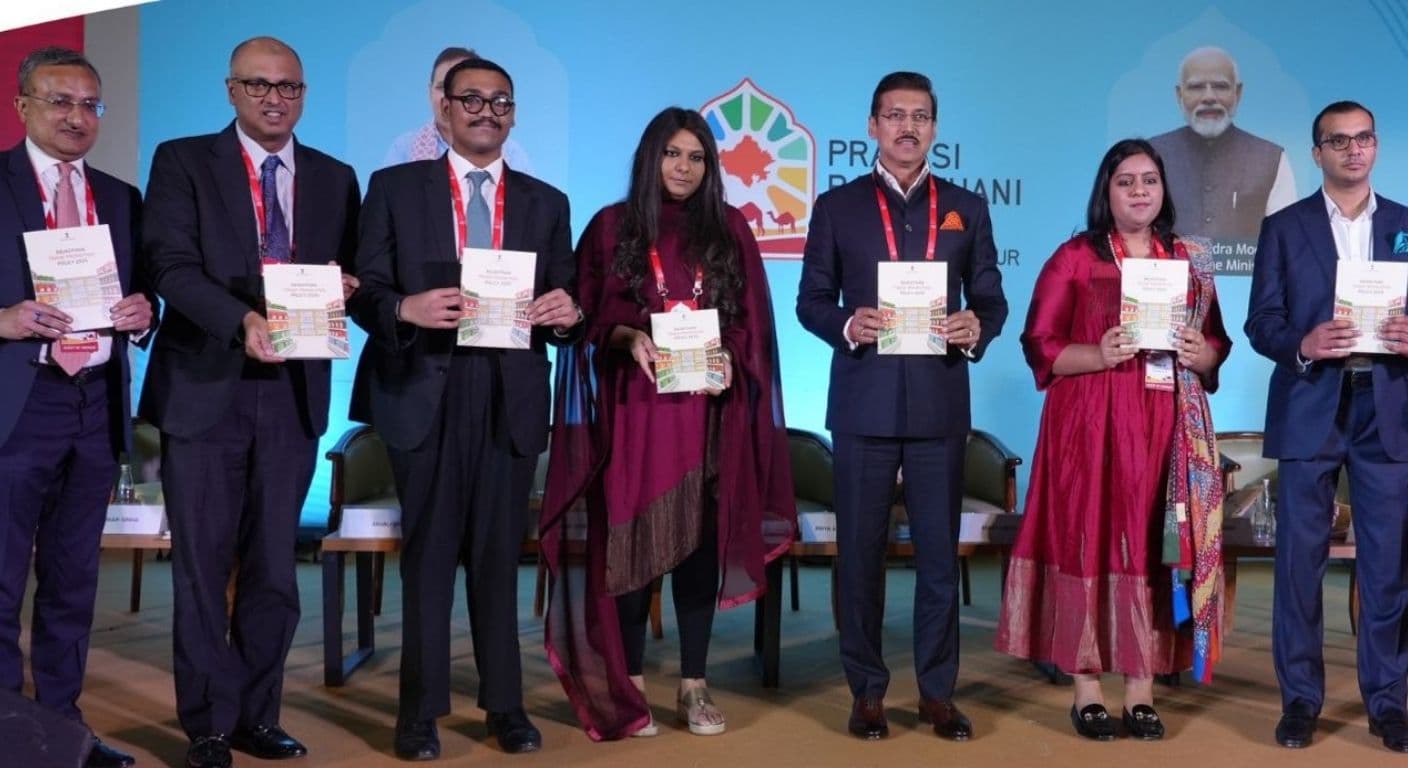
Applications are now open under Rajasthan Trade Promotion Policy 2025, giving traders a live route to seek support through their SSO ID or via e-Mitra. The policy package is aimed at business expansion in the state's retail ecosystem, with support that includes loans up to Rs 2 crore, interest subsidy, insurance assistance and help with e-commerce platform costs.
For Jaipur, the update matters because the city is one of Rajasthan's biggest trading and service hubs, with thousands of small businesses that could benefit if the policy translates into easier credit and lower operating risk. The bigger state-level pitch is that smaller traders should get better access to larger trade channels, e-commerce platforms and logistics networks instead of being left behind by scale and financing constraints.
Quick Highlights
- Applications under Rajasthan Trade Promotion Policy 2025 are now open.
- Traders can apply through their SSO ID or via e-Mitra.
- The policy provides a route for support linked to loans of up to Rs 2 crore.
- Interest subsidy goes up to 6%, with extra support for eligible women, SC, ST and Divyang traders in the higher loan bracket.
- Insurance premium support can cover 50% for up to five years, subject to a cap.
- E-commerce platform fee support can cover 75% for one year, up to Rs 50,000.
What support traders can get
The policy is structured as a multi-part support system rather than a single subsidy. For new micro trader enterprises, loans up to Rs 1 crore can receive up to 6% interest subsidy, while loans above Rs 1 crore and up to Rs 2 crore can receive up to 4% interest subsidy. Women, SC, ST and Divyang traders can receive an additional 1% interest subsidy in the higher loan category.
There are also risk-reduction incentives beyond interest support. Under the CGTMSE credit guarantee framework, the state will reimburse 50% of the guarantee fee for up to five years on eligible loan coverage up to Rs 5 crore. Micro trader enterprises are also eligible for 50% support on insurance premiums for up to five years, capped at Rs 1 lakh per year.
| Policy support area | Benefit announced |
|---|---|
| Application route | SSO ID or e-Mitra |
| Maximum retail trader loan | Up to Rs 2 crore |
| Interest subsidy up to Rs 1 crore | Up to 6% |
| Interest subsidy from Rs 1 crore to Rs 2 crore | Up to 4% |
| Extra subsidy for women, SC, ST and Divyang traders | 1% additional in the higher slab |
| CGTMSE guarantee fee reimbursement | 50% for 5 years on coverage up to Rs 5 crore |
| Insurance premium support | 50% for 5 years, up to Rs 1 lakh per year |
| E-commerce platform fee support | 75% for 1 year, up to Rs 50,000 |
Why the 10.5 lakh retailer figure matters
The policy has been framed around a very large base: more than 10.5 lakh retail stores across Rajasthan. That matters because the state is not treating this as a niche MSME measure for a handful of firms. It is positioning the policy as a broader trade-sector intervention meant to strengthen both retail and wholesale business activity, improve market access and create room for new investment and jobs.
That scale also explains the focus on logistics and e-commerce. Smaller traders often struggle not just with credit, but with digital discovery, platform costs and access to larger supply networks. By combining finance support with help on insurance and online selling costs, the policy is trying to make business formalisation and expansion more realistic for firms that may otherwise stay small or informal.
What Jaipur traders should watch next
For Jaipur traders, the most immediate takeaway is practical: the application window is active, and the route is simple enough to be accessible through the state's existing digital and assisted-service systems. Markets, neighbourhood retailers and new small business operators in the city can now test whether the policy's promised support actually becomes usable on the ground.
The next real measure of success will be implementation quality. If approvals move smoothly and the subsidy structure is easy to claim, the policy could strengthen access to credit and modern retail channels for smaller businesses. If the process becomes document-heavy or slow, the headline benefits may remain attractive on paper without delivering their full impact in the market.