
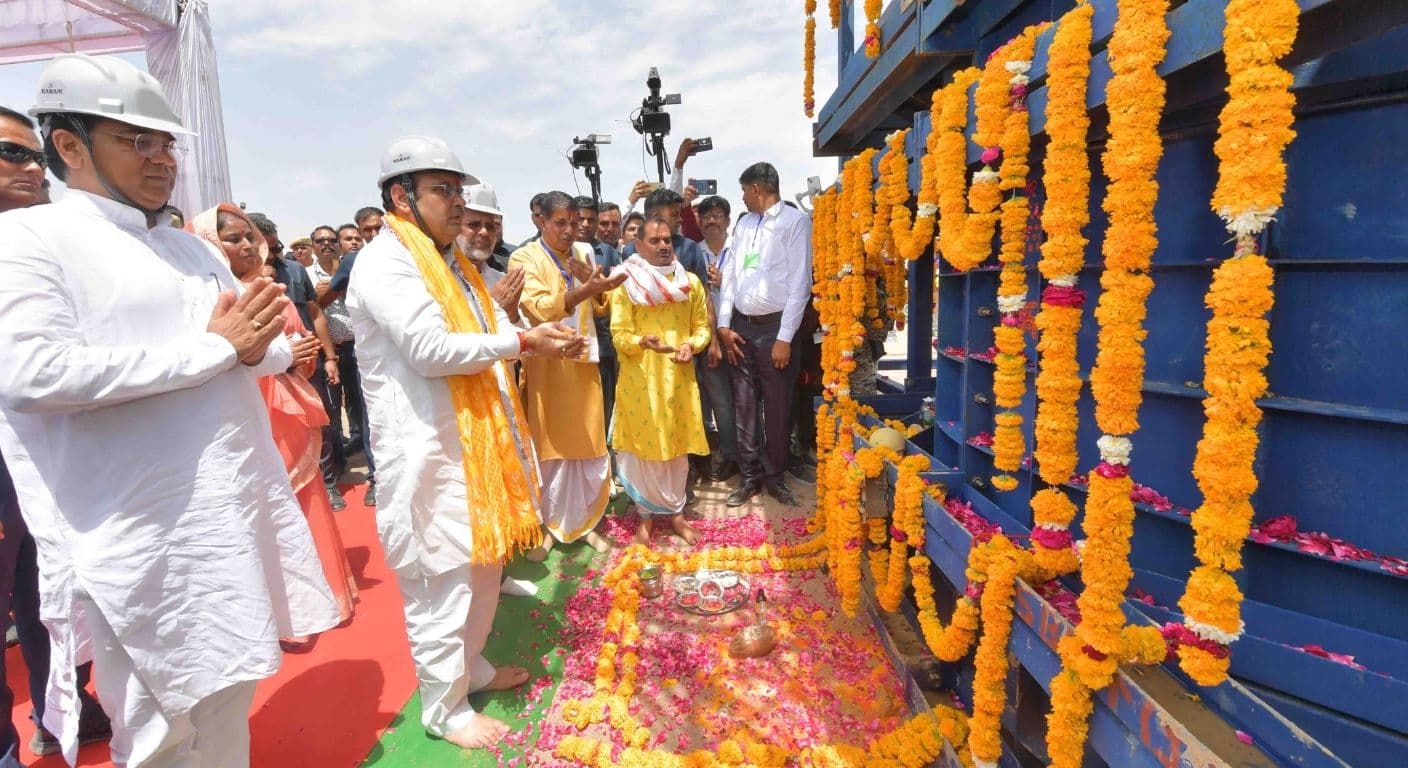
One of Rajasthan's biggest water-linked infrastructure works is moving ahead in Bundi, where Chief Minister Bhajan Lal Sharma reviewed the under-construction Chambal aqueduct under the Ram Jal Setu Link project. The state is positioning the project as a major eastern Rajasthan water link with a much wider footprint than the construction site itself.
Officials said the larger project is meant to support drinking water and irrigation needs in 17 districts and could benefit about 40 percent of Rajasthan's population. For Jaipur readers, the significance lies in the scale: this is the kind of state-level water infrastructure that can influence how eastern Rajasthan manages supply, irrigation pressure and longer-term regional water planning.
Quick Highlights
- The Chambal aqueduct is being built under the Ram Jal Setu Link project.
- The state says the larger project can support 17 districts in eastern Rajasthan.
- Officials said the project could benefit about 40 percent of the state's population.
- The aqueduct length is 2,280 meters.
- The structure is planned on 5,060 piles, 77 pile caps and about 384 circular piers.
What the project is expected to do
The project's main promise is straightforward: move enough water to strengthen both drinking water supply and irrigation support across eastern Rajasthan. That makes the aqueduct more than an engineering sub-project. It is a core structural element in a wider water-transfer system the government considers strategically important for the region.
During the site review, Sharma described the Ram Jal Setu Link as one of the state's key priority projects and told officials to keep construction quality high while completing the remaining work within the prescribed timeline. That emphasis matters because projects of this scale tend to be judged not just on design ambition but on whether they are delivered without quality compromises or long delays.
| Project metric | Figure or location |
|---|---|
| District coverage | 17 districts in eastern Rajasthan |
| Estimated population impact | About 40 percent of Rajasthan's population |
| Aqueduct length | 2,280 meters |
| Foundation work | 5,060 piles and 77 pile caps |
| Main support elements | About 384 circular piers |
| River crossing stretch | Between Peepalda Samel in Kota and Guhata in Bundi |
Where the aqueduct is being built
The structure is being built across the Chambal river between Peepalda Samel village in Kota and Guhata village in Bundi. The chief minister carried out the inspection from the Bundi side at Guhata village in Indergarh tehsil, where officials briefed him on the construction progress and the technical layout of the aqueduct.
The briefing said the structure will carry water over the Chambal so the project can cross the river as part of the broader link alignment. Officials also indicated that the finished structure is expected to make local movement easier for the public, giving the project a transport-convenience angle in addition to its core water function.
Why the construction numbers matter
The engineering scale helps explain why the government is monitoring the work so closely. An aqueduct built on 5,060 piles with 77 pile caps and roughly 384 circular piers is not a routine civil job. Those numbers point to a large, technically demanding structure that will need careful sequencing, supervision and quality control through the remaining phases.
That is also why the inspection focused on monitoring and progress rather than only a symbolic visit. If the project stays on schedule and performs as intended, it could become one of the more consequential water-infrastructure assets tied to Rajasthan's eastern districts. The next thing to watch is execution: whether the state can convert the scale promised on paper into timely completion and dependable water delivery on the ground.