
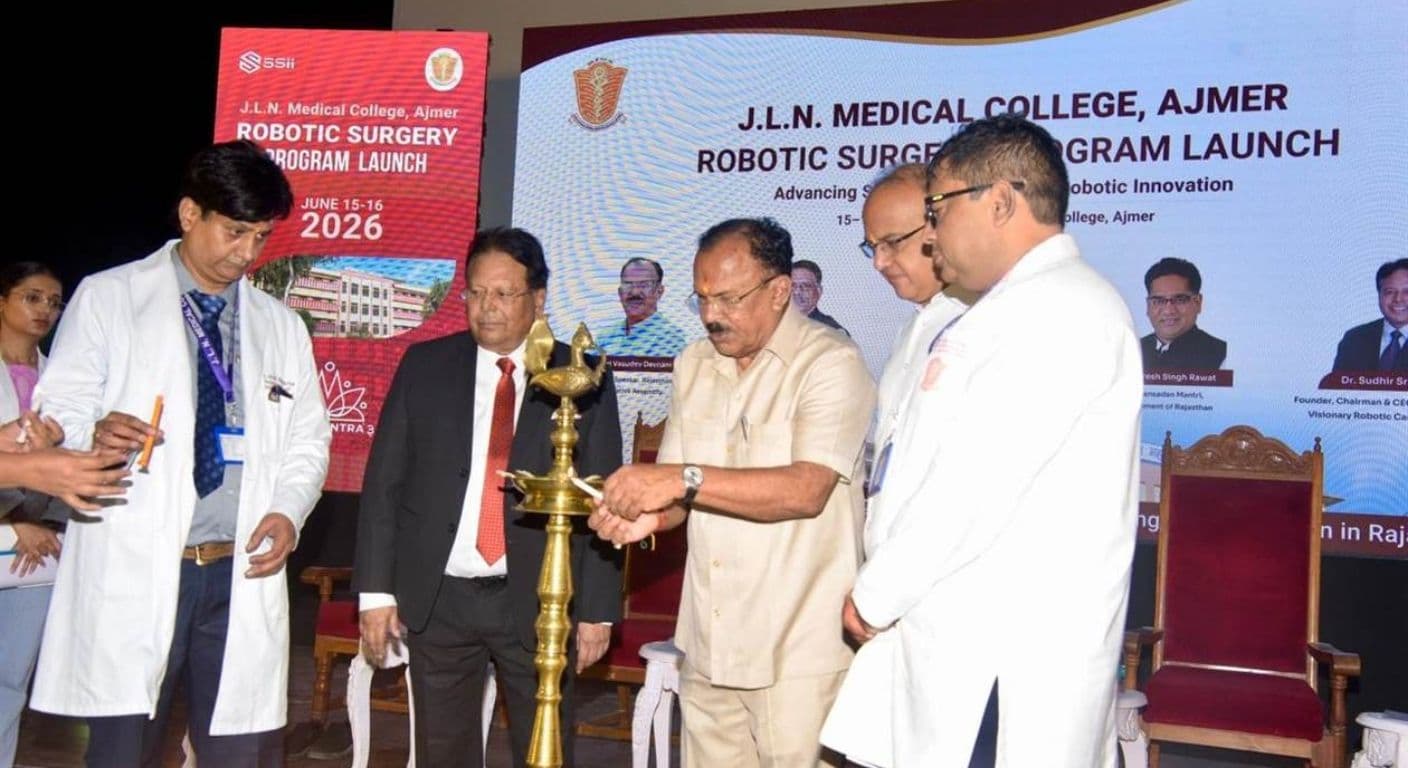
Ajmer's Jawaharlal Nehru Hospital has opened a robotic surgery department and completed three successful robotic procedures on its first day, marking a significant jump in the kind of advanced care now being offered inside the city's public-health system. The new setup, described in the official announcement as a free high-end installation worth about Rs 18 crore, is meant to give patients in Ajmer division access to more complex surgery without automatically looking toward larger referral cities.
The immediate importance is practical rather than ceremonial. If the unit stays active, staffed and well supported, patients who once expected to travel farther for certain advanced procedures could begin finding that care closer to home, with potentially shorter recovery times and a less disruptive treatment journey.
Quick Highlights
- Three robotic surgeries were completed successfully on the unit's first day.
- The new system was provided free of cost by Dr Sudhir Prem Srivastava, founder of SSI and a former student of Ajmer Medical College.
- The announcement described the setup as equipment worth about Rs 18 crore.
- Officials said robotic surgery can support smaller incisions, less pain, higher precision and faster recovery.
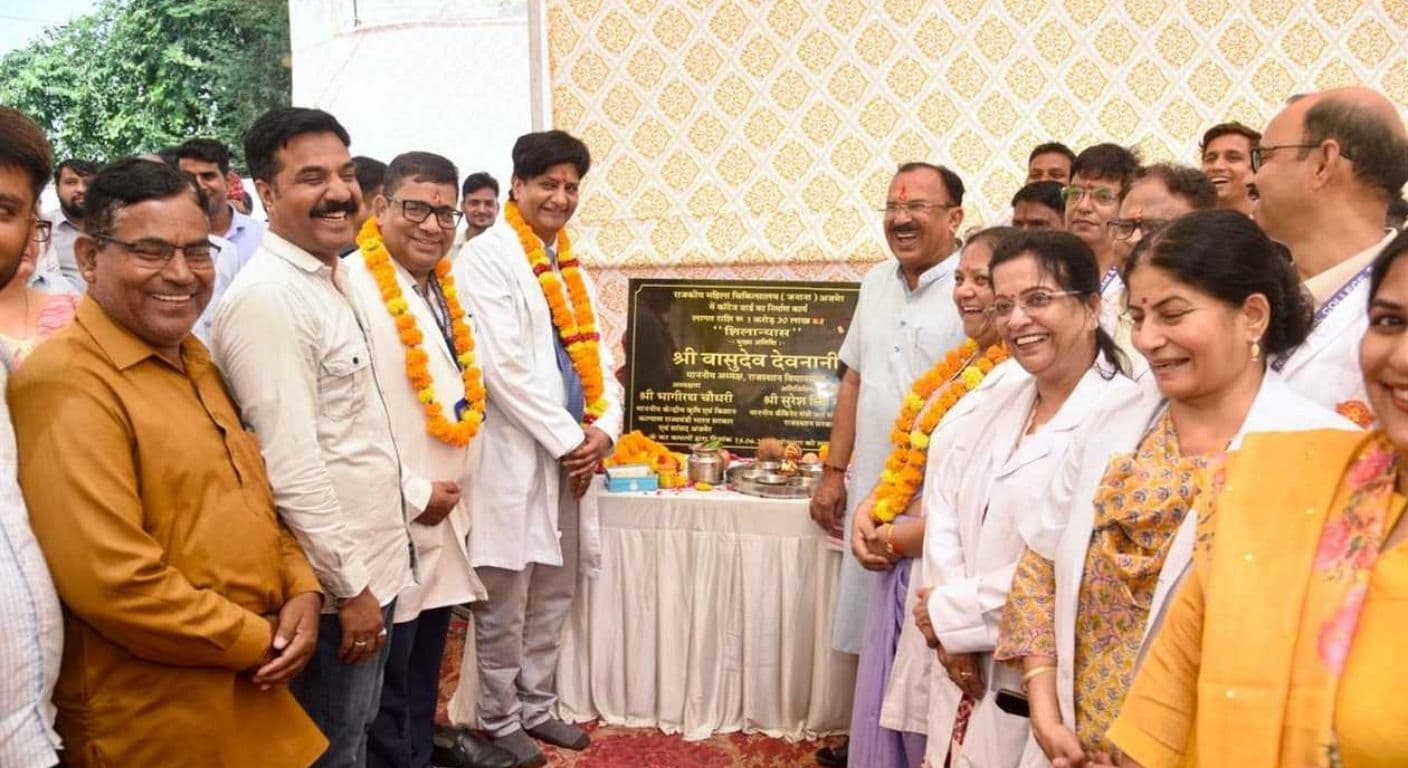
- The hospital also linked the launch to a wider plan that includes a roughly Rs 190 crore super-speciality block and about Rs 50 crore in renovation work.
What changed at JLN Hospital
The biggest new development is that robotic surgery has moved from idea to actual use. The hospital did not just inaugurate a department; it also reported three completed procedures on opening day, which is a more concrete sign of readiness than a technology launch alone. For public hospitals, that distinction matters because many headline upgrades take time before they become visible in patient care.
The donor-backed setup also gives Ajmer a stronger claim to advanced-surgery capacity within the state system. Instead of treating robotic surgery as a prestige label, the release framed it as a working tool for handling more difficult operations with better precision and a lighter recovery burden for patients.
| Ajmer robotic-surgery update | Current detail |
|---|---|
| Hospital | Jawaharlal Nehru Hospital, Ajmer |
| New facility | Robotic surgery department |
| Day-one performance | 3 successful robotic surgeries |
| Donor | Dr Sudhir Prem Srivastava of SSI |
| Approximate setup value | About Rs 18 crore |
| Next institutional goal | Develop the unit into a Centre of Excellence and state-level training centre |
Why patients could feel the difference
Officials said robotic surgery can enable smaller cuts, less pain, greater precision and faster recovery. In real terms, that can mean shorter hospital stays and an easier post-surgery period for patients, especially in procedures where surgical accuracy and tissue handling matter. Those benefits are well known in higher-end private and specialist settings, so bringing them into a government hospital environment is the part that stands out here.
The other practical gain is geographic. Ajmer division patients with complex surgical needs are often pulled toward bigger cities when local public options feel limited. A functioning robotic-surgery unit does not remove that need in every case, but it can widen the range of advanced care available within Ajmer itself and reduce the sense that higher-end treatment always begins elsewhere.
How this fits the wider Ajmer medical-hub push
The launch is also being tied to a larger expansion story at JLN Hospital. Officials again referenced a planned Rs 190 crore super-speciality block and about Rs 50 crore in broader renovation work, suggesting the hospital wants the robotic-surgery department to become one part of a bigger tertiary-care build-out rather than a stand-alone technology showpiece.
That broader context matters because advanced equipment only changes outcomes when the surrounding system can support it. Training, staffing, operating-room workflows, post-operative care and referral coordination will all determine whether the new unit becomes a reliable long-term service or remains a narrower symbolic upgrade. The release said the hospital wants to move toward a future Centre of Excellence and training role, and that ambition will now be judged by case volume, staff preparation and patient outcomes over time.
What to watch next
The next test is continuity. One good opening day is encouraging, but the bigger question is whether robotic-surgery cases continue regularly, whether more specialists are trained and whether the unit starts absorbing a meaningful share of advanced surgical demand from across the division.
If that happens alongside the planned super-speciality and renovation works, Ajmer could strengthen its role as a more serious regional medical centre. If not, the launch will still matter as a visible milestone, but its full patient impact will remain limited.