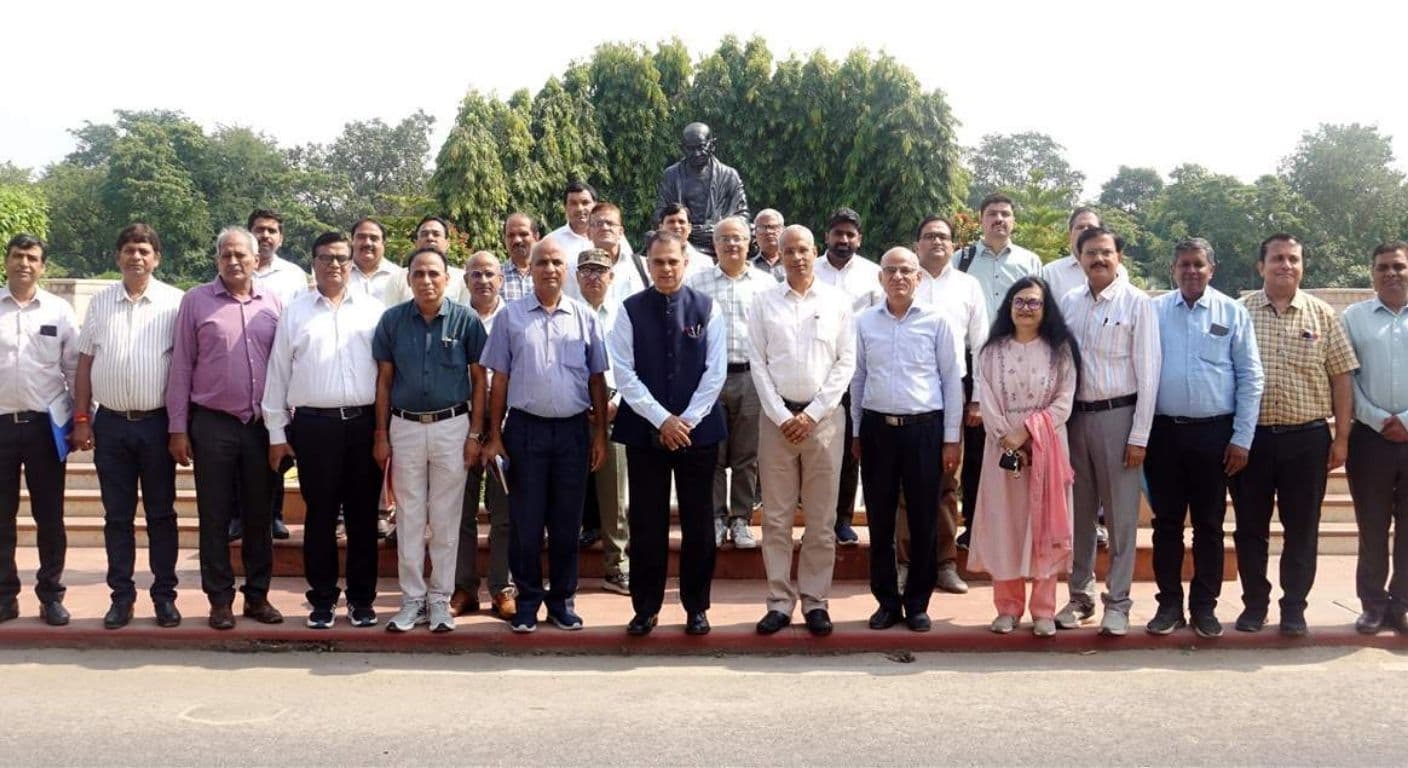

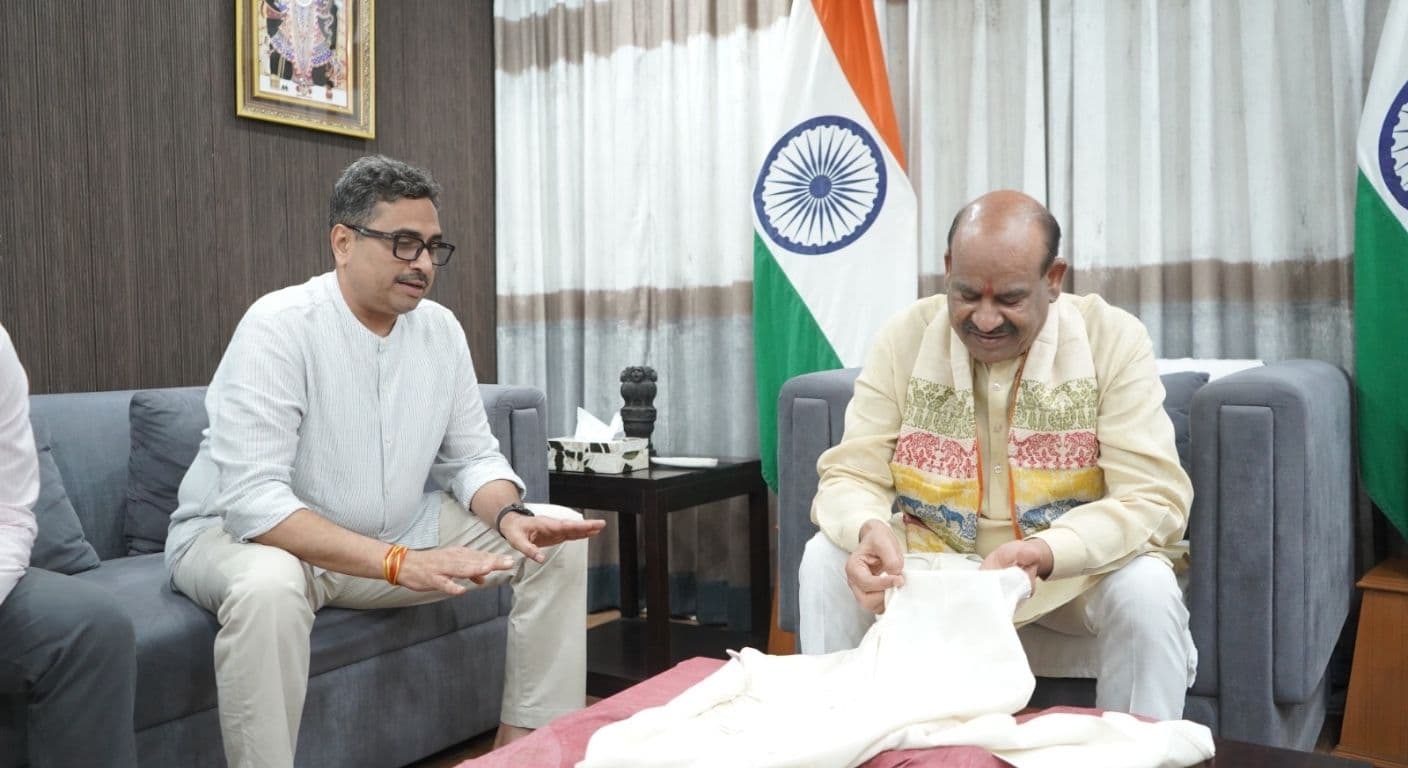
A plan to blend Rajasthan's Kota Doria with Northeast India's Eri silk is moving ahead, with officials, designers and weavers discussing a new premium fabric that could connect two distinct Indian handloom traditions. At a meeting in Kota, a delegation led by DoNER Secretary Sanjay Jaju met Lok Sabha Speaker Om Birla to discuss the proposed textile collaboration.
For Rajasthan readers, the idea matters because Kota Doria is more than a local fabric identity. It is tied to the livelihoods, skill base and cultural recognition of the region's weaving community. If the proposed fusion moves from concept to production, it could open a new premium product line for artisans while giving one of Rajasthan's most recognizable textiles a fresh market story.
Quick Highlights
- The proposal aims to combine Kota Doria with Eri silk to create a new premium fabric.
- The discussion involved DoNER, local designers, weavers and representatives linked to the Northeast handloom sector.
- A visit was also made to the Common Facility Centre in Kaithoon, where the traditional weaving process was reviewed.
- An MoU is being prepared between NEHHDC and Rajasthan's District Industries Centre.
- The proposed collaboration includes joint design development, artisan training and market access support.
Why the fabric fusion is getting attention
The collaboration is built around the strengths of two very different textiles. Eri silk is known for its softness, warmth, durability and eco-friendly production profile, while Kota Doria is known for its lightweight feel and distinctive checked weave. The proposal is to combine those qualities into a fabric aimed at premium domestic and international markets.
That makes the initiative more than a symbolic cross-region exchange. If developed well, it could help handloom clusters move into higher-value product categories instead of relying only on traditional market positioning. It also gives designers a chance to shape a new textile story rooted in Indian craft rather than generic fusion branding.
What happened in Kota
Before the meeting, Jaju visited the Common Facility Centre (CFC) in Kaithoon along with District Collector Piyush Samaria and a representative from the North Eastern Handicrafts and Handlooms Development Corporation (NEHHDC). The delegation reviewed the traditional Kota Doria weaving process and discussed how it might be combined with Eri silk in a way that preserves the fabric's identity while improving its market range.
| Initiative element | What is proposed |
|---|---|
| Textile idea | A premium fabric blending Kota Doria and Eri silk |
| Site reviewed | Kaithoon CFC and the traditional weaving process |
| Institutions involved | DoNER, NEHHDC and Rajasthan's DIC |
| Planned cooperation | Design development, artisan training and market support |
| Next formal step | A proposed MoU between NEHHDC and DIC |
Om Birla described Kota Doria as a symbol of the Hadoti region's identity and the labour of its weavers, while linking the initiative to a larger effort to create new opportunities for artisans. The release also positioned the collaboration within the broader 5F vision of moving from fibre to fabric, fashion and export markets.
What happens next
The next concrete step is the proposed MoU between NEHHDC and the Rajasthan government's District Industries Centre. If that moves ahead, the collaboration is expected to cover joint design work, artisan skill development and market access support rather than remaining a one-off idea discussed at a meeting.
The real test will be whether the fabric can be developed in a way that keeps Kota Doria's character intact while making the product commercially strong enough for premium buyers. If that balance is achieved, the initiative could create a rare outcome: a new textile category that expands artisan opportunity without reducing a traditional handloom identity to a novelty.