
Rajasthan has placed regional access, quality and digital systems at the centre of a healthcare roadmap for the coming decade, with a call to bring advanced services closer to patients outside Jaipur and other major cities.
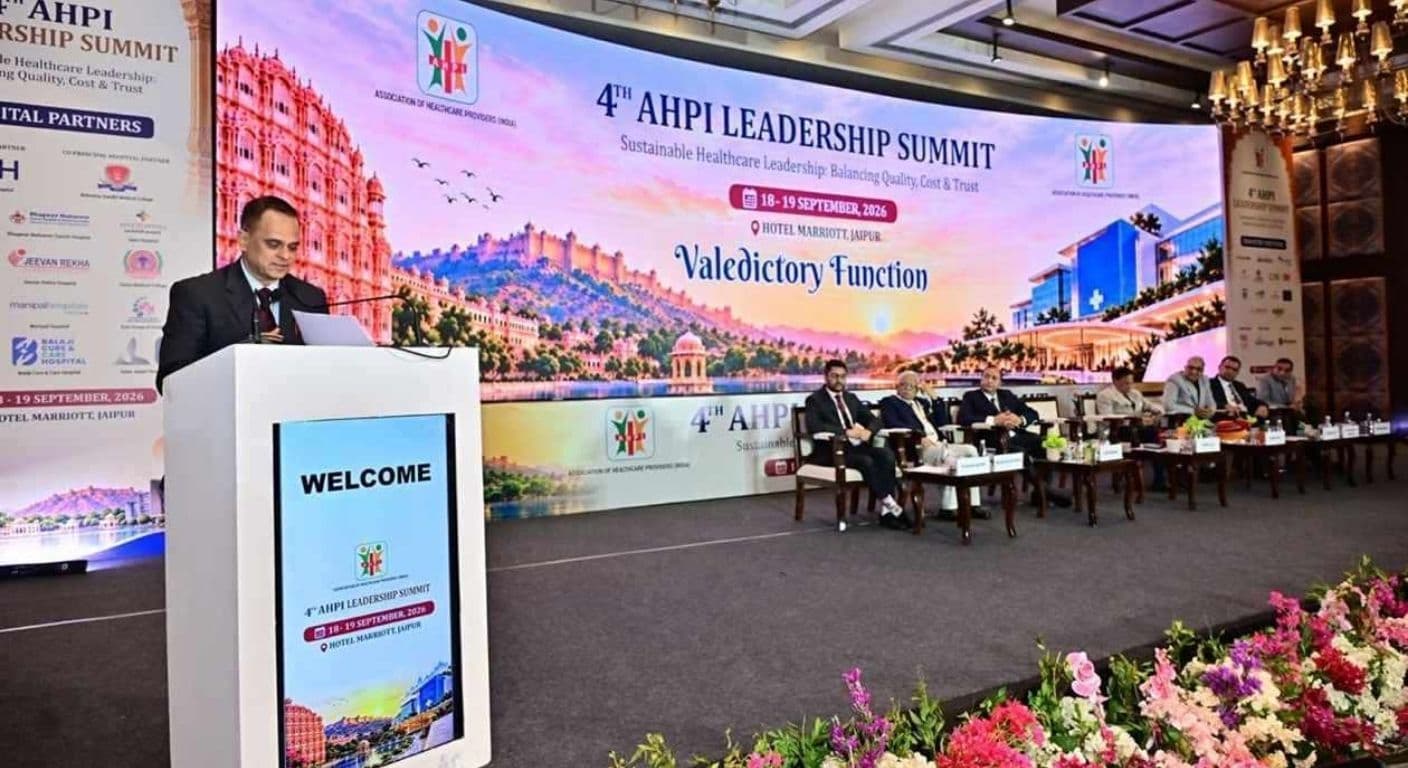
Chief Secretary V. Srinivas outlined the priorities at a national healthcare leadership summit in Jaipur. The approach goes beyond constructing hospitals and brings together affordable access, trained professionals, modern technology, institutional trust and compassionate care.
- Regional access: develop advanced healthcare services in regional centres and smaller cities.
- Quality and workforce: strengthen patient safety, clinical accountability and long-term professional training.
- Digital health: connect systems and make better use of Rajasthan's 8.37 crore digital health records.
- Shared delivery: use government capacity and private-sector expertise as complementary strengths.
Advanced care beyond Jaipur
The roadmap calls for hospitals, diagnostic centres, specialist doctors, paramedical teams, emergency services, referral networks and digital connectivity to grow as an integrated system across regional centres and smaller towns.
Building this network could reduce the need for patients to travel long distances for treatment while creating skilled healthcare jobs closer to home. A stronger regional system could also ease some of the pressure on major hospitals in Jaipur by allowing more care to be delivered locally.
State priorities under the wider Viksit Rajasthan 2047 vision include maternal and child health, universal immunisation, medical education and research, stronger Ayushman Arogya Centres and greater use of technology. Timely identification of high-risk pregnancies, counselling and an effective referral system are part of the maternal and neonatal health focus.
No new hospital project, budget allocation or rollout deadline was announced with the roadmap. The immediate emphasis is on the direction of healthcare development over the next decade.
Quality, skills and public-private cooperation
Expansion is expected to be matched by consistent standards in patient safety, infection control, transparent outcomes, clinical accountability and continuous improvement. The aim is for healthcare institutions to move beyond minimum compliance and build a broader culture of safety and excellence.
Workforce development is another central challenge. Training doctors, paramedical workers, technicians and healthcare administrators requires sustained investment even when buildings and equipment can be added more quickly. Government agencies, hospitals and educational institutions are being encouraged to work together on practical training, faculty development and continuing medical education.
The roadmap also treats the public and private sectors as complementary partners. Government can provide scale, public financing and policy direction, while private providers can contribute investment, specialised services, modern technology, innovation and management capacity.
Digital health moves to the next phase
Rajasthan ranks second nationally in the Healthcare Professional Registry, fifth in the Health Facility Registry and fourth in the generation of Ayushman Bharat Health Account identification numbers. The state has created 8.37 crore unique digital health records.
The next step is to make those digital assets more useful through interoperable systems and meaningful use of data. Connected electronic health records can help patients move more smoothly between services, give doctors better information and support delivery of government health programmes.
Artificial intelligence is also expected to assist clinical and administrative decisions, but the roadmap stresses that human oversight, patient safety and accountability must remain central.
Rajasthan is also positioning healthcare as a source of investment, employment and medical tourism. Its connectivity, medical education institutions, hospitality network and competitive costs could support that ambition, provided access and quality improve together across the state.