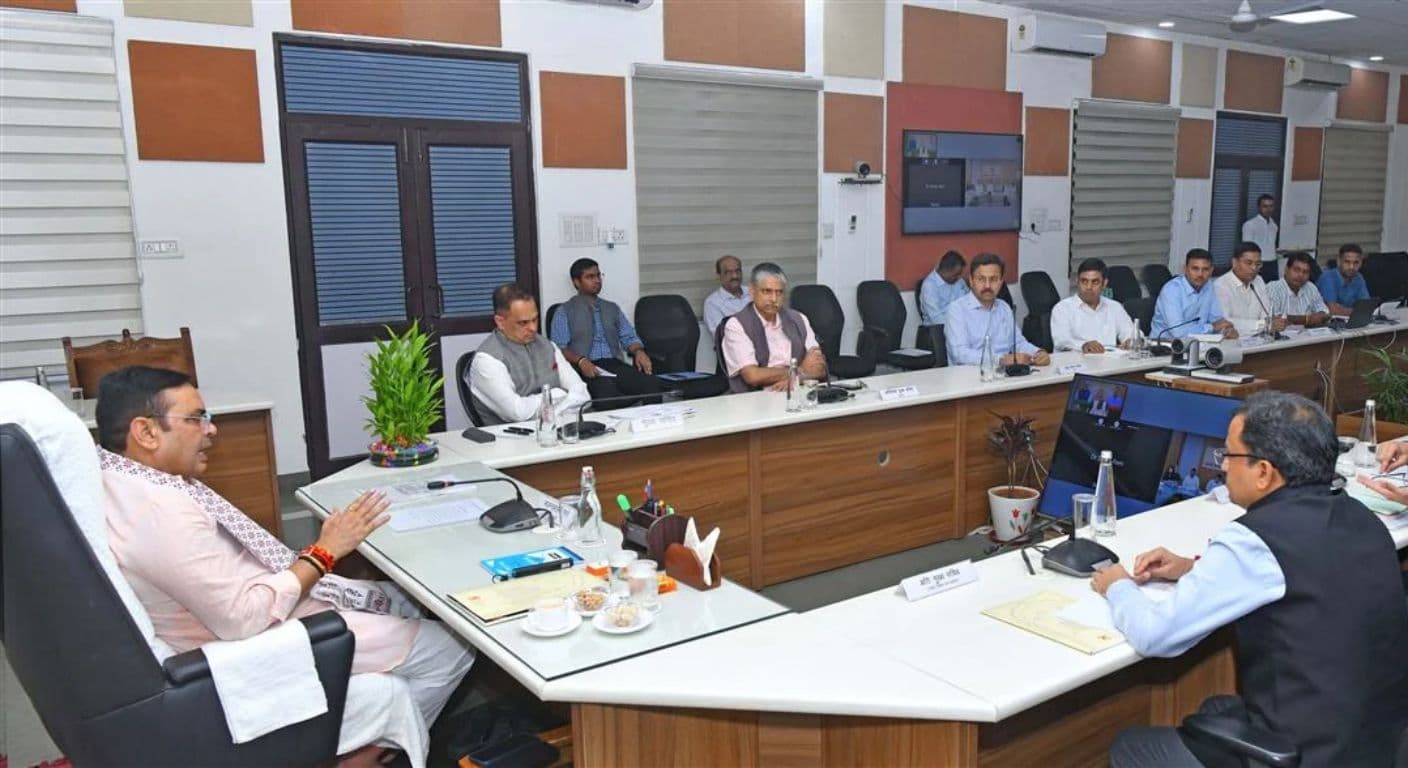

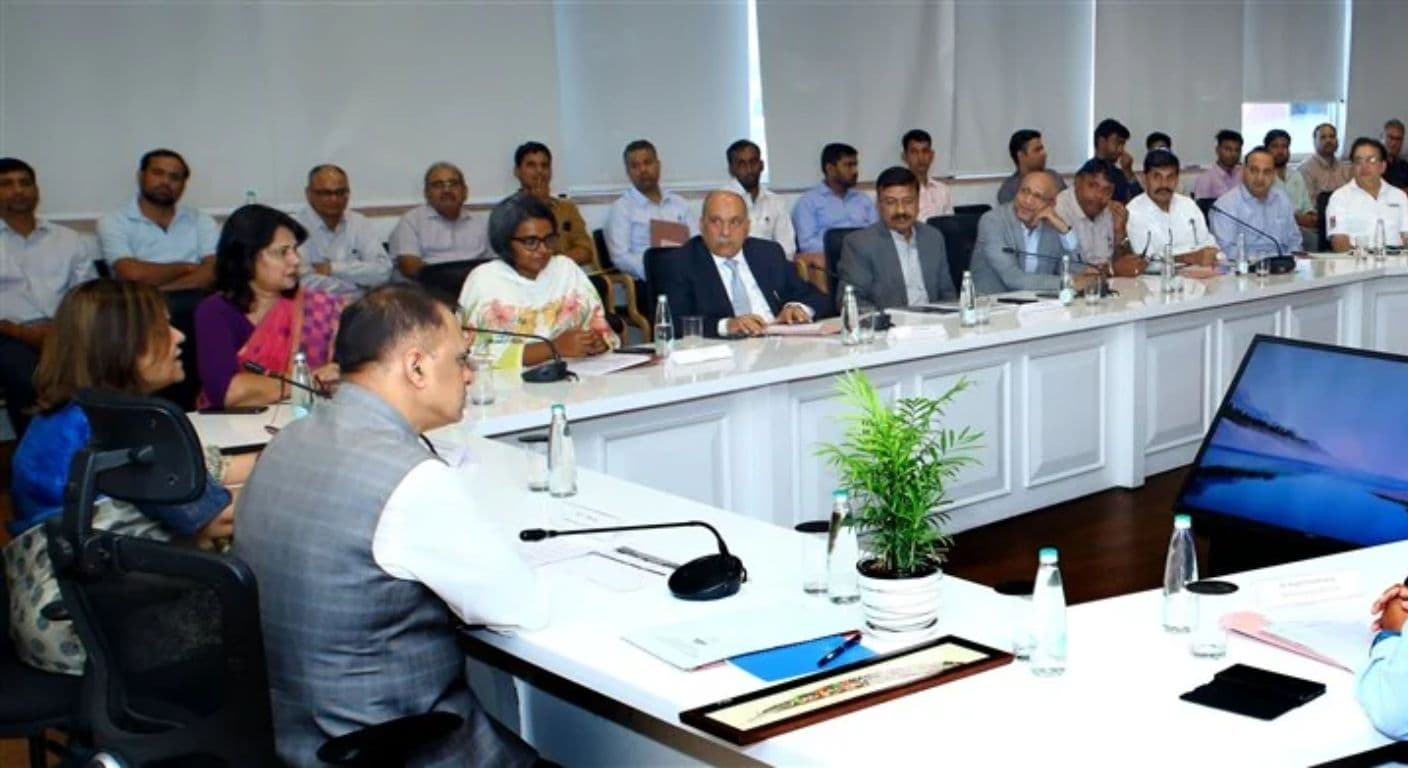
Rajasthan Chief Secretary V. Srinivas has emphasised the growing importance of cyber hygiene, digital security, and scientific e-waste management, urging government departments, private organisations, and citizens to actively participate in awareness initiatives. Addressing a state-level workshop on electronic waste management during BRICS Sustainable Lifestyle Week 2026 in Jaipur, he highlighted the need to adopt modern recycling technologies and environmentally responsible practices.
The Chief Secretary also flagged off eight e-waste collection vehicles to promote the organised collection, safe disposal, and recycling of discarded electronic equipment across Rajasthan.
Eight E-Waste Collection Vehicles Flagged Off in Rajasthan
As part of the awareness campaign, Chief Secretary V. Srinivas, Rajasthan State Pollution Control Board (RSPCB) Chairperson Aparna Arora, Environment Secretary Shailja Deval, and RSPCB Member Secretary Kapil Chandrawal flagged off eight dedicated e-waste collection vehicles.
The initiative aims to strengthen the state's electronic waste collection system while encouraging households, businesses, and institutions to dispose of obsolete electronic devices through authorised recycling channels.
During the event, the Chief Secretary also inspected demonstrations presented by e-waste recyclers, showcasing modern recycling processes and technological solutions for recovering valuable materials from discarded electronics.
Scientific E-Waste Recycling Can Recover Valuable Metals
Highlighting the economic and environmental benefits of scientific recycling, Chief Secretary V. Srinivas explained that discarded electronic devices contain valuable metals, including gold, silver, and other recoverable materials.
Through advanced recycling technologies, these materials can be extracted and reused, reducing dependence on natural resources and minimising environmental damage.
He stressed that transforming electronic waste into reusable resources can contribute significantly to the circular economy, where materials are recovered, recycled, and reintegrated into production rather than being discarded.
The Chief Secretary further emphasised that environmental protection and sustainable development require collective efforts from citizens, industries, government agencies, and recycling organisations.
He encouraged people to incorporate environmentally responsible practices into their everyday lifestyles, noting that a cleaner environment is essential for better public health and long-term sustainability.
Over 7.58 Lakh People Participate in BRICS Sustainable Lifestyle Week Activities
Rajasthan has witnessed extensive public participation in environmental awareness activities organised during BRICS Sustainable Lifestyle Week 2026.
According to figures shared during the programme, 58,976 activities have been conducted across Rajasthan, involving more than 7.58 lakh participants.
RSPCB Chairperson Aparna Arora stated that approximately 59,000 programmes had been organised between November 1 and November 5, reaching more than 7.60 lakh residents across the state.
She added that nearly 27 government departments have participated in the campaign, demonstrating coordinated efforts to promote pollution control, waste management, and sustainable living.
Chief Secretary V. Srinivas appreciated the Rajasthan State Pollution Control Board's daily awareness initiatives and public engagement efforts, describing Rajasthan as a leading state in the nationwide campaign.
Public Participation Essential for Effective E-Waste Management
RSPCB Chairperson Aparna Arora highlighted the responsibilities of consumers, manufacturers, recyclers, and institutions in ensuring effective electronic waste management.
She explained that environmental protection should go beyond simply disposing of waste. Greater emphasis must be placed on recovering useful materials and reintroducing them into productive use.
The workshop also highlighted the importance of strengthening formal e-waste collection networks and increasing public awareness about responsible disposal practices.
Experts advised citizens not to discard outdated electronic devices with regular household garbage. Instead, such items should be handed over to authorised collection centres or registered recyclers to ensure safe handling and scientific processing.
Focus on Plastic Waste Management and Sustainable Living
RSPCB Member Secretary Kapil Chandrawal outlined the various environmental awareness programmes being conducted throughout the week.
The initiatives focus on several important areas, including:
- Sustainable lifestyles and environmentally responsible consumption.
- Scientific collection, segregation, and recycling of electronic waste.
- Plastic waste management and pollution prevention.
- Conservation of natural resources.
- Cleanliness, environmental awareness, and community participation.
- Responsible waste disposal and reuse of recyclable materials.
During the technical session, experts discussed the importance of improving e-waste collection, transportation, segregation, scientific recycling, and resource recovery systems.
They also highlighted the need for stronger public accountability and greater cooperation between consumers, authorised recyclers, and regulatory authorities.
Participants took a pledge under Mission LiFE (Lifestyle for Environment) to adopt eco-friendly habits, practise responsible consumption, and support sustainable waste management.
Rajasthan Strengthens Commitment to Environmental Sustainability
Environment Secretary Shailja Deval and Mines Department Special Secretary Namrata Vrishni also addressed the workshop, sharing their views on environmental protection and sustainable resource management.
The programme concluded with a vote of thanks delivered by RSPCB Chief Environmental Engineer Premalal.
Through initiatives such as dedicated e-waste collection vehicles, recycling awareness programmes, and large-scale public participation, Rajasthan is working to strengthen its waste management infrastructure and encourage sustainable lifestyles.
The workshop reinforced the importance of combining digital safety, scientific recycling, resource conservation, and public awareness to build a cleaner and more environmentally responsible future.