
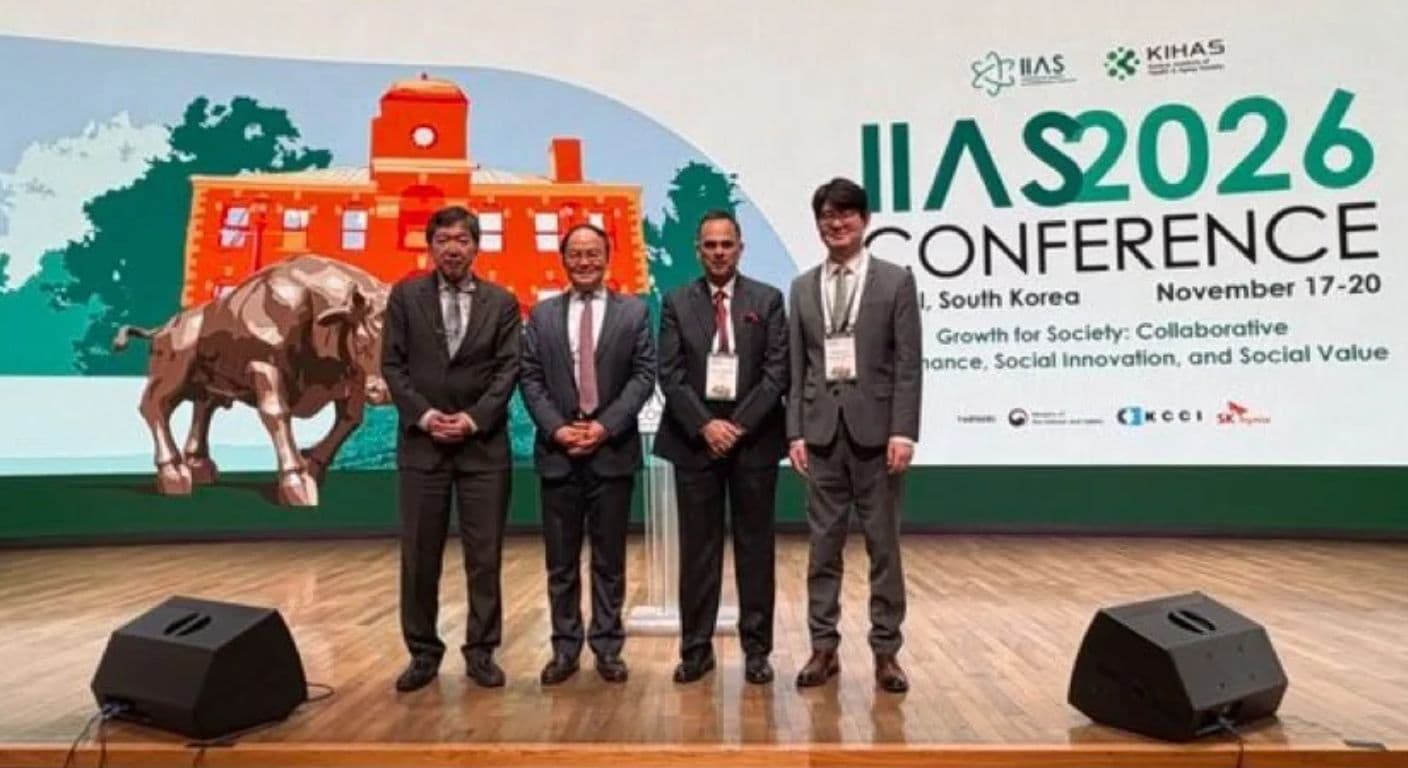
Rajasthan’s growing use of Artificial Intelligence (AI), digital technologies and data-driven governance has emerged as a key example of citizen-centric public administration. Chief Secretary V. Srinivas highlighted the state’s digital transformation initiatives during the International Institute of Administrative Sciences (IIAS) Annual Conference held in Seoul, South Korea.
Srinivas, who also serves as President of the IIAS, participated in discussions with leading public administration scholars from Singapore, Japan and South Korea, focusing on the increasing influence of Asian nations in shaping the future of global governance.
Rajasthan’s AI and Digital Governance Initiatives Improving Public Services
During the conference, Chief Secretary V. Srinivas shared Rajasthan’s experience in integrating Artificial Intelligence, digital platforms and data-driven decision-making into public administration.
He explained how these technologies are helping make government services more accessible, responsive and citizen-friendly while improving administrative efficiency.
Highlighting the state's progress, Srinivas presented Rajasthan Sampark 181 as a significant example of technology-enabled public service delivery. The grievance redressal platform enables citizens to register complaints and seek resolutions through a more accessible and transparent system.
He emphasised that digital governance initiatives such as Rajasthan Sampark 181 demonstrate how technology can strengthen communication between citizens and government institutions, improve accountability and enhance public service delivery.
Capital Investment and Emerging Technologies Driving Rajasthan’s Economic Growth
Speaking about Rajasthan’s economic development, the Chief Secretary identified four major pillars contributing to the state's growth:
Capital Investment: Encouraging investment to strengthen infrastructure, industries and economic opportunities.
Frontier Technologies: Adopting emerging technologies, including Artificial Intelligence and advanced digital solutions, to support innovation and efficiency.
Knowledge Institutions: Promoting research, education and institutional development to build a knowledge-driven economy.
Rule-Based Governance: Strengthening transparent, accountable and efficient administrative systems to support sustainable development.
Srinivas stated that these factors play an important role in accelerating Rajasthan’s economic progress while strengthening governance institutions and improving administrative performance.
Asian Moment in Global Governance Discussed at Seoul Conference
The IIAS Annual Conference brought together prominent scholars and public administration experts to discuss the emerging concept of the Asian Moment in Global Governance.
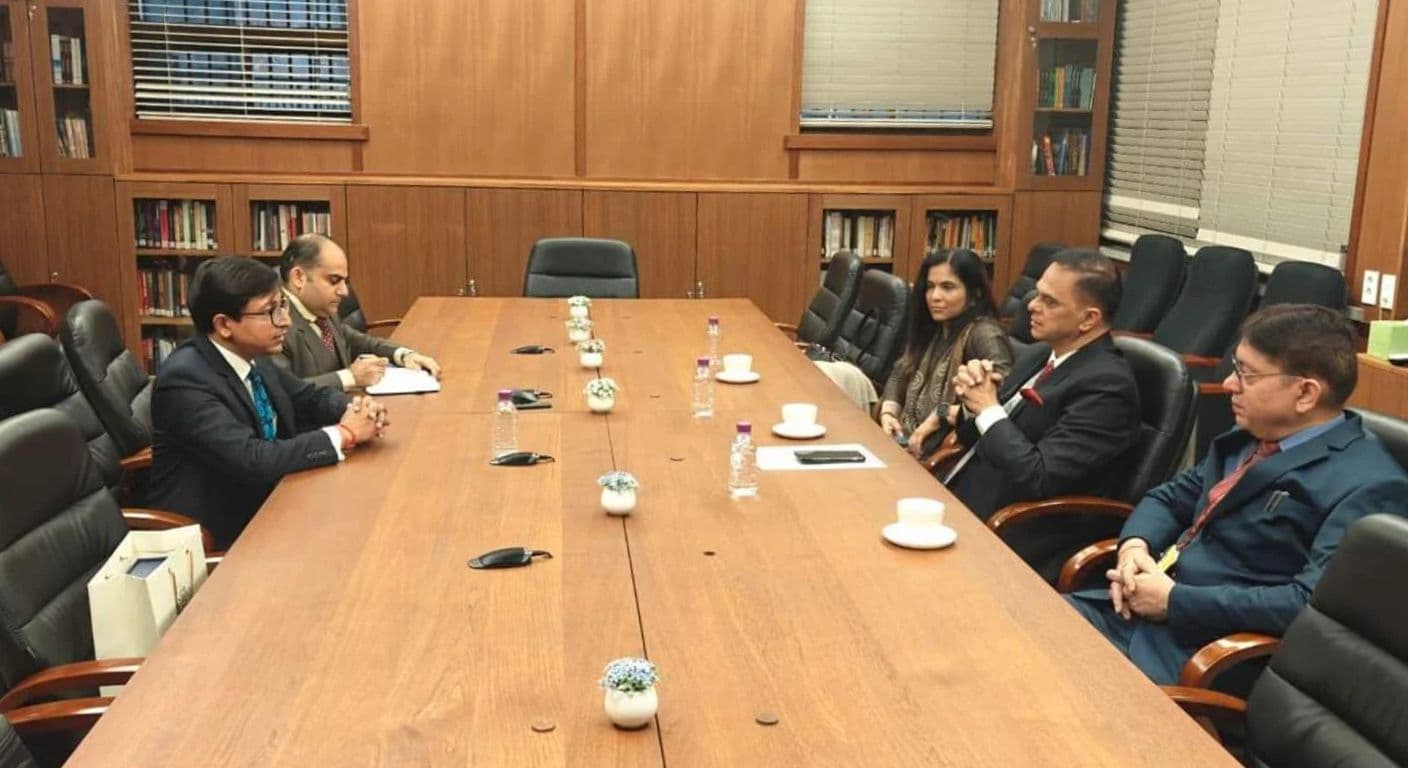
Chief Secretary V. Srinivas interacted with several distinguished international scholars, including:
Prof. Dr. Liu Hong from Singapore
Prof. Dr. Hideaki Shiroyama from Japan
Prof. Dr. Young Bum Lee from South Korea
The discussions explored how Asian countries are increasingly contributing to global governance through technological innovation, digital transformation and modern administrative practices.
Participants also examined the growing importance of Artificial Intelligence, digital platforms and Big Data in improving governance systems and addressing emerging administrative challenges.
Braibant Lecture 2026 Highlights Asia’s Growing Role in Governance
During his visit, Chief Secretary V. Srinivas also attended the Braibant Lecture 2026, delivered by Prof. Dr. Liu Hong on the theme “Global Asia Governance as a New Paradigm.”
The lecture explored Asia’s expanding influence in global public administration and highlighted the role of Artificial Intelligence, digital platforms and Big Data in shaping modern governance frameworks.
It also examined how technological advancements and innovative administrative approaches are creating new opportunities for Asian countries to contribute to international governance practices.
Rajasthan’s Digital Transformation Showcased on International Platform
Rajasthan’s participation in the IIAS Annual Conference provided an opportunity to share the state’s experience in digital governance and public administration with international experts.
By highlighting initiatives such as Rajasthan Sampark 181, Chief Secretary V. Srinivas demonstrated how technology-driven governance can help improve public service delivery and strengthen citizen engagement.
The discussions also reinforced the importance of combining technological innovation, institutional development and transparent governance to achieve sustainable economic growth.
As Artificial Intelligence and digital technologies continue to influence public administration worldwide, Rajasthan’s governance initiatives offer practical examples for broader discussions on efficient, accessible and citizen-focused government services.