
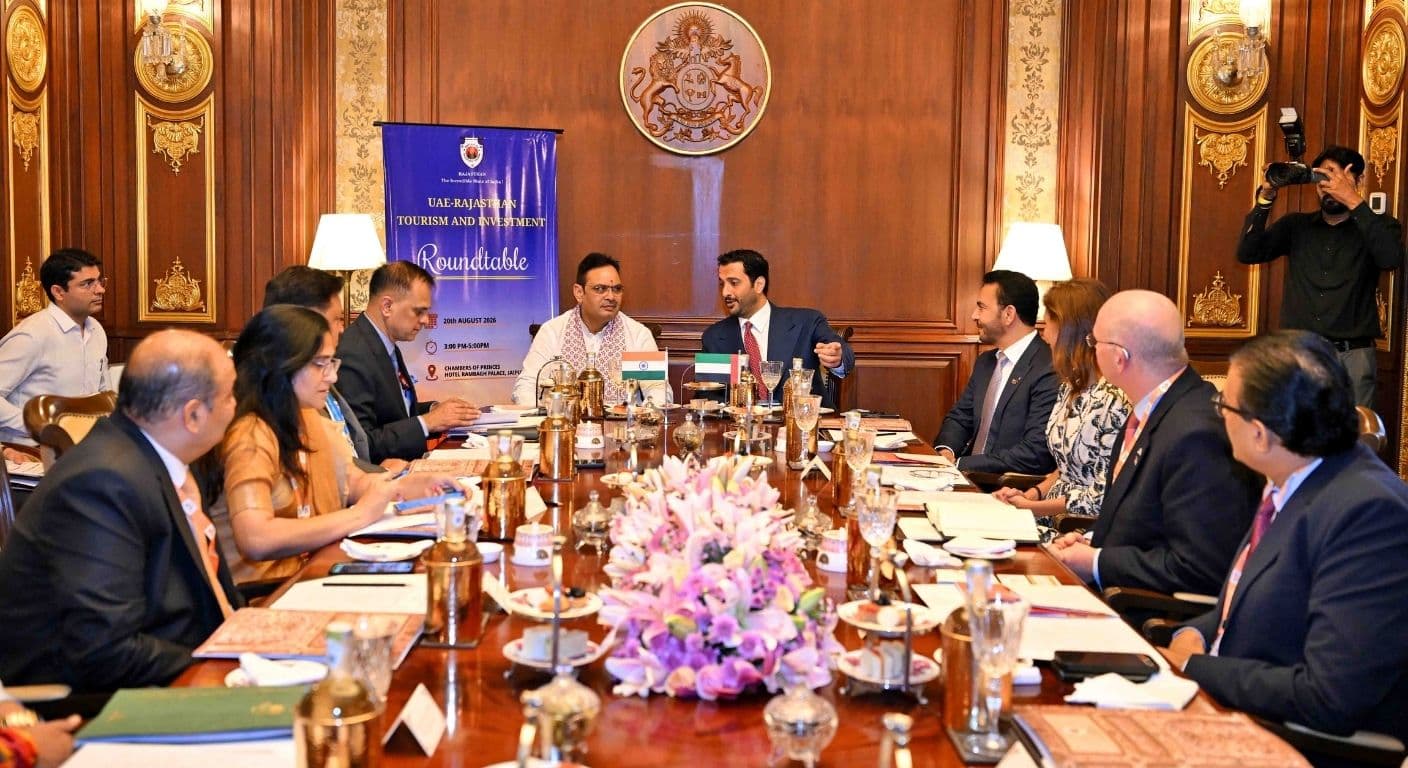
Rajasthan used a high-level round table on Thursday, August 20, 2026 to push its case for deeper tourism and investment ties with the United Arab Emirates, with Chief Minister Bhajan Lal Sharma inviting UAE companies to look at sectors including energy and hospitality. At the same meeting, UAE Minister of Economy and Tourism Abdulla bin Touq Al Marri invited Sharma to visit the UAE, giving the discussion both a diplomatic and business dimension.
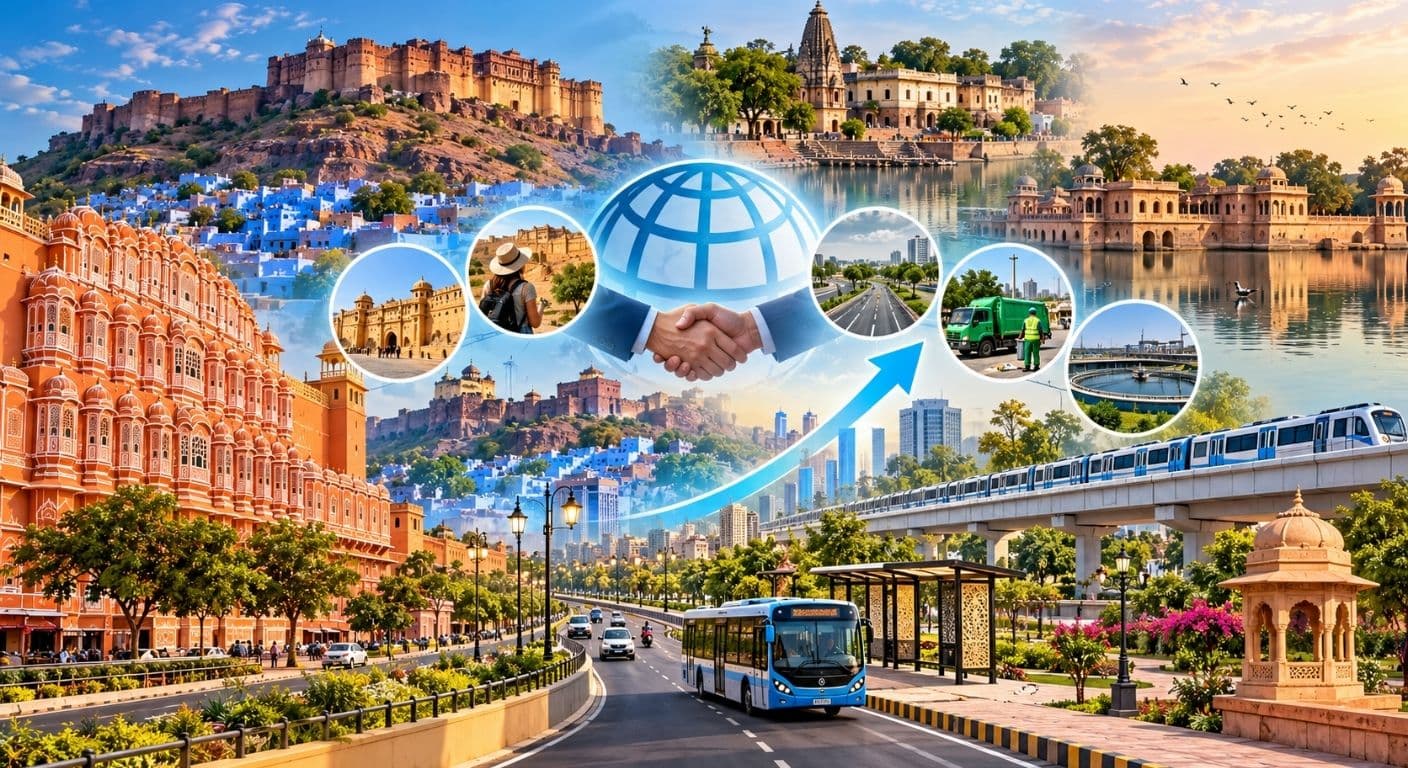
The bigger story is not the invitation alone. Rajasthan is clearly trying to convert a strong India-UAE relationship into more concrete economic gains, especially in sectors where tourism, heritage and investor interest can reinforce one another. That matters because the state is pitching itself not only as a cultural destination, but as a place where global capital can connect with hospitality, infrastructure, energy and heritage-led growth.
Quick Highlights
- The UAE-Rajasthan Tourism and Investment Round Table was held on August 20, 2026.
- Abdulla bin Touq Al Marri invited Chief Minister Bhajan Lal Sharma to visit the UAE.
- Rajasthan invited UAE companies to invest in sectors including energy and hospitality.
- The UAE side signalled interest in Rajasthan's hospitality sector and in stronger Jaipur-Dubai air connectivity.
- The chief minister said India-UAE bilateral trade has exceeded 100 billion US dollars in each of the past two years.
What Rajasthan put on the table
Sharma's pitch was built around Rajasthan's broad asset base. He highlighted the state's forts, palaces, havelis, deserts, wildlife sanctuaries, gems and jewellery, handicrafts, textiles and minerals as part of a case that UAE companies could find significant room for long-term investment.
He also linked the pitch to policy support, saying the state has already rolled out multiple investment-oriented measures, including the Rajasthan Aerospace and Defence Policy, and is moving quickly toward energy self-reliance. That combination suggests Rajasthan wants to present itself as more than a heritage destination: it is trying to position tourism, industry and energy transition inside one wider investor narrative.
| Round table theme | Key signal from the meeting |
|---|---|
| Tourism and hospitality | UAE companies were described as keen to invest in Rajasthan's hospitality sector. |
| Energy and wider investment | Rajasthan invited investment in energy and other strategic sectors. |
| Connectivity | The UAE side expressed interest in stronger Jaipur-Dubai air links. |
| Heritage-led development | The state said 662 Shekhawati havelis have been identified for conservation. |
| India-UAE economic ties | Bilateral trade was said to have exceeded 100 billion US dollars in each of the past two years. |
Why heritage and connectivity both matter
One of the more telling parts of the meeting was how Rajasthan tied investment talk to heritage and movement. Sharma said 662 historic havelis in the Shekhawati region have been identified for conservation under the principle of balancing development with heritage. That matters because it shows Rajasthan is trying to make preservation part of its economic pitch rather than treating it as a separate cultural file.
At the same time, the UAE side raised a practical point: better air connectivity between Jaipur and Dubai. That is important because tourism and hospitality investment tends to become more credible when travel links improve. The release does not announce any confirmed expansion in flights, but it does show that connectivity is being treated as part of the broader investment conversation.
Why the India-UAE relationship is central to the pitch
The meeting also drew heavily on the larger political and economic relationship between India and the UAE. Sharma said the partnership gained fresh momentum after Prime Minister Narendra Modi's May 2026 visit to the UAE, while Al Marri pointed to the Comprehensive Economic Partnership Agreement as an important foundation for stronger commercial engagement.
The chief minister also noted that around 4.5 million Indians live in the UAE, including a significant number from Rajasthan. That diaspora link matters because investment, tourism and business partnerships often move faster when there is already a strong human bridge between the two sides.
What happens next
The next real test will be whether the warm signals from the round table turn into concrete movement on investment, hospitality projects or connectivity upgrades. For now, the meeting points more to intent than to signed outcomes.
Even so, the August 20 discussion matters because it shows Rajasthan actively trying to convert international diplomatic goodwill into sector-specific opportunity. If that effort gains traction, tourism, hospitality and heritage-linked development could become some of the most visible areas where the UAE-Rajasthan relationship starts delivering on the ground.